Riding in Style: First Time on a Party Bus
Al Drago and I, clusters of middle aged women and a few families took off down Huffman Mill Road; we were headed to the Best Western in Burlington.
Find out more on this week's double truck, Dr. Danieley's lifetime of maroon and gold, Rebecca Wickel discusses her time with the infamous Dr. Danieley.
I spent my Monday morning following Boston Marathon updates, checking the progress of the elite runners between classes (I admit it) on two extended trips to “fill up my water bottle” during class. This year’s marathon was an excruciating, hot race, run in over 80-degree heat.
Map drawing by Ronald Chang, contributing artist.
“Why are Americans so afraid of strangers?” This was the question posed to me last night in Parque Montegrande (a public park in the neighborhood of Los Condes) by Eduardo SN (abbreviated last name for privacy), a fifty year old professor of the Spanish language who hails from a sleepy town in the Los Lagos (Lakes) Region of southern Chile. I had come to Montegrande in order to rehearse an academic presentation for the following day, and also to enjoy the cool breezes and tranquility that characterize the park at night. Eduardo (who was visiting relatives in Santiago during his summer vacation) had come to Montegrande in order to walk his cousins’ dog, who had drifted in my direction while I sat on a park bench reciting my academic spiel. After exchanging pleasantries, Eduardo took an interest in my presentation on Chilean artist Roberto Matta, and given his profession (as well as the fact that he taught at a university in Alabama for five years), he was able to help me improve my grammar and pronunciation. The topics of our conversation ranged from the intricacies of the Chilean accent/chilenismos (phrases and words that are distinct to this country) to the mentalities that allow us to enjoy our lives in a joyous and positive manner. When it was time for us to head on our respective ways, Eduardo suggested that we exchange email addresses and cell phone numbers. I hesitated for a second, mostly because I still can’t remember the number for my Chilean movil (cell phones are only assigned 8 digits while land lines receive 10), but also as a result of that warning which was ingrained into our consciousnesses as young Americans: "Never talk to strangers!” As though he was reading my mind, Eduardo joked, “I know how you Americans are, always afraid to trust somebody new!” This was just one of the differences that he noted between Americans and Chileans. Another being that we "northern hemispherer" don’t understand how to properly enjoy a glass of pisco (a Chilean liquor distilled from grapes) or vino, as we are typically concerned with the inebriating effects of the drink, and thus ignore the potentials that a spirit has to solidify a friendship or connote an important situation. He further explicated that Americans act rather cold when exchanging salutations and goodbyes, limiting ourselves to handshakes given from an arm’s length apart. In Chile, women are greeted (by both sexes) with a hug and a kiss on the cheek, no matter how well you know the person. Men exchange brazos (hugs), and the male generation of Chileans that are my age also frequently give a quick peck on the cheek as well. This is not to say that there aren’t aspects of American custom that Eduardo doesn’t admire. If someone offers you a stiff drink in the states and you reply "no," you are not usually pestered any further, whereas in Chile a "no" connotes a challenge for the host to change your mind. I think that I surprised Eduardo a bit when I played along with the joke of Americans’ fear of strangers, and gave him my email address, phone number and hug (no cheek-kiss, as he made sure that I understood that his generation does not engage in this practice). And why wouldn’t I? Here was a respectable and wise professor who spoke very good English and crisp Spanish (he was able to refrain from the machine-gun rhythm of Chilean speech), had helped me advance my Spanish grammar/pronunciations/vocabulary and gave me some very valuable life lessons (we should imagine ourselves as bees, moving from flower to flower, only extracting that which is entirely wholesome). I have spent a good bit of time in American public parks during the night, and never came close to receiving the enlightenment that I gained in Parque Montegrande. I suppose we Americans live with much unnecessary paranoia and preoccupation that prevents us from interacting with those who we do not know. Perhaps we are so caught up in the day-to-day cycle of our lives, so consumed by material possessions, that we miss those wonderful opportunities to broaden our perspectives that come free from a friendly new face. If you are devoting your attention to someone with something meaningful to say, you are never wasting time; you are learning and maturing. But hey, in the words of Eduardo, “At least you Americans aren’t as cold and paranoid as the British.”
For Elon University junior Deanna Fox and senior Darrius McQueen, a lifetime of relationship experiences resulted in something beautiful — the completion of “Life Lessons,” their first mixtape as Dulcet Entertainment. “‘Life Lessons’ is just what the title says it is — a mix of songs that take a person through the feelings of a relationship and the lessons that someone usually learns,” Fox said. McQueen said the 13-track R&B mixtape allows for a variety of teachings. “The tracks each have a different viewpoint of relationships,” McQueen said.
Bullying – it’s a term everyone is familiar with, and may have even experienced personally at some point in time.
Monday evening, the courtyard of Best Western on Huffman Mill Road exuded enticing aromas of freshly prepared cuisine and blared the musical talents of a local band. Taste of Alamance, an event where local food and beverage vendors offered samples of their cuisines to hungry guests, was responsible for the commotion.
It’s a running joke in The Pendulum office that if staff members were paid by the hour, they’d be some of the most well paid students on Elon’s campus. In reality, many of us devote 40 or more hours a week to what equates to a full-time job, while also balancing separate academic and social lives. We don’t do it for fame or glory.
It has 28 course offerings, 18 participating study abroad programs and 12 affiliate departments on campus. But the Asian studies program at Elon University has only 38 students, which is an increase from the 17 who declared in 2009. “I think the program is small simply because of the lack of popularity and the stigmas of Asians we have in America today,” sophomore Sarah Wells said. Wells is an Asian studies minor interested in eastern religion.
For Elon University freshman infielder Tyler McVicar, the 55 days between his first collegiate at-bat and Friday night’s game against Towson University could best be described as waiting for the proverbial opportune moment. He saw the field sparingly in that time, serving mostly as a pinch hitter that had failed to hit.
The Elon University Phoenix women’s tennis team is holding to the mantra of better late than never.
If breakfast is the most important meal of the day, then brunch is the most important meal of the week. Whether it’s to recover from a night out or to socialize after the morning’s worship, brunch is a momentous weekend fixture.
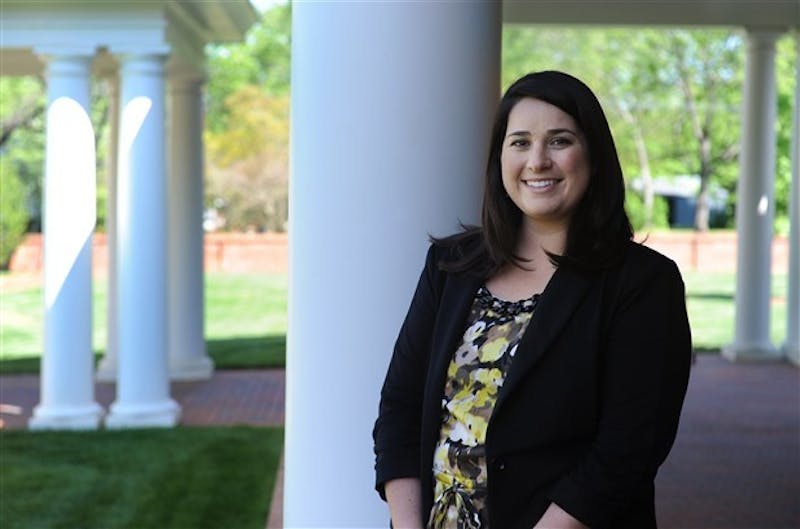
It was a small taste of what was to come. “I had never visited campus before,” said Brittany Werts, an admissions counselor and 2009 Elon graduate.
A Ban Against Neglect (ABAN) is already an up-and-coming charitable organization, but now, it’s gaining a stronger presence at Elon as well. The organization was founded in 2008 by three students at the University of Ghana: Callie Brauel, Rebecca Brandt and Emmanuel Quarmyne.
Besides OnTrack, there is one site that students frequent during the hectic time of class registration.
Smith Residence Hall has had seven cases of theft as of March 16. Items that have been stolen include four iPods, three Macbooks, two iPads, a watch, a pair of headphones, an IBM laptop and a wallet containing a debit card, a driver’s license and an ID card.
Traveling to Honduras, Elon University’s chapter of Global Medical Brigades will leave more than footprints. The chapter of the national organization had a donation drive last week to collect sunglasses and hats to give to farmers in Honduras during its fourth annual brigade there this summer. Global Medical Brigades works with licensed medical professionals to provide free health services in rural communities, specifically in Honduras, Ghana and Panama. Twenty-eight Elon students along with a doctor, dentist and OB/GYN will travel to Honduras Aug.
An Elon University junior biochemistry major recently became the second Elon student to win the Barry M.
Taliban attacks Afghan capital The Taliban carried out a series of seven attacks on the Afghan capital April 15.