

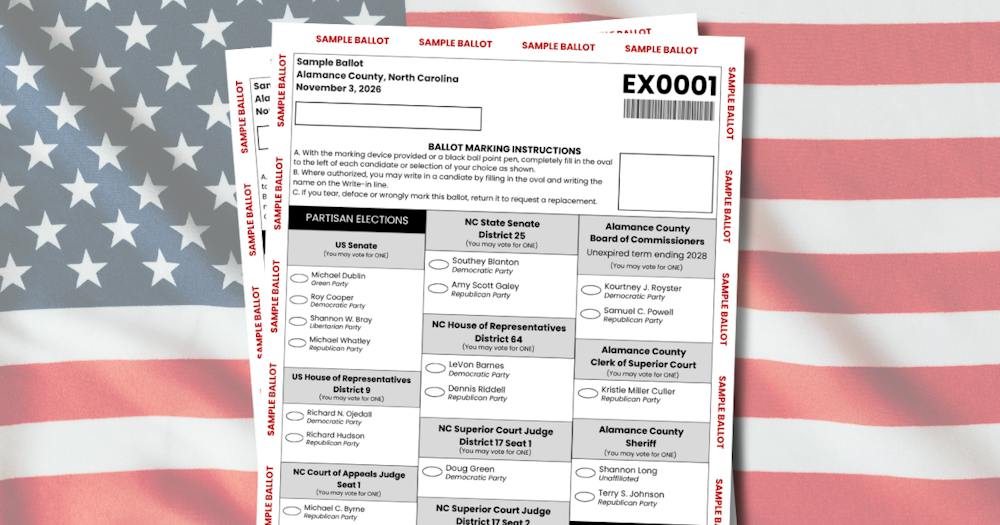
North Carolina voters have two updated procedures to pay attention to when it comes to returning their absentee ballots for this year’s midterm elections.
The North Carolina State Board of Elections updated two numbered memos this month that provide counties with guidance on absentee ballot returns and deficiencies. The changes affect how county election officials handle ballots that are returned in person and ballots with problems involving their return envelopes.
The memos are not new documents. One of the memos, which addresses the in-person return of absentee ballots, was originally issued in 2020 and updated once before this. The other memo addresses envelope seal problems and was originally issued in 2021 and had gone through two other updates prior to September.
These updates came as the state board worked to give county boards guidance ahead of the upcoming election.
Jason Tyson, director of external affairs for the state board, said numbered memos are a form of executive guidance used to provide counties with administrative direction. He said the current administration has not typically opted for the numbered memo process.
“What the board did was to just move the date up of application from January first to apply for this election. So our counties would know and have that guidance on how to treat those two instances,” Tyson said.
The state board had adopted several other proposed absentee voting rules this summer which went to the Rules Review Commission and a public comment period.
Tyson said that the board has not received any real pushback from election administrators.
“The counties understand that they need it. We understand the time constraint that we were under there,” Tyson said.
The changes apply to a voting method used by thousands of residents. According to the North Carolina State Board of Elections’ website, in the 2022 general election, 2,877 Alamance County voters cast absentee-by-mail ballots, accounting for about 4.8% of the county’s 60,155 voters who cast ballots. Statewide, 187,746 voters cast absentee-by-mail ballots, about 5% of the 3.79 million votes cast.
Joselle Torres, communications manager for the advocacy group Democracy North Carolina, said the change could create additional steps for voters whose ballots have envelope problems.
“With the update of this memo, if the envelope itself isn’t properly sealed, that could now be spoiled, rejected and a new ballot would be sent out, or you could come and vote in person,” Torres said.
Torres said a cure process where ballots can be spoiled and reissued will allow voters to correct certain problems, but a reissued ballot can add time to the process. She encouraged voters who plan to vote by mail to return their ballots as early as possible.
The state board’s updated guidance came 60 days before the midterms and as absentee ballots are being sent to voters for the 2026 election.
Torres said the changes make voter education especially important as voters navigate the updated absentee process.
“We are wanting to make sure voters have easy, clear guidelines on how to return their ballot by mail or if they’re voting in person or whatnot,” Torres said.
Torres said that for voters choosing to vote by mail, the changes make the return process especially important. Voters must follow the instructions accompanying their ballot and can use the state board’s cure process if they are notified that an issue needs to be corrected.