

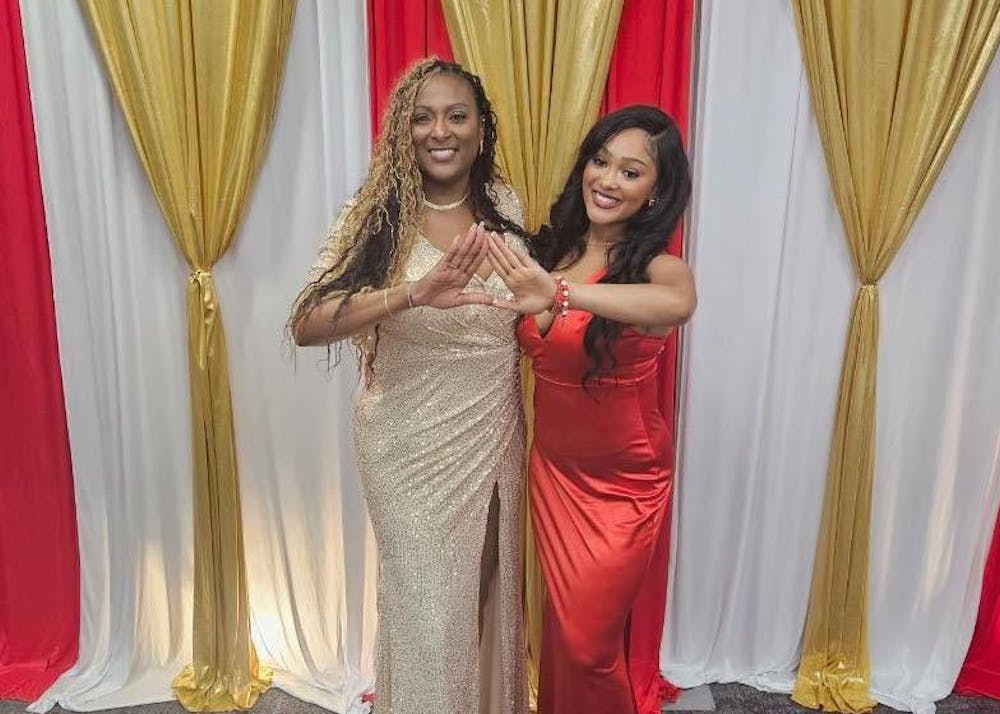
Cameko Proctor did not always know whether her daughter, Elon senior Maleah Proctor, would join Delta Sigma Theta Sorority Inc.
“When she began to be her own lady, her own person, out here in this world, going to college, I wasn't for sure,” Cameko said.
For both women, Maleah’s membership was more than crossing into a Divine Nine organization. It was a family legacy, passed down through generations.
“I think she chose the right direction,” Cameko said.
“Crossed” refers to the date of initiation into a cultural Greek organization and “legacy” is a potential member whose grandparent, parent, brother or sister is a member of a fraternity or sorority.
The Divine Nine, formally known as the National Pan-Hellenic Council Inc., is composed of nine International greek letter sororities and fraternities.
Maleah is her mother’s legacy in Delta Sigma Theta Sorority Inc. Cameko said it warms her heart to see her legacy continue through Maleah.
“It makes me so proud of her,” Cameko said. “She has this leadership quality, but I think was very, very out front and to see her work her magic out in the open in representing my sorority, there's nothing like it.”
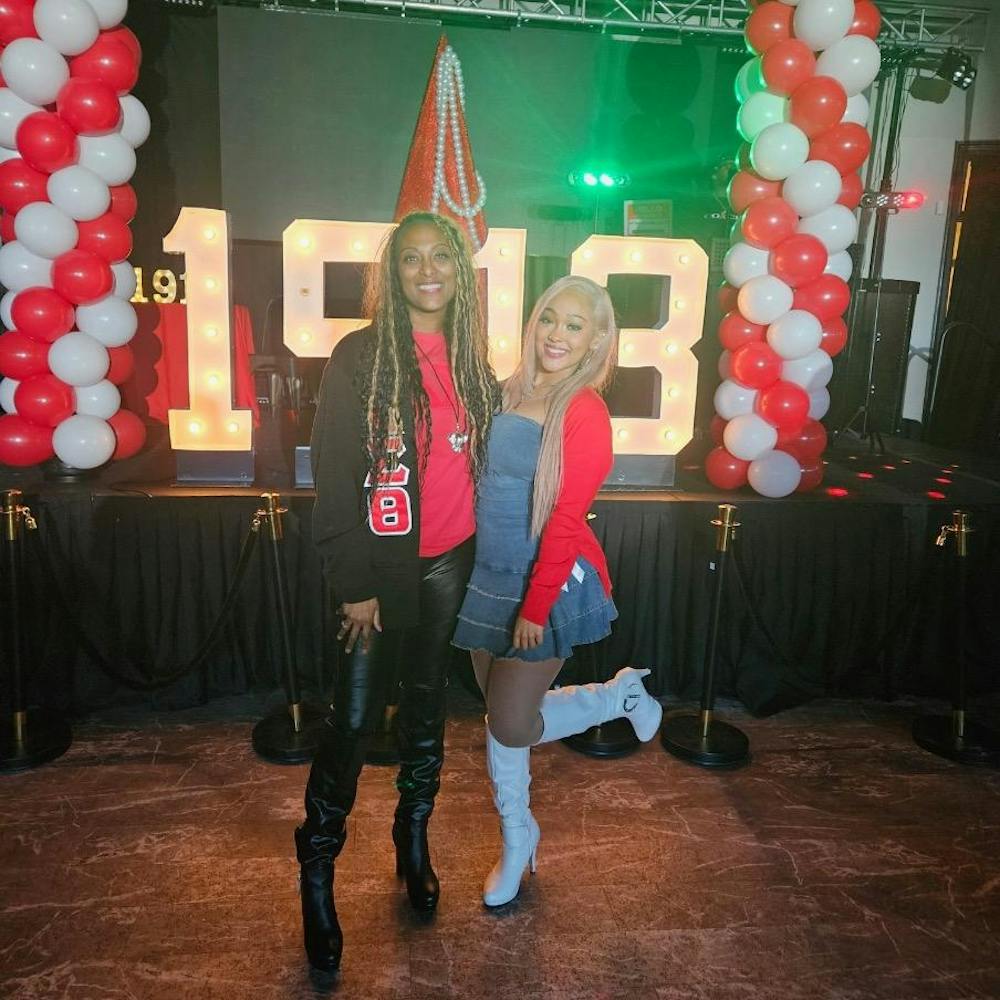
Cameko Proctor and Elon senior Maleah Proctor at the Delta Sigma Theta Founder's Day Celebration in Charlotte on Jan. 11. Photo courtesy of Maleah Proctor.
Delta Sigma Theta Sorority, Incorporated, was founded on January 13, 1913, by 22 women at Howard University who promoted academic excellence and assisted those in need, according to their national website. The organization is committed to sisterhood, scholarship, service, and addressing social issues.
Maleah said being a member of Delta Sigma Theta means being able to have a platform to advocate for social issues.
“We talk about different initiatives, and how we can use our sorority and our platform to bring attention to different issues and kind of join in on different social action initiatives,’’ Maleah said.
For Maleah, joining Delta Sigma Theta is a connection to a history of great women, such as her mother and Mary Carroll Robertson — Elon’s first Black Homecoming Queen.
“There's a really rich history at Elon, and it's just one of those things that just makes you super proud to be a part of something bigger than yourself,” Maleah said.
Cameko crossed into the Union County Alumnae Chapter of Delta Sigma Theta, a graduate chapter serving Union County, North Carolina. She said the organization’s commitment to service is what drew her in.
“I always out in the community, and nine out of 10, when I met these women, or I went to go speak with these women, they always were Deltas,” Cameko said. “I was like, ‘Wow, these are women that's making an impact. And I want to be just like those women, like, I want to go out there and serve my community’, so when I had a chance, that's what I did.”
According to Cameko, being a member of is a lifetime commitment of sisterhood, one she now shares with her daughter.
“We are true, tried and true sisters,” Cameko said. “In the end, my daughter is not only my daughter, but she's a sister to me.”
Maleah, the current president of Elon’s Black Student Union, said several influential women on campus shaped journey, including former BSU president Aleezah Adams, a member of Delta Sigma Theta.
“I kept coming across influential women, and saw what they were doing, and then when common denominator for all of them were that they all happen to be Deltas,” Maleah said.
Before joining, Maleah said she was already familiar with the sorority through her mother and aunties. Maleah’s aunties are Cameko’s line sisters — not sisters by blood, but sisters by commitment and oath.
“I kept coming across influential women doing great things here, and so that really kind of drove me to be inspired and want to be a part of the same type of thing that they were,” Maleah said.
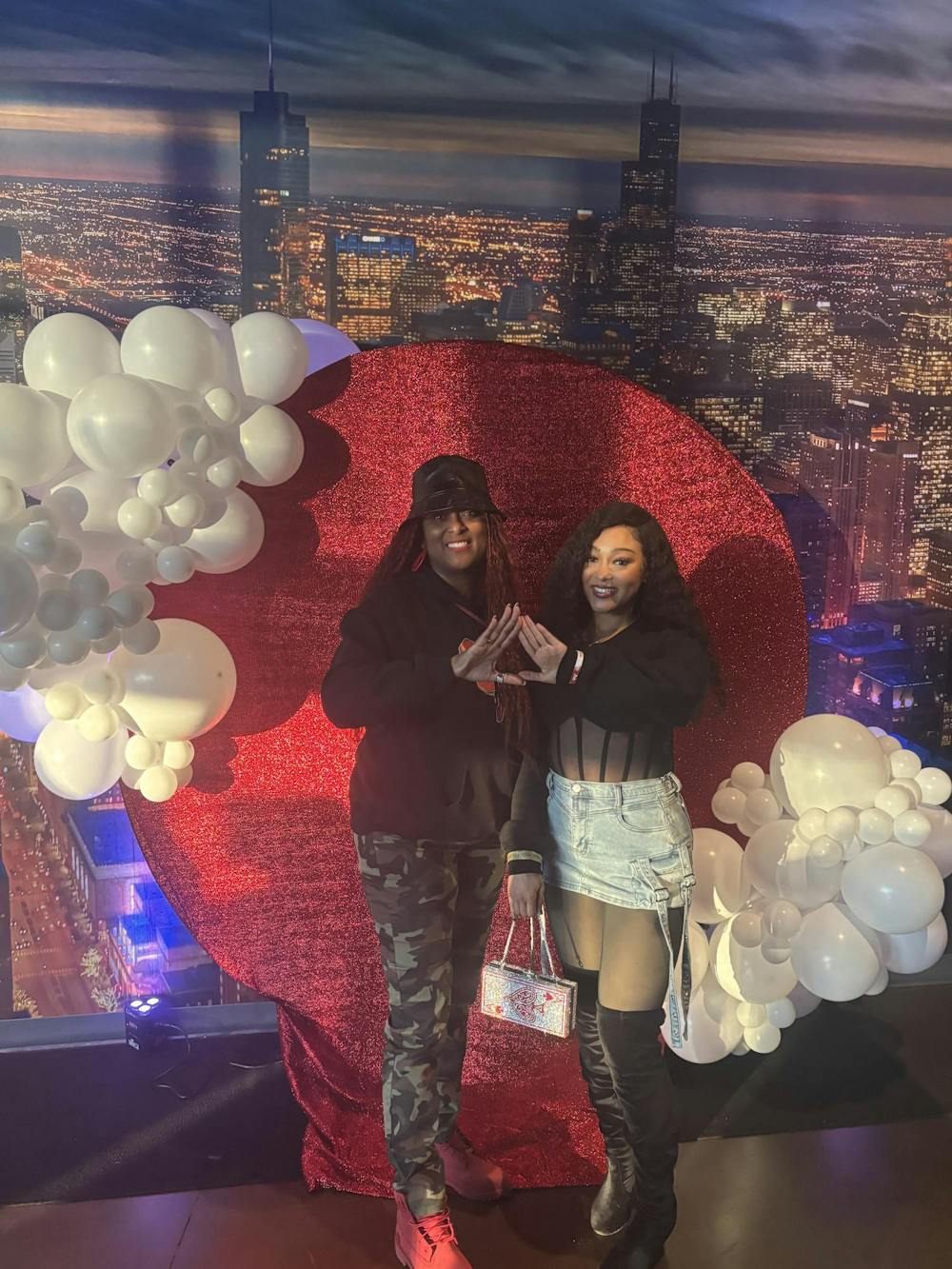
Cameko Proctor and Elon senior Maleah Proctor at the Delta Sigma Theta Founder's Day Celebration in Jan. 2025. Photo courtesy of Maleah Proctor.
On March 3, 1913, two months after its founding, the sorority participated in its first public act of service by marching in the Woman Suffrage Procession in Washington, D.C.
Maleah, a Political Science and Policy Studies double major, said the organization has a rich history of giving back to the community by participating in social action.
“Social action and the political state of the world is something that's always interested me too, and has impacted my future career path,” Maleah said. “To have that history is really important. one of the reasons why I also wanted to be a part of this organization, because so much of this foundation is made up of service and giving back to community.”
For Maleah, being a legacy means a continuation of greatness and representation — especially on Elon's campus, which is a predominantly white institution. Maleah said representation shows others, who may not look like her, what she is capable of.
“That's one of the reasons why I think it's so important that I show up in so many different ways on campus, because I want to continue that legacy, not only for my mom, not only for my sorority, but for myself and other people who look like me,” Maleah said.
For Cameko, legacy is a continuation.
“When I add my legacy and add her great mind and her thoughts and what she contributes to this earth, when she has a long list of things that she does right now that adds more and more organization, it makes it greater,” Cameko said. “It makes it better. It makes it diverse.”