

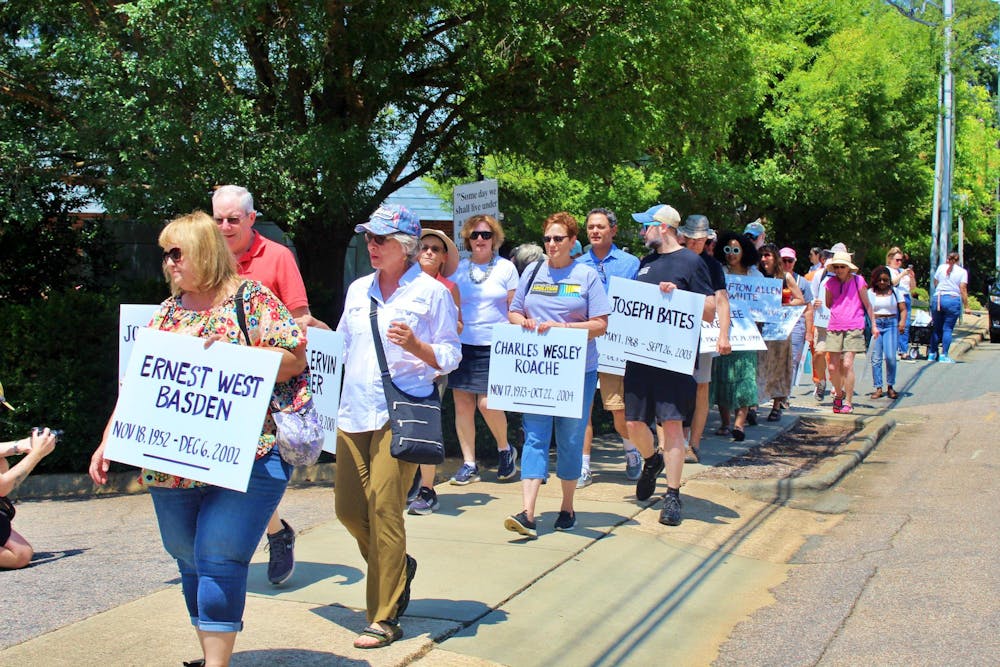
Kristin Stapleford still remembers the early morning of Dec. 6, 2002 when her uncle Ernest Basden was executed at 2 a.m.
An ice storm had swept across North Carolina, making it a chilly night as she and other family members anxiously awaited Basden’s scheduled execution at Central Prison in Raleigh.
“I’ve never been claustrophobic in my life. That day, I became claustrophobic,” Stapleford said.
Stapleford’s uncle is one of over 800 people that North Carolina has executed, but the state has seen an almost 20 year pause on the death penalty due to legal challenges. However, HB 307, or ‘Iryna’s Law,’ could spark a return of the death penalty to the state. The sweeping crime bill, which took effect Dec. 1, addresses a number of crime related issues but includes an amendment that directs the state to find another form of execution if lethal injection, the state’s current method of execution, is found to be unconstitutional or not available. The state would have to choose a method adopted by another state such as the use of a firing squad.
Stapleford said that this new legislation brings back difficult memories.
“It’s horrid. It just brings up all these emotions and feelings of December 6, 2002,” Stapleford said. “There is no justice in the death penalty. It’s injustice. People try to use the Bible. In the Bible, there’s a verse that says, ‘An eye for an eye’. Well, in my opinion, an eye for an eye makes the whole world blind.”
Basden was sentenced to death in 1993 for the murder of Billy White. Basden was convicted alongside his nephew Lynwood Taylor and White’s wife, Sylvia White. Sylvia planned the murder-for-hire scheme. According to Stapleford, Sylvia hired Taylor initially who proceeded to approach Basden. Basden, whose mother died when he was 14, was a recluse, Stapleford said.
“He was kind of depressive, and he didn’t like to be around a lot of people, and he had his own mechanic shop, and he worked on cars, and he liked to be to himself,” Stapleford said.
Taylor approached Basden about the job and Basden refused and called him crazy at first, but later accepted due to a need for cash. He later killed Billy with a shotgun high on drugs supplied by Taylor, according to Stapleford. Stapleford said that she condemns what he did, but that she doesn’t think he knew what he was doing because of the drugging.
Taylor and Sylvia both avoided the death penalty and received life sentences, which Stapleford said she believes is unfair.
According to the Wilmington Star-News, six jurors signed statements that they would have chosen for life without parole if that sentence had been available at the time.
Stapleford was 21, coming home from college on a weekend, when she found out about the murder. Her mother, Basden’s sister, was upset and told her daughter about it. From that point on, Stapleford, who hadn’t seen her uncle since she was a child, decided she wouldn’t let her mother go through that alone. She and her mother visited Basden in the county jail that he was being held at.
She attended all of the trial proceedings of the case, which was her first time in a courtroom. She said that she was “scared to death.” Once he was sentenced to death row, Stapleford and her mother visited Basden once a month for nearly 10 years. While on death row Basden became a Christian and led prison services.
On the night of the execution, Basden’s family members, including Stapleford, were able to visit with him.
“My uncle hugged my mom with so much emotion that he lifted her up off the floor when he hugged her because she hadn’t hugged him in 10 years,” Stapleford said.
Basden died at the age of 50 and his final words asked for forgiveness. “I killed Billy White. I’m sorry for it. And I pray that his family will come to forgive me and let time heal their wounds. And that’s all we can do,” Basden said.
Stapleford said that before this experience, she didn’t have an opinion on the death penalty, but it radically changed her perspective. She said she promised her uncle on the day of his execution she would not give up the fight and she would always advocate against the death penalty.
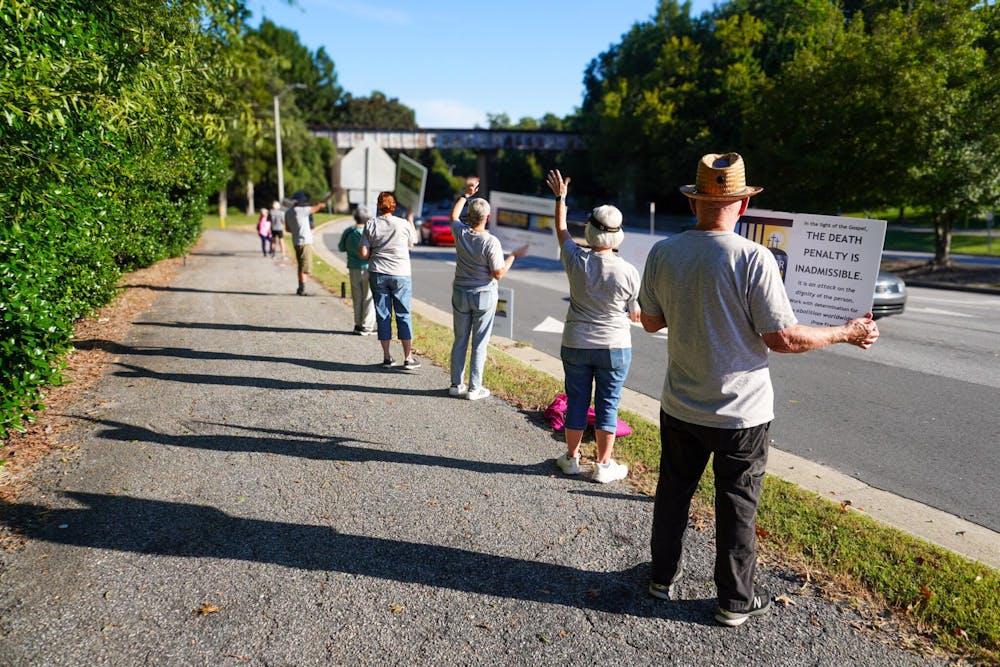
She is now a member of the North Carolina Coalition for Alternatives to the Death Penalty, a statewide coalition of organizations committed to ending the death penalty. Through the NCCADP, she takes part in marches and vigils, along with talking to other loved ones of people on death row who were executed.
According to NCCADP executive director Noel Nickle, the coalition was founded to educate the public and lawmakers and does advocacy campaigns, such as their two-year commutation campaign that led to Gov. Roy Cooper commuting 15 death sentences in 2024.
Nickle said that HB 307 has added a sense of urgency to the coalition’s efforts.
“It’s a mess, and it’s harmful, and we will stand against it as best we can with all of our partners and try to defeat the negative ramifications that have already started to take place because of it,” Nickle said.
Some of the alternatives to the death penalty that the NCCADP emphasizes are increasing resources and services for survivors of violent crime, family members of homicide victims and people who are reentering society after incarceration. Nickle also said that life without parole needs to be chosen over the death penalty.
Nickle said she is confident that they will abolish the death penalty in North Carolina, but it is a matter of resolve and time. Amid the possibility of executions restarting in North Carolina, both Nickle and Stapleford said that continuing the fight against capital punishment is a must.
“If I could tell anyone, any family that has to go through this, you know, that has a loved one on death row, do everything you can for your loved one that’s on death row,” Stapleford said. “Advocate for them. Don’t let it stop after they’ve been executed. Keep fighting.”