


After going almost two decades without carrying out executions, North Carolina is inching toward a return to the death penalty with the passage of HB 307, a new criminal justice law, in the North Carolina General Assembly.
“Iryna’s Law,” signed into law Oct. 3, eliminates cashless bail in some circumstances, establishes a new mental health evaluation protocol and restricts pretrial conditions for the release of violent offenders. But it also contains an amendment from Senate leader Phil Berger that would direct the state to find another form of execution if lethal injection — currently the state’s method of execution — is found to be unconstitutional or not available. The state would have to choose a method adopted by another state, such as the use of a firing squad.
Executions have been halted in North Carolina since 2006 over legal challenges to the use of lethal injections and issues of racial bias in death sentences, according to Matthew Robinson, a professor in the department of government and justice studies at Appalachian State University. Robinson said this amendment is a way for legislators to find alternative means to restart the death penalty.
“These are legislators who want to see executions resume in the state, and who are taking some steps through the law to try to restart them,” Robinson said. “For example, replacing lethal injection with other means like firing squad or electrocution would mean that doctors wouldn’t have to participate in executions, so that eliminates that hold up.”
Robinson has decades of experience researching capital punishment and has provided the state legislature with multiple reports detailing research and data on the death penalty in order to help them make policy decisions over the past several years.
Robinson said the law impacts those currently on death row.
As of Oct. 7, North Carolina has 122 people on death row, and Robinson said execution dates could be set for any of them as a result of this new law.
“Iryna’s Law” is named for Iryna Zarutska, whose murder, which was caught on camera on a Charlotte light rail, sparked national attention and outrage.
Robinson said the return of the death penalty was inevitable, but Zarutska’s death fast tracked the process.
“The more heinous, the more violent crimes occur, they tend to get a lot more media coverage, and more media coverage generates support among the public to do something to bring about effective change,” Robinson said. “Legislators in the state are using this as an opportunity to try to push through something they’ve wanted to get done for a long time.”
Zarustka’s death comes amid a series of high-profile murders that includes a mass shooting in Southport, North Carolina, where three people died. As a result of these murders and a recent increase in homicides, the Charlotte police union sent a letter to city leaders requesting federal assistance from the National Guard.
However, violent crime was down 25% in the first half of this year before these killings, according to police mid-year crime statistics.
A history of executions
North Carolina has a long and turbulent history with the death penalty dating back to the early 1700s. Until the 1970s, North Carolina was one of most active states in executions, according to data compiled by the Death Penalty Information Center, a nonprofit organization that compiles data and analysis on capital punishment. The data consists of research done by the DPIC and data from the National Archive of Criminal Justice Data. From 1608 to 1972, North Carolina executed 784 people — a total that ranks fifth among all states. However, since 1976, North Carolina has only carried out 43 executions.
According to Seth Kotch, a historian on the death penalty at the University of North Carolina, Chapel Hill, the state’s decrease in executions and eventual complete suspension of them largely resulted from legal battles over racial bias. This racial bias included wrongful convictions and the exclusion of African Americans from capital cases’ juries.
“We know that it disproportionately fell on people who are uneducated. We know that if you had mental illness, you were more likely to be executed, and crucially, we know that if you had a white victim, you were more likely to be executed,” Kotch said. “Hence, all of the legal delays, lawsuits, and of course, tragically, the discoveries — often too late — of people who were executed, although they didn’t commit the crime that they were sentenced to death for.”
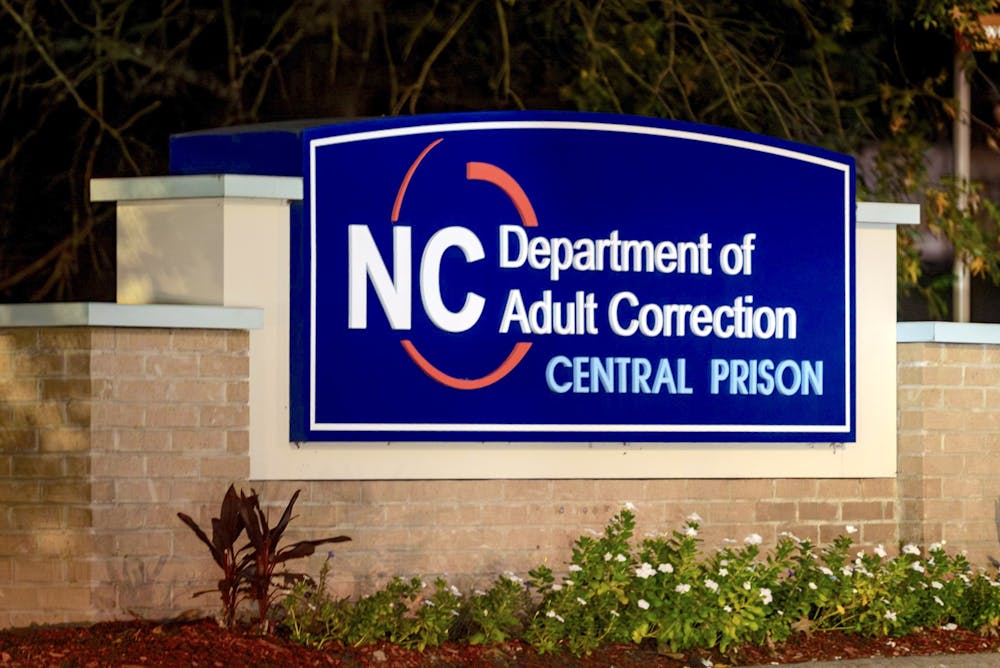
Robinson said there were also significant studies by scholars on the cost of the death penalty that turned public opinion against it. A 2009 study by Duke University economist Philip Cook found that North Carolina could save $11 million annually if the death penalty had been abolished. Kotch said Zarutska’s death is sparking a return to North Carolina’s past.
“We’ve seen a lot of newspaper, national media coverage about this tragedy in Charlotte that appears to have inspired a return to a kind of older, harsher and more brutal death penalty system,” Kotch said.
An uncertain future
“Iryna’s Law” sparked contention among state legislators as it was debated. The House voted 81-31 with 17 Democrats in support and the Senate vote saw no Democrats voting in favor of it. Democratic Rep. Pricey Harrison voted against the bill and denounced the amendment that would consider alternative methods during the House’s session on Sept. 23.
“Electrocutions, they’re even more gruesome. We stopped that a long time ago because they were so gruesome. They literally cook the prisoner to death and sometimes they begin bleeding from their faces,” Harrison said. “You and I, and the rest of the state of North Carolina, having these people executed in our name, I don’t know if you want to go there. I’m going to be a no.”
Gov. Josh Stein signed the bill into law, but called the death penalty aspects of the law “barbaric” in a video announcing his decision to sign it.
“There will be no firing squads in North Carolina during my time as governor,” Stein said in the video published Oct. 3.
Robinson said that historically this has been a partisan issue where conservative Republicans favor the death penalty more than liberal Democrats.
Despite the potential for executions to restart under “Iryna’s Law,” Robinson said he still expects the death penalty to stay uncertain for now due to the legal holdups. He said he hopes it will be replaced by life without parole because the death penalty does not achieve its objectives of reducing crime or bringing closure to victims.
“The cost associated with the death penalty clearly outweighs its modest benefits in terms of financial cost, in terms of racial bias, in terms of threats to the innocent,” Robinson said. “So my conclusion is that by any standard evaluation of policy, it’s a failed policy.”
Kotch said if the new law brings a return to the death penalty, people’s belief in capital punishment will be tested.
“We will have a really grim opportunity in the coming years to see if indeed we support the death penalty as much as we say we do, because there’s going to be a lot of killing,” Kotch said.
Kotch echoed Robinson’s statements, and said the death penalty is not a permanent solution.
“If this is indeed going to become a rising period for the death penalty, I expect that the next period would involve a fall. But unfortunately, that’s not a cure. That’s just sort of a response, and it doesn’t line us up for actual solutions to serious crimes,” Kotch said. “It lines us up for a more reactionary government and a government that is much too close to death for my taste.”