

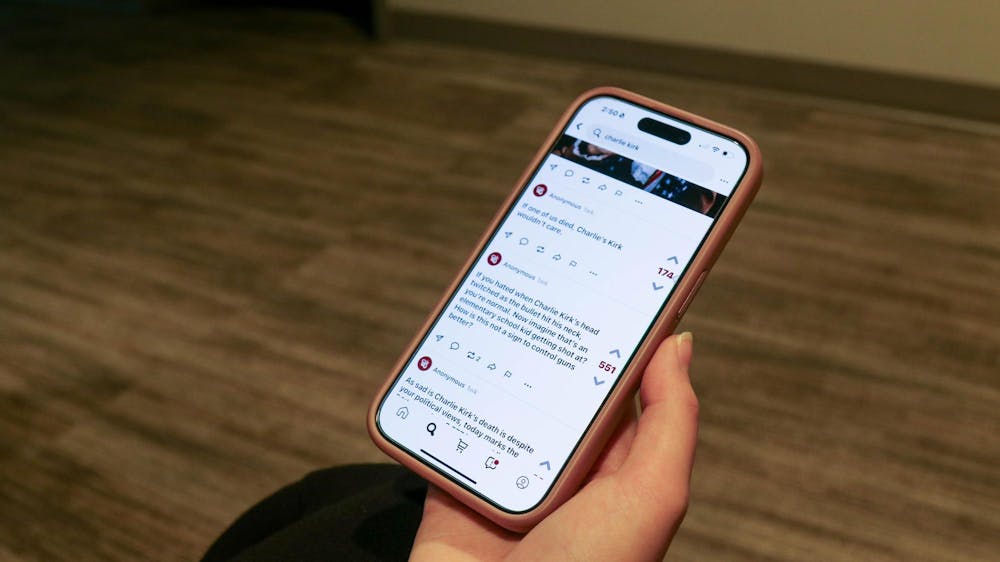
Charlie Kirk, a conservative activist and co-founder of Turning Point USA, was fatally shot during a speaking event at Utah Valley University on Sept. 10, setting off waves of shock and speculation across multiple social media platforms.
That same night and into the next morning, anonymous posts on social platforms like Fizz and YikYak appeared, with some sending love, but others sending political shame or threats.
Some posts threatened other political activists, such as American political conservative commentator Ben Shapiro. One post said, “I hope mfs get Ben Shapiro w explosive rounds,” with a comment posted under saying, “Wishing death upon someone is crazy.”
Lee Rainie, director of the Imagining the Digital Future Center at Elon University, said that Kirk’s killing has generated examples of speech rights issues that have plagued civilizations since the ancient Greeks and Romans.
“In anonymous apps, some of the questions relate to ‘how public is this speech?’” Rainie said. “If it's just communications, you can say things in letters back and forth to each other that you can't say in a public square and things like that.”
Rainie also said that material from apps such as Fizz can go public, which raises issues about who is saying what. He said that people can’t incite violence, but there are a lot of gray areas.
“People can get away with a lot in free speech,” Rainie said. “They can't commit fraud. They can't actually do hateful acts.”
To create an account on Fizz, a user needs to enter their Elon email. Chief of Campus Safety and Police Joe Lemire said that campus officers have social media, including Fizz accounts, and pay attention to what is posted.
“It's responsible law enforcement to pay attention to what's going on, as opposed to somebody else telling us, so an officer will be scrolling through to see what's going on,” LeMire said.
LeMire said that more often than not, officers will not post or comment on social media platforms, but said they use these accounts to know what is going on around campus.
“Sometimes events go on, everything from athletic events to political speakers to different stuff happening on campus, and we go through all social media to pay attention to what's being said,” LeMire said. “How many people are going to show up? What are they saying about the event? I think it's just awareness and proper planning for us.”