


After Tropical Storm Chantal brought torrential downpours with seven inches of rain, 40-mile-per-hour winds and flooding to central North Carolina on July 6, communities in Alamance County and surrounding areas are in a state of emergency, including the City of Mebane, which is currently in a water shortage.
Mebane is now implementing the city’s water shortage response plan. The current state of the plan requires all industries, businesses, offices and non-residential units to limit their total workforce to 60% and prohibits them from using outdoor water.
The response plan remains in effect as of July 11, following damage to the Graham-Mebane Water Treatment Plant caused by Tropical Storm Chantal. Flooding submerged the treatment plant under six feet of water, significantly damaging its systems. There has also been road damage throughout the county due to Tropical Storm Chantal.

Elon senior and Mebane resident Faith Almond said there are resources available to help those without water.
“I know that there's a phone number that you can call, and people will deliver water to your door,” Almond said. “I think that's really good for people that maybe can't drive or can't go out to get water.”
The Alamance County Community YMCA is offering free use of its showers to Mebane residents who are unable to shower at their homes amidst the water shortage. Almond said she loves the support she’s seen from her community to give back to those in need and from government officials making an effort to assess the damage, such as Josh Stein’s recent visit.
“It’s just something that you wouldn't expect to happen to you,” Almond said. “It's something you see on the news, and it's like, ‘Oh my gosh, this is happening to me now.’”
While living at home, Almond commutes to Elon’s campus to work in Admissions. She said many of her coworkers offered her a place to stay the night or a shower if needed.
“I'm just really grateful that people are being respectful and supportive like that,” Almond said.
Although her family’s water is still on, Almond said they are not allowed to use it unless it’s for “essential purposes,” such as limited drinking when bottled water is not available, limited restroom use and required medical purposes.
“We can't really wash our hands using that water,” she said. “We got notice that we can shower for four minutes maximum per person, but we are encouraged to use bottled water for everything like cooking, washing your hands, cleaning, that sort of stuff.”
The storm, which hit North Carolina almost one year after Hurricane Helene, left behind severe damage and flooded rivers. As of July 6, the National Weather Service reported between two and six inches of rain from the storm across Alamance, Chatham and Orange Counties. A flash flood warning was in effect through early July 7 and additional severe weather, including a tornado and damaging wind gusts, hit communities across the area. At least six people have died due to weather-related causes.
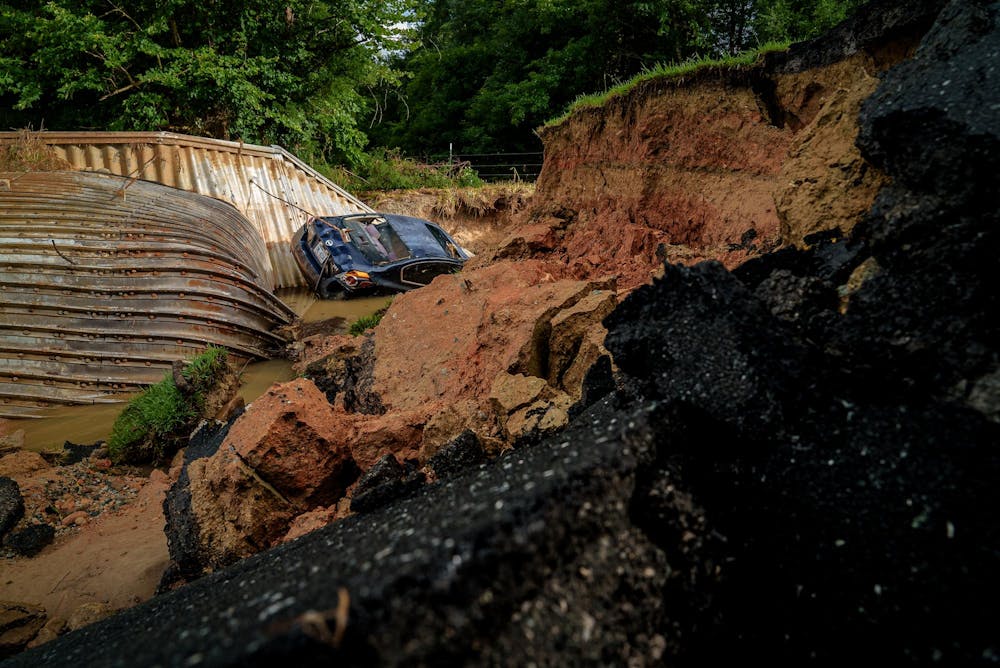
Just one week ago, heavy rains devastated parts of Texas, with flooding reported in Kerr, Travis, Williamson, and other counties. According to CNN Weather, at least 120 people died due to the storms, and 160 are still considered missing.
Elon junior Lina Ganguly volunteered in Saxapahaw, North Carolina, on Tuesday after the floods. However, that wasn’t her original plan.
“I was bringing some donations,” Ganguly said. “I had seen some Instagram posts about things that they needed. So I went over to like the donation site, and then I saw that they were also going to volunteer and stuff, and I said honestly, ‘I’m here already — might as well.’”
Ganguly, who is spending her summer at Elon University, is from Houston, Texas. Ganguly said she is no stranger to floods.
“There's a lot of infrastructure to deal with floods, whereas, flash flooding in North Carolina, from my understanding, at least, it seems to be a more recent, large issue, and unfortunately, I feel like something that people are having to adapt to,” Ganguly said.
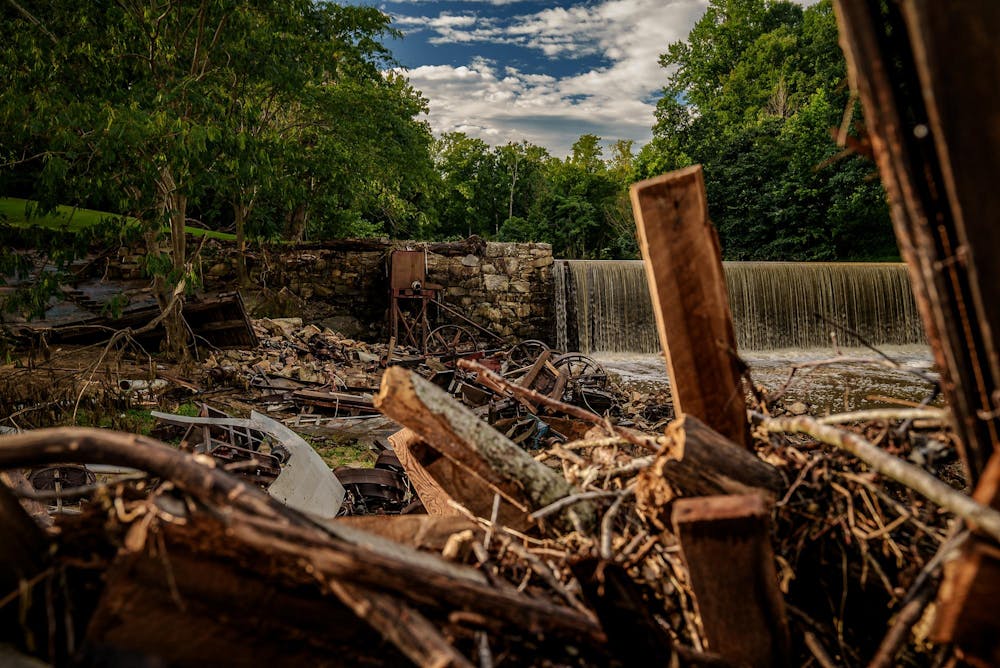
Dickey Mill, built in 1835, has been washed away by flooding on July 10 in Mebane. The mill operated for 95 years and shut down in 1930, and was restored between 1985 and 1986.
Ganguly and other volunteers went into buildings along the Haw River, like the Haw River Canoe & Kayak Company, and pulled out everything they could. She said it was sad to see the devastation because she had visited the river area with friends a few days before.
“In my mind, the contrast of having been in that exact building, and looking around, and you're like, ‘Oh, here's all the boats,’ and I remember there was some merch that I was like, ‘Oh, this is so cute. I'll buy this next time I come back,’” Ganguly said.
Power was still out in several counties throughout central North Carolina when Ganguly and other volunteers went to help. She said it felt like a horror movie.
“It was really, really dark,” Ganguly said. “We had to have little lights and stuff. Some people had headlamps. It was honestly really hard to see, and it was wet. There were a bunch of things on the floor that I kept stumbling over.”
Even when surrounded by debris, Ganguly said in a lot of ways, it was beautiful to see so many people helping to rebuild the area and supporting their communities in need.
“There's also definitely still a lot of work to be done, and they still need lots of donations and volunteers and everything, but it was nice to kind of see the community coming together for that,” Ganguly said.
According to the city of Mebane, the following Water distribution sites will be open daily while supplies last:
• Mebane Arts & Community Center (MACC) – 633 Corregidor St. (8:30 a.m. to 5 p.m.)
• Mebane Fire Station 2 – 405 N. First St. (8:30 a.m. to 5 p.m.)
Nia Bedard contributed to the reporting of this story.