

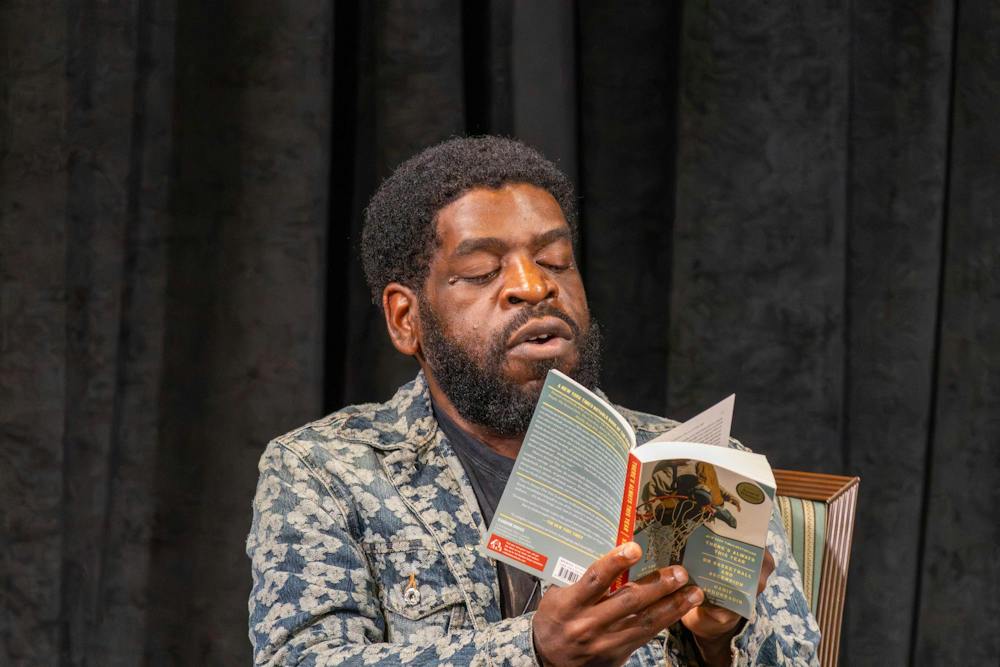
Hanif Abdurraqib believes one of the most important things students can do is fail.
The author and poet spoke to Elon students about basketball, community and success as the Common Reading Lecturer Sept. 29 in Alumni Gym.
Abdurraqib’s book, “There’s Always This Year: On Basketball and Ascension,” was selected as Elon’s 2026 Common Reading for freshmen. For college students who are uncertain about their futures, Abdurraqib said not knowing what comes next is not something to fear.
Abdurraqib said that people tend to agonize about the hypothetical possibilities of their future.
“I do this often. When I do this, when I’m at my worst or best at doing it, it is coming at the expense of the present that I’m allowing to slip by,” Abdurraqib said in an exclusive interview with Elon News Network.
Abdurraqib said that students often spend too much time worrying about what they will lose or what their future will look like instead of paying attention to the now.
“You should bask in the not knowing,” Abdurraqib said.
That relationship with time is central in Abdurraqib’s book. While his book is structured like the quarters of a basketball game, Abdurraqib said the book ultimately became about much more than the sport.
Abdurraqib said he approaches writing with the belief that he does not necessarily know where the work will take him. He said the first draft of his book was around 125,000 words, while the final book was around 88,000.
“I really love the idea of abundance in the draft space because that is when ideas really come to life,” Abdurraqib said.
The same idea of embracing the process applies to failure, too.
This advice is a main theme in the book and shows the tension between wanting to know what comes next and recognizing the importance of the people and experiences that make up current moments.
Abqurradib also discussed how his relationship with his hometown of Columbus, Ohio, affects his writing.
“My life in this place is tied less to the architecture and more to the atmospheres of the individuals who live here, alongside me, before me,” Abdqurraqib said.
Abdqurraqib said he thinks the athletes who don’t end up playing professionally still deserve to have attention, recognition and to show the big impact they had on his community.
During the lecture, Abdurraqib read a section of his book about Kenny Gregory, one of the non-professional players that personally shaped him and lived just a few doors down.
The reading described everyone in the neighborhood had stopped what they were doing, kept quiet and huddled around the television together watching him slam a dunk. Gregory won the 1997 McDonald's All-American Slam Dunk Contest. According to Abdurraqib, Gregory had become larger than life.
For students navigating college, graduation and what comes next, Abdurraqib said the uncertainty itself can be valuable. The goal, he said, is not necessarily to know exactly where you are going, but to remain present enough to appreciate where you are.
Kathan Gandhi contributed to the reporting in this story.