The Eli Whitney Fire Department released a press release saying that PFAS scientifically known as per- and polyfluoroalkyl substances, were found in the water supply from its well. The discovery came after tests were conducted as part of the statewide firefighting research program passed by the legislature in 2023. As part of this program, the North Carolina Collaboratory tested water wells at 411 rural fire stations across North Carolina.
PFAS are large groups of man-made chemicals that are extremely hard to break down due to their strong carbon-fluorine bonds.
Elon junior and environmental engineering major Sophie Remisio is currently conducting research about PFAS and their effects on health. Remisio presented her research at last year’s SURF Day,where she spoke about her plans for a water filtration system that could lessen the effects PFAS may have on people’s health.
She said PFAS can be found in nearly everything on the consumer market, giving examples such as nonstick cookware, guitar strings, fire extinguishers and makeup.
“In the early 2000s, everyone started to figure out that it's very carcinogenic,” Remisio said. “It’s really hard to remove from water, and so companies have shifted over from using longer chains of PFAS to using shorter chains.”
However, Remisio said traces of PFAS are often found in water systems because of their durability and how common the chemicals are.
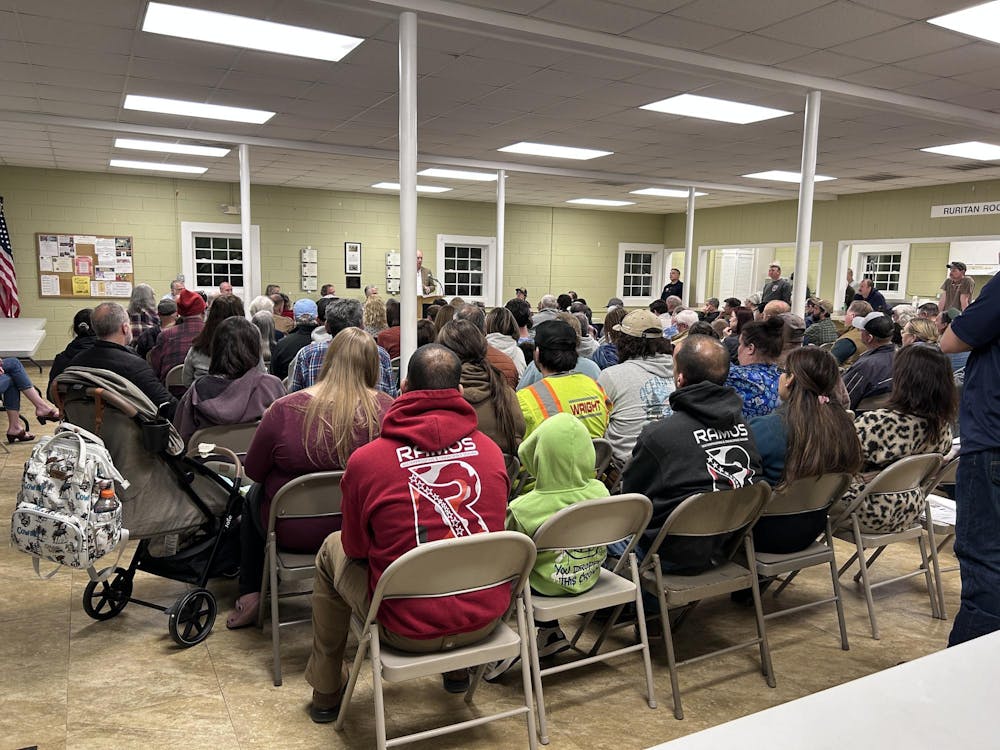
Following the announcement, a community meeting was held at the Eli Whitney Fire Department on Feb. 10 in partnership with the Department of Environmental Quality, the Department of Health and Human Services, the NC Collaboratory and the Alamance County Health Department to further explain the situation.
Southey Blanton, a Burlington resident, was in attendance and said “There were a few people in the audience who seemed to be, I think, they were justifiably, a little spooked.”
Blanton is running for North Carolina District 25 senate in November and said he was there to support his community. However, he said many in attendance hoped to learn the next steps for those living in the area.
“I remember distinctly, there was one member of the audience who raised their hand, and their question was essentially to the experts and the people talking to us, and they're like, ‘you're smart people. Why don't you know what's going on?” Blanton said.
Since receiving the notification, the Alamance County Health Department said it is working to maintain open and accurate communication with the public.
“We're kind of serving as conveners,” said Tony Lo Giudice, director of the Alamance County Health Department. “Making sure we're getting all the folks in the room that we're communicating effectively with firefighters, but also the adjacent community.”
Lo Giudice said the health department wants to remain transparent while addressing any PFAS concerns the public has. He said they have created a website, which he is hoping can be a valuable tool for people with concerns.
“As soon as we get new information, we push it out and we put it up on the web page,” Lo Giudice said.
According to the website, 32 properties have been selected and notified for further testing surrounding the Eli Whitney area, with testing beginning in mid-to late February and results expected by mid-March.
According to Lo Giudice, a North Carolina laboratory, along with researchers from universities across North Carolina such as Duke, are driving the research.
Blanton said he hopes the issue encourages local leaders to take a deeper look into water filtration systems and safety. “I'm hoping that at a state or even national level, it shines a light on these sort of issues where whether it's federal grant funding or state appropriations, that we can help that come not only the teams who are getting out there to research and investigate and find these issues out, but also funds or resources for families,” Blanton said.