

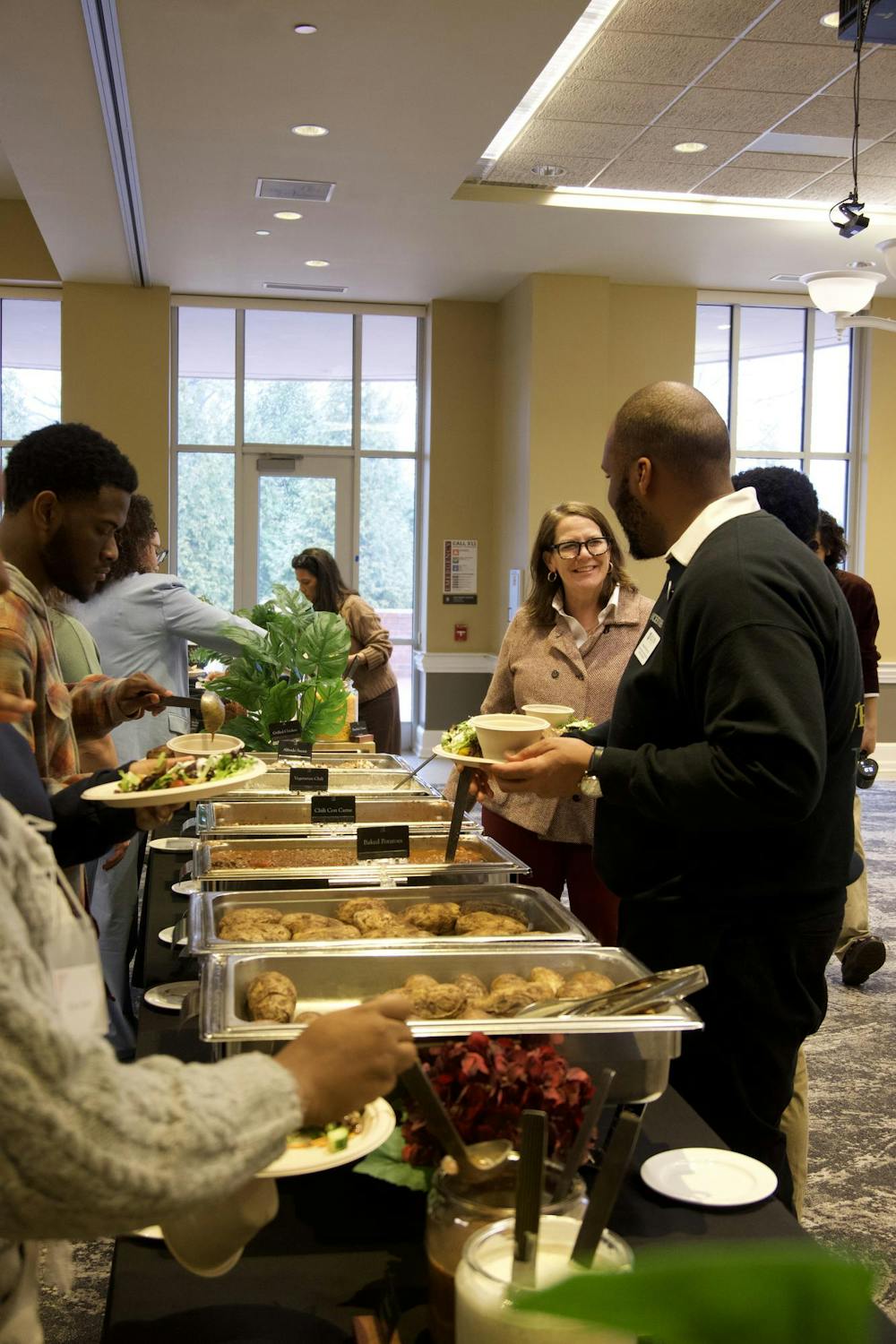
The Center for Race, Ethnicity and Diversity Education hosted the 12th annual Black Solidarity Day Conference where students, faculty and staff, and community members gathered together in McKinnon Hall to discuss topics on allyship, anti-racism, anti-black racism, wellness in Black communities, Blackness in a global context, intersectionality in Black communities and socio-political activism.
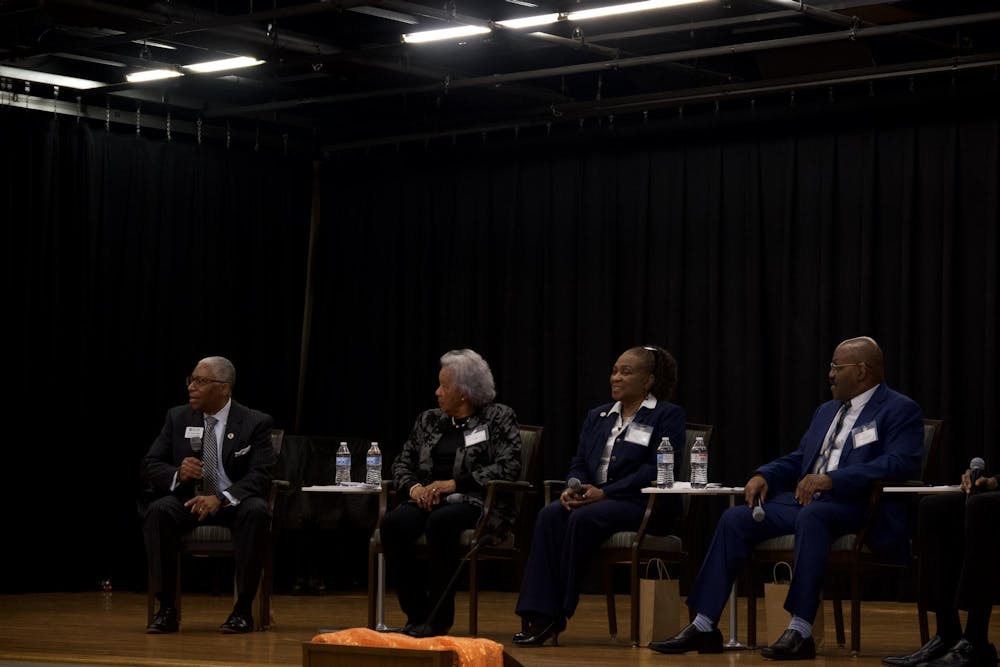
“The dream was the degree because I knew once I had that piece of paper, I could move to other arenas and do other things,” said Gail Parker ‘70, the first African American woman to graduate from Elon University, during a panel discussion at the conference.
Black Solidarity Day was founded in 1969 in efforts to demonstrate Black liberation, and in 2014, Black students at Elon implemented the day as a “form of protest, solidarity amongst one another, and as a call to action for the university” according to Elon University.
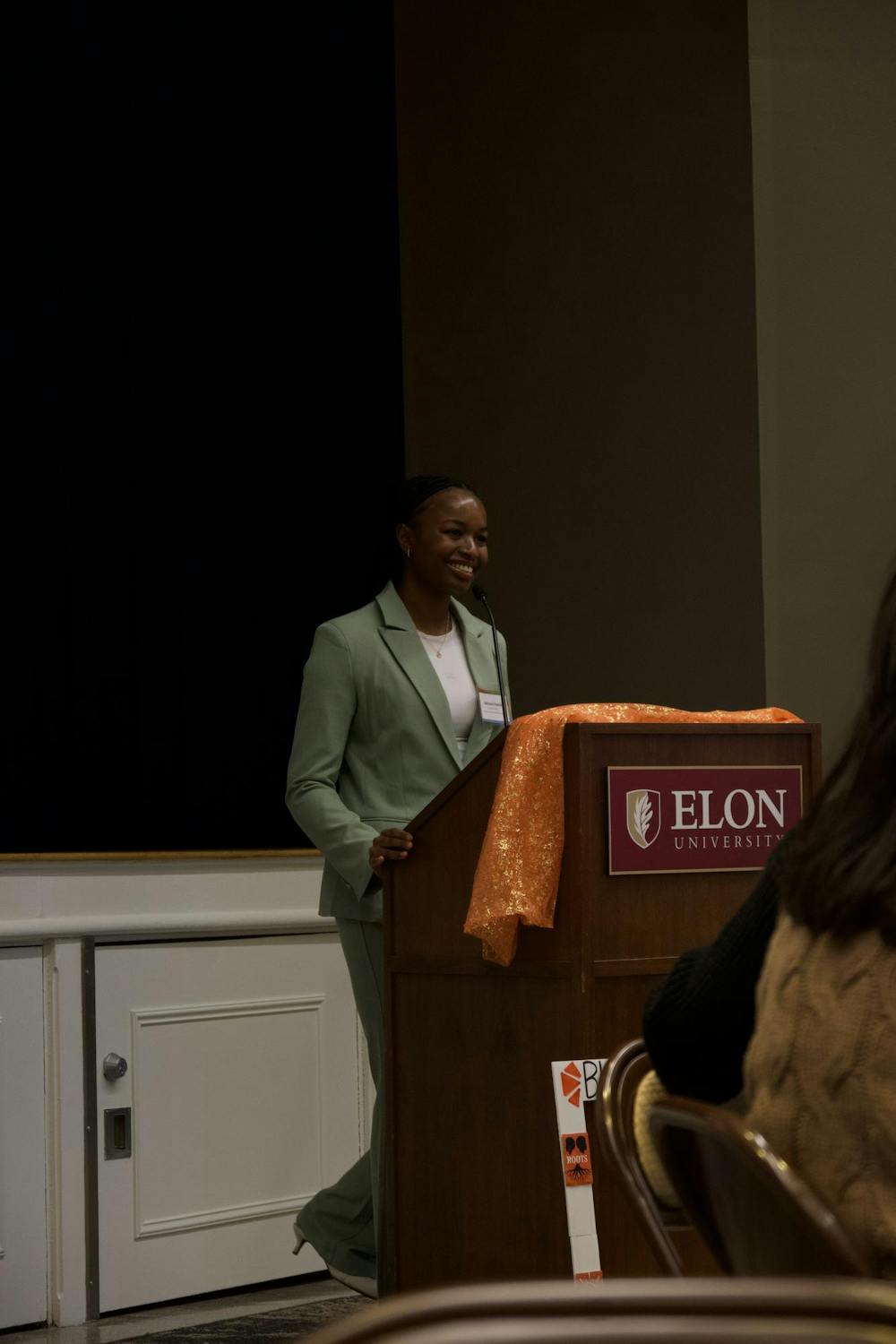
Elon sophomore and CREDE Student Coordinator, Autumn Parish, kicked off the event by explaining the importance of creating spaces where everyone truly belongs. She also introduced the significance of the first keynote panel session at the event, highlighting the panelists’ contributions to the university and the greater community.
Gail Parker ‘70, Dr. George Talbert, Janet Williams, and Donald McLaghlin ‘76 gave empowering advice to attendees about being the first to do something regardless of systemic barriers and institutions at play.
Assistant Professor of Marketing, Dr. George Talbert, spoke about creating opportunities for others as a “first.”
“Once you get in the room, please leave the door open and make sure that you minimally bring two other people with you,” Talbert said during the panel.
In an interview with Elon News Network, President Connie Ledoux Book shared her thoughts on how great the message was.
“When you have an opportunity to be first or have access to something, keep the door open and challenge yourself to bring more people through that same door,” Book said.
Vice President for Finance and Administration and Chief Financial Officer, Janet Williams, also talked about the empowering nature of “being first.” She spoke about her experiences and how one can act as a mentor by supporting and creating a network for the future, demonstrating operational and performance excellence, and creating a different cultural environment that is diverse and inclusive.
Black Culture Society, known today as the Black Student Union, was a first for the founder and former president, Donald McLaughlin ‘76. During the panel, he explained how they started in 1974 with “nothing and nowhere to go,” but once the flame began, they were able to unite and keep moving forward. McLaughlin expressed his gratitude to the now Black Student Union.
“I’m here to say that I’m so proud to see that the flame hasn't gone out and it's gotten bigger,” said McLaghlin.
Once the panel concluded, attendees had the opportunity to listen in on five different educational sessions that continued the conference.
- Aniya Jerkins, Assistant Director of Student Involvement: “It’s All Greek to Me: What is a Black Greek?”
- Shane Atkinson, Associate Chaplain for Muslim Life: “Honoring the Legacy of Imam W.D. Mohammed: Roots, Routes, and Resistance”
- George Dou, Assistant Director of the CREDE: “Freedom Teaching: The Strategy of the Civil Rights Movement”
- Kenneth Brown Jr. ‘19, Assistant Director, First-Generation Student Support Services: “Fugitive Files: How Stories of Resistance Can Shape Current Movements for Justice”
- Kendall Lytle ‘26: “The Weight We Carry: How Black Fatigue Shapes Student Experiences at Predominately White Institutions”
Lytle’s session revolved around her undergraduate research and focused on the idea of Black fatigue and weathering in our social climate today. Black fatigue is the emotional, physical and mental impact of racism and discrimination on the mind, body and spirit. It is an experience that causes a level of strain that negatively impacts someone.
“One of my biggest hopes with doing my research was to be able to make sure that not only Black students were aware of this term, but also white students and others from diverse backgrounds,” said Lytle.
Mikayla Williams, Elon senior and a CREDE student coordinator, discussed the relevance of this conference and how her team planned with intention by focusing on connecting students to faculty, staff and the featured speakers.
“Seeing faculty, staff, and students come together to learn more about what it means to be a Black student and be a Black person in the U.S. is really empowering,” Williams said. “We’ve never done a panel, and I think being able to hear from so many different voices and places around campus is something that is really unique and specific to Elon’s Black Solidarity Conference.”
Abdul Malik Harrison, assistant director of the CREDE, sees solidarity as being all about love. He said no matter if the community believes in a higher power or not, they should all center solidarity around the fact of love.
The day ended with BSU hosting a Mocktail Hour where students reflected on this year’s Black History Month theme, “History in the Making,” painted and socialized.
Black History Month at Elon will conclude with Africa Night on Feb. 28 in Alumni Gym from 6 to 8:30 p.m.