

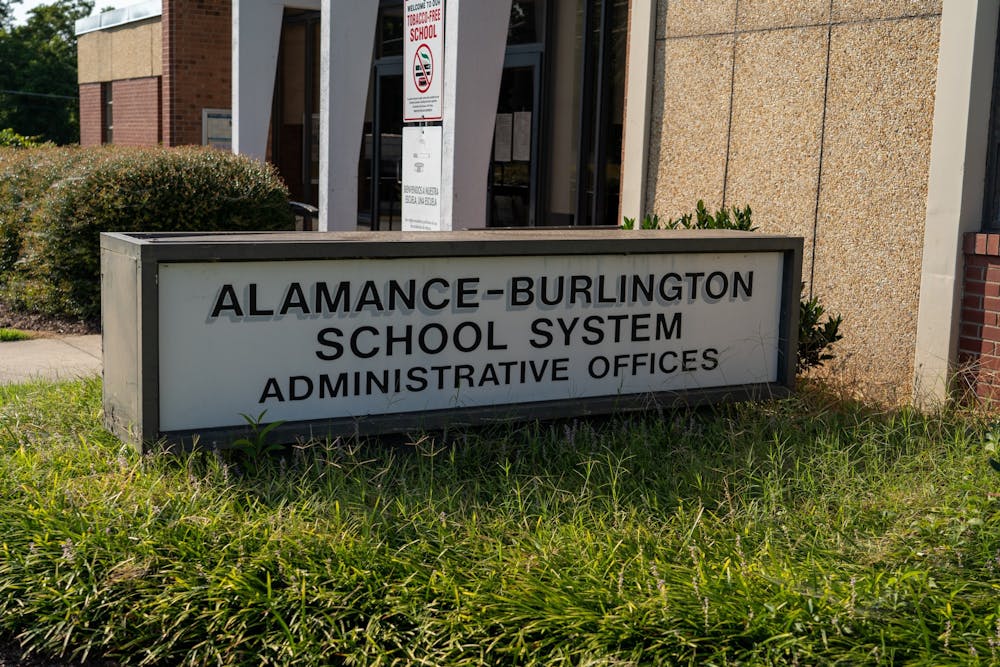
The Alamance-Burlington School System has been designated as “low performing.” This is the first time ABSS has received this designation since the Department of Public Instruction began using its A-F grading system in 2014.
The grade identifies ABSS as low performing out of North Carolina’s 115 public school districts for the 2024-2025 academic year. With more than half of its schools receiving a failing grade, ABSS is the largest district in the state to carry that title.
The DPI grades schools on a number of factors including enrollment, attendance, performance and test scores.
In a written statement to Elon News Network, ABSS Superintendent Aaron Fleming wrote that the data outlines the significant challenges the district has faced. Fleming was unavailable for comment.
“My initial focus has been on stabilizing our finances and strengthening our facilities during my first year with the district,” Fleming wrote. “We have already initiated strategic leadership changes and are implementing new solutions to support our teachers and students as we address academics. These steps are part of a comprehensive plan for sustainable improvement across the district.”
Fleming also wrote that he is confident in the dedication of ABSS educators, and the district is committed to urgency and working collaboratively to ensure every student in our district is successful.
According to NCDPI data, 20 of the district's 36 schools, or 55.6%, received a D or an F in the 2024-25 school year. The Early College at Alamance Community College earned the district's only A.
ABSS parent Krista Johnson has a 17-year-old student at the Early College, and said she appreciates the foundation of the Early College program — especially the separation of high school classes versus college preparation courses.
The grade of 94 percent from the Early College includes a 92.4% academic growth rate, which has exceeded previous years. Johnson said that the high grade is reflected in students wanting to be enrolled at the school.
“The kids who are in my teenagers’ graduating class are the kids that they started with as freshmen,” Johnson said. “There's a lot of motivation to continue performing at that expected level, but I think the support is probably what has kept a lot of them there.”
With a total of 231 students enrolled during the 2024-25 academic year, the Early College had a 0% suspension and expulsion rate, and a 0% rate of criminal acts, bullying, law enforcement referrals and arrests. The state of North Carolina had an average of 7.39% combined.
The ABSS 2025-26 Budget Worksheet breaks down the program costs for the year, which includes a total of $59,047,151 for the 2025-26 school year. Although the budget increased $5,720,000, Johnson said if the budget were given more attention, then the district wouldn’t have failing grades.
“If we were able to keep our teachers happy and keep them at an employable salary, where they're not having to supplement with other jobs, or they're not leaving the profession entirely, they would have more incentive, maybe in some ways,” Johnson said.
Johnson said that she is grateful that her teenager was able to have a good experience with the Early College program, and it seemed like the best fit for them.
“It's really jump-started my teenager's adult life,” she said. “Nothing's perfect, obviously, and overall, I'm just really happy that it exists, and I'm happy that they have the scores to kind of prove that this is a great, great idea.”