

Throughout the summer and the last several months, North Carolina legislators have enacted almost 70 bills, but have yet to pass a state budget despite the start of the new fiscal year on July 1.
The House and the Senate have struggled to agree on a version of the two-year, $66 billion budget. Raises for state employees and teachers and discussions on future tax cuts were at the heart of some of the disagreements between chambers. The House’s version of the budget has higher raises for state employees and wants to slow future tax cuts. North Carolina is one of three states that have yet to enact a new budget for this fiscal year.
The state isn’t required to pass a new budget — spending remains at current levels until a new budget is enacted — but it still could have negative effects until a new one is passed. Sally Hodges-Copple, a public policy analyst at the North Carolina Budget and Tax Center, said the lack of a new budget prevents certain tax cuts from being paused. She said certain state income tax cuts have disproportionately benefited the “wealthy few” and haven’t met the needs of North Carolinians.
“Without a state budget that pauses those tax cuts and begins to invest again in North Carolinians’ well-being, legislators aren’t delivering for people in the way that they need to,” Hodges-Copple said.
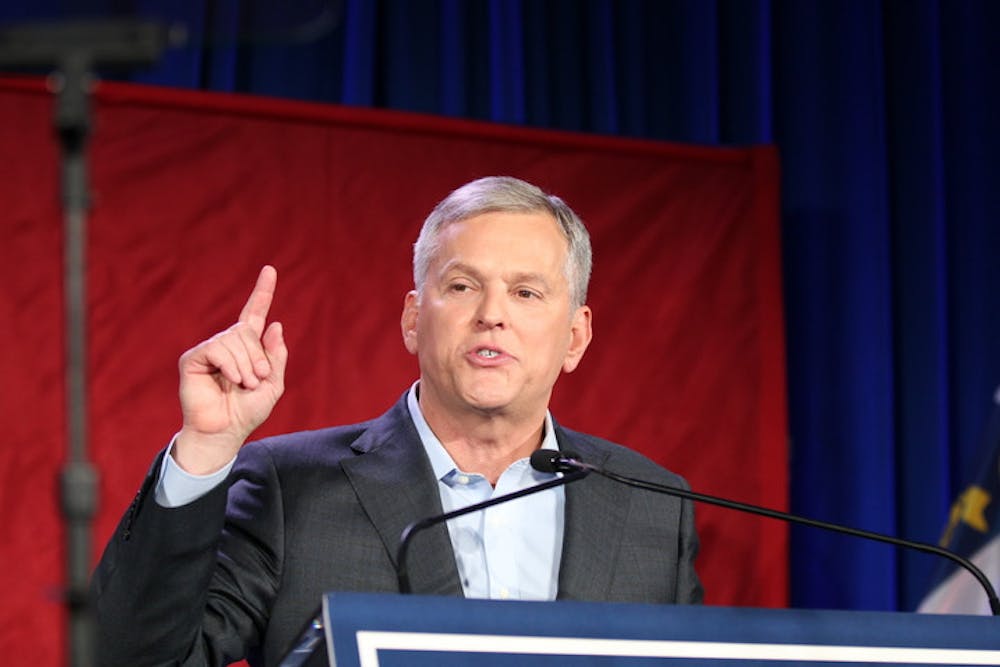
Gov. Josh Stein also proposed a version of the budget, in which he called for a pause on scheduled income tax cuts and also addressed living costs concerns for North Carolinians.
Hodges-Copple said the failure to pass a new state budget is concerning.
“It means that needs that North Carolinians have identified for a long time in public education and housing affordability and childcare access and affordability will continue to go unmet,” Hodges-Copple said.
Michael Bitzer, a politics professor at Catawba College, said the disagreement between the House and Senate illustrates some of the differences between the chambers, despite both being controlled by Republicans.
“When you’ve got the House and the Senate controlled by the same party, but they’re not necessarily all unified, because they are two different chambers with two different priorities, that’s just kind of another wrinkle in this kind of legislative process,” Bitzer said.
North Carolina legislators managed to enact a “mini-budget” bill to fund urgent needs such as Medicaid, state construction projects and teacher pay raises. Stein signed the bill into law but called it a “band-aid” bill and said it fails North Carolina.
After a summer break, lawmakers reconvened on Aug. 26, which began the process of resuming discussions on the budget.
Over the last six months, lawmakers passed almost 70 bills including another Hurricane Helene relief bill as they neared their summer break. It placed $700 million in a reserve fund and allocated $500 million in funding that supports crop recovery and infrastructure grants.
Other bills passed include one that allows North Carolinians to use non-commercial expired driver’s licenses up to two years past the expiration date until 2027 in order to alleviate the backlog of appointments at the DMV. Lawmakers also passed a bill that bans students in K-12 schools from using cellphones during instructional time. Stein signed a bill into law that prevents the release of name, image and likeness contracts involving student-athletes at public schools.
Stein also vetoed several controversial bills that passed both chambers. These bills cover a wide range of issues, including allowing permitless, concealed carry of a handgun, eliminating DEI in school and state government agencies and increased cooperation with federal immigration enforcement.
One of the vetoed bills could affect North Carolina colleges, as Senate Bill 558 prohibits public universities from maintaining offices or divisions “referred to as or named diversity, equity, and inclusion.”
Lawmakers haven’t voted to override the vetoes of these specific bills yet, but overrode eight other vetoed bills. The bills that were overridden and passed into law include the repeal of a carbon reduction mandate for Duke Energy, moving some power over charter school oversight from the State Board of Education to the Charter Schools Review Board, school library regulations, the official recognition of two sexes in North Carolina and allowing trained staff to carry concealed weapons in private schools.
Several House Democrats crossing party lines and voting to override the vetoes proved crucial as the GOP is one House seat short of a veto-proof supermajority. Bitzer said party unity will be very important to the possibility of the more controversial vetoed bills being overridden.
“As you’re dealing with fairly controversial issues, the question is, does party unity really hold tight or are there some Democrats that are willing to buck against their party, and particularly the governor, to override the veto,” Bitzer said.
With a Republican-dominated legislature and a Democratic governor, Stein is already on pace to match former Gov. Roy Cooper’s 29 vetoes in the 2023-24 legislative session. Bitzer thinks this pattern of vetoes and overriding them is the new norm of North Carolina politics.
“With them being one vote short in the House, that puts a lot of pressure on potential moderate, maybe slightly conservative Democrats to feel the pressure of casting a vote that some of their voters back home want. Or there are deals cut through the budget to say, ‘You vote for this piece of legislation, we will include your request for budgetary allocations.’ Those are kind of the dynamics that we see now,” Bitzer said. “They may not have an outright numerical supermajority, but there’s the potential for a working supermajority with one, two, maybe three Democrats.”