

From the mountains of Czechoslovakia to the rocky terrain of northern Israel, the panic and loss of her adolescence stays with her.
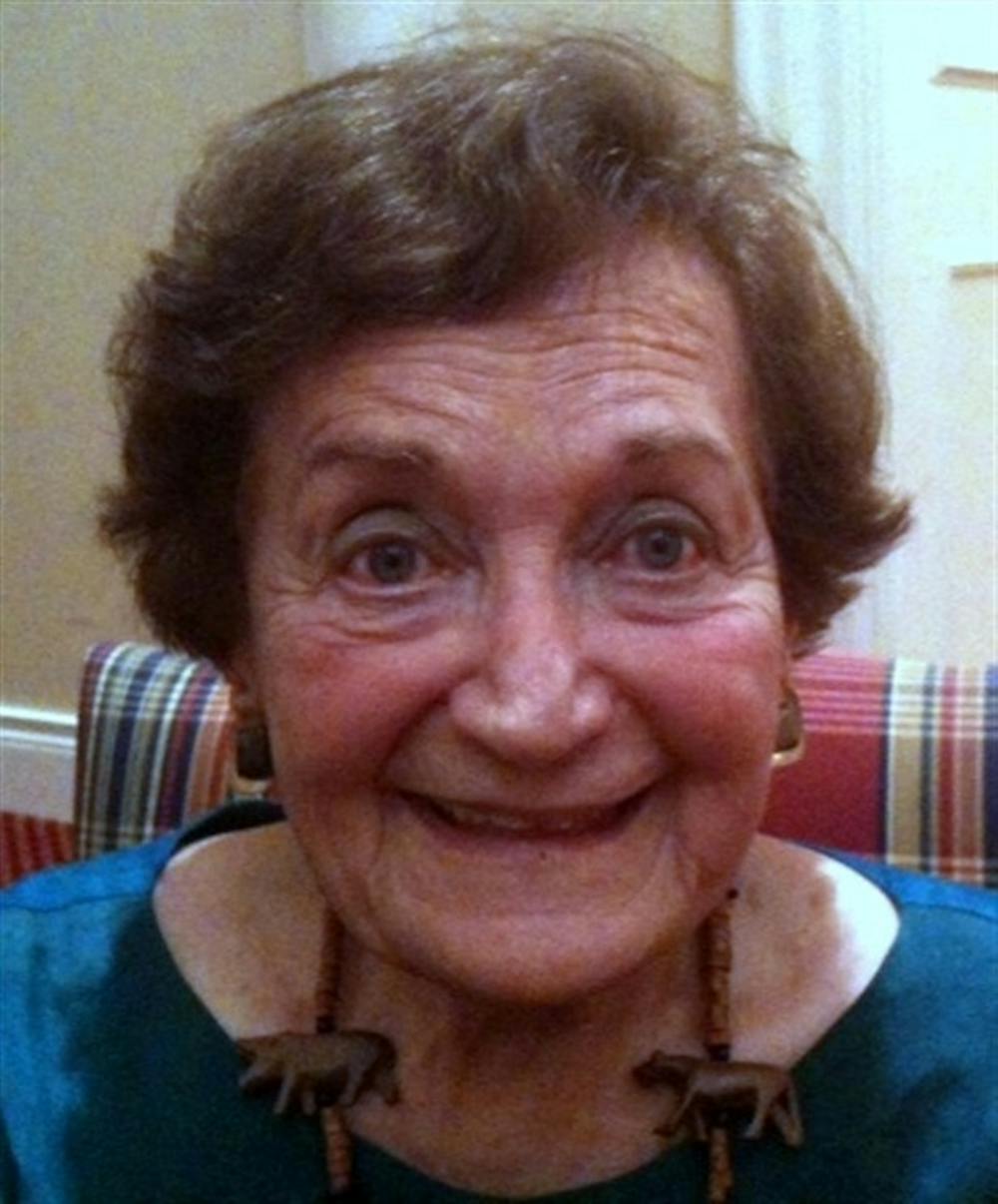
Marlene Appley, a retired professor of anatomy and physiology, is a Holocaust survivor. She recounted her experience fleeing from the Nazi regime and the effects it had on her adolescence Tuesday in Koury Business Center at Elon University. The lecture marked the first event in a series of commemorative activities in observance of Holocaust Remembrance Week.
“I’m a survivor, and even though my fate isn’t as dark as many of the other victims, I nevertheless was robbed of an innocence in my childhood from ages eight to 14,” Appley said.
The sudden intolerance during the Nazi regime was startling, according to Appley. She grew up in the Ore Mountains of Czechoslovakia, in a town she said had a large Jewish population since the 15th century.
“Czechoslovakia was a free and democratic country,” she said. “It had laws that protected the rights of all minorities and religions. Yet when I was growing up, I lived in fear of Adolf Hitler’s Final Solution.”
But what Appley described as a beautiful place to grow up quickly became a dangerous potential war zone. Western Czechoslovakia was a highly industrial area with nearly 3 million ethnic Germans, and Hitler therefore set his sights upon the land.
Following the signing of the Munich Pact by France and England, the Holocaust came closer to Appley’s doorstep.
“One evening I was with my sister, and we had the radio on,” she said. “Suddenly, the program stopped and there was Hitler speaking about the extermination of the Jews, who were responsible for all of the problems in Germany and the world. I remember looking at my sister and saying, ‘I guess we’ll never be grownups.’”
Terror continued to spread throughout western Czechoslovakia. Appley said she carried a gas mask to school along with her books, for fear of a gas attack. Her chemistry teacher called her “the Jewish one.”
One morning in March 1939, Appley’s father told her to pack a suitcase. He was born in Chicago, and the family would return to America as soon as possible. For now, they were leaving for Prague, where they would await passports for the United States.
[quote]"Suddenly, the program stopped and there was Hitler speaking about the extermination of the Jews, who were responsible for all of the problems in Germany and the world. I remember looking at my sister and saying, ‘I guess we’ll never be grownups.’" -Marlene Appely, Holocaust Survivor [/quote]
In Prague, German soldiers were everywhere, she said. Although she knew some of them previously, relationships were forced to change.
“One day, I was walking through a big square and there were some German soldiers coming toward me,” she said. “When I looked, I recognized one of the soldiers as the friend of my oldest brother. He used to carry me on his shoulders, and he came to dinner in our home every night. We just looked at each other for a moment that I will never forget.”
In July 1939, the family escaped to New York. Appley said she felt tremendous guilt for abandoning the friends and family that remained in oppression.
To honor those who suffered under the Nazi regime, and provide a safe haven for those who escaped, she went to Israel in 1949 to help build a kibbutz, a collective agricultural community that served as a community for Holocaust survivors.
“(The Kibbutz) is something that is there for everyone,” she said. “We had to have a place where people could go if they were ever in a situation. And that might be a deterrent for another Holocaust.”