

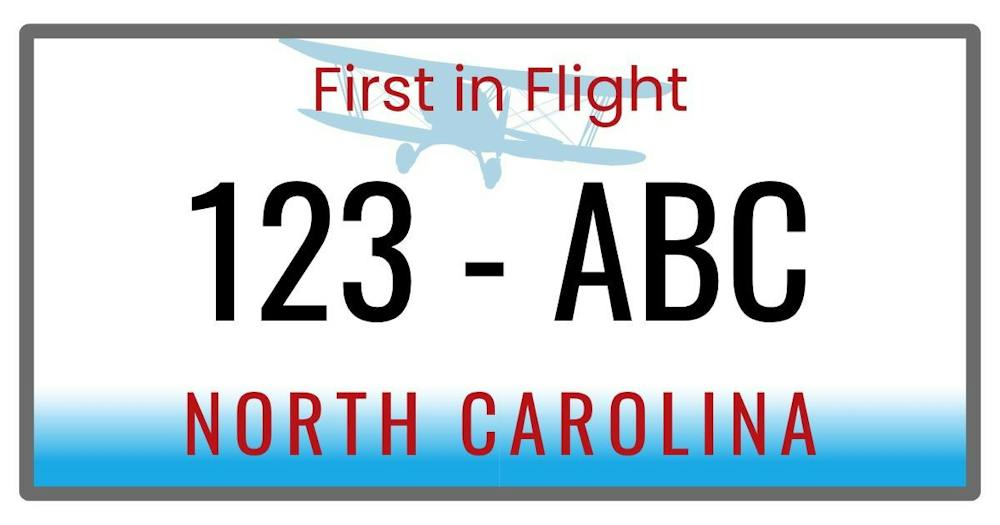
Starting Oct. 1, North Carolina has switched from paper vehicle registration to an all-electronic system.
Drivers no longer receive license plate stickers or physical registration cards in the mail. Instead, registration will be available for electronic download.
The change comes after a new state budget bill removed funds previously used for paper registrations. Passed on July 7, the North Carolina Division of Motor Vehicles’ budget was reduced by $4.8 million. Lawmakers initiated the cut to eliminate physical documents and lower administrative costs.
Marty Homan, communications director for the North Carolina Division of Motor Vehicles, said this shift won’t have much of an impact on the current process of checking vehicle registration. He said law enforcement officers already use their own digital systems to check a license plate’s validity.
“They either have license plate readers in their vehicles or they’ve got their computer right there next to them where they’re punching in your license plate information,” Homan said. “And they know before they get out of their vehicle and approach your window whether you are current or not.”
Drivers will still have access to physical registration cards if they want them. Drivers can now download a copy of their registration from the NCDMV website and print it themselves or visit a DMV location in person and have it printed for $5.
Homan noted that the process for renewing vehicle registration will remain the same, and drivers will still have to pay fees and taxes. The only thing changing is they will not automatically receive a paper card in the mail.
Homan also said drivers are advised to remove existing registration stickers after the change takes effect.
“That way you don’t run into a case where, you know, there may be some confusion with law enforcement if you happen to be in another state and they’re not familiar with our process and they see an expired sticker,” Homan said.
North Carolina driver Melissa Carner-Baynes said she feels optimistic about the change.
“Here, you have user error, you have older people that really depend on those papers. So it probably has some kinks but it will be a faster process,” Carner-Baynes said.
Homan said he believes that after getting through the first year of this process, drivers will begin to get used to the change and realize it is not a major adjustment.