

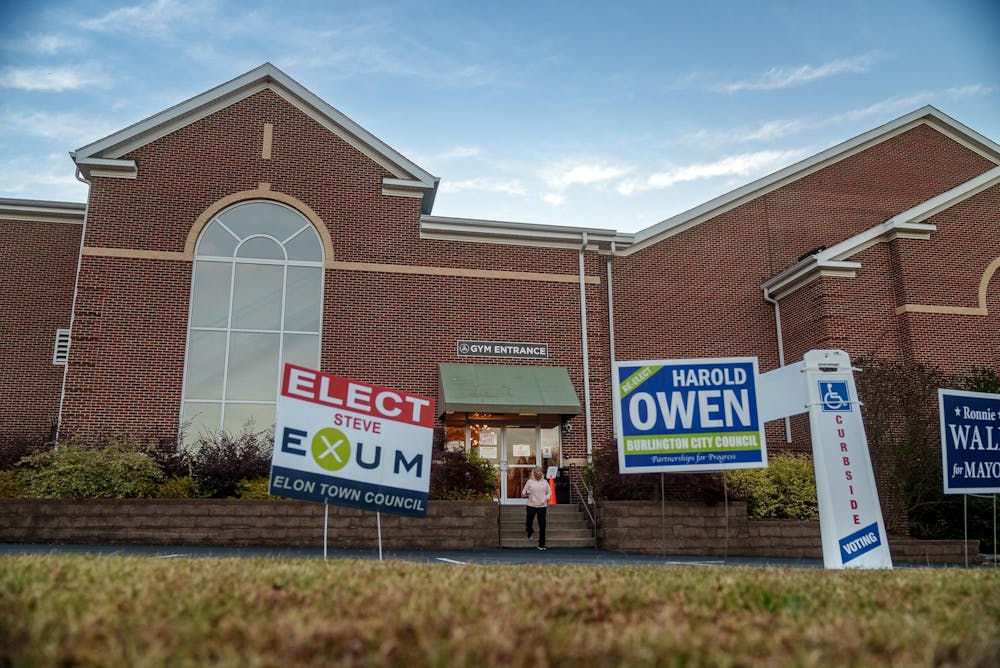
Gov. Josh Stein vetoed a sweeping elections reform bill that would reduce early voting days and expand the state auditor’s authority in elections. The legislation now heads back to the state House of Representatives.
House Bill 958 includes measures to reduce early voting periods for primaries and special elections from 17 days to 10 days, allow precinct officials to be removed by county boards on the day of an election and require the state auditor to conduct post-election audits of county election systems. Stein vetoed the bill Aug. 17.
The state auditor was previously given more authority over elections in Senate Bill 382, a Hurricane Helene relief bill that transferred control of the state Board of Elections from the governor to the state auditor.
Rebekah Whilden — the executive director of left-leaning advocacy group and think tank Carolina Forward — said the group celebrates Gov. Stein’s veto and will continue urging lawmakers to vote no on HB 958.
“Our law should make things easier for North Carolinians, like expanding early voting and making sure that we’re not taking away those days,” Whilden said. “We don’t need to be creating new hurdles that make it harder to cast a ballot and to have it counted, and HB 958 moved us in the wrong direction of that.”
The legislation was voted for along party lines in the state House of Representatives and Senate — only Republicans voted in favor of HB 958. Republicans hold a three-fifths majority in the Senate, but are one seat short of a three-fifths majority in the House. Stein’s veto could stand unless Democrats or unaffiliated legislators side with Republicans. The General Assembly does not plan to vote again until after the midterm election.
Republicans said HB 958 would make elections more secure and efficient, while Democrats accused GOP lawmakers of attempting to stay in power ahead of the 2026 midterm.
Sam Hayes, a Republican and the executive director of the N.C. Board of Elections, issued a statement following Gov. Stein’s veto, saying that his office supports the changes presented in the bill and hopes the General Assembly will revisit it later in the year.
“The State Board’s responsibility is to ensure that our voter rolls are accurate and that every eligible voter can participate while maintaining the security and integrity of our elections,” Hayes said in a statement. “We welcome the opportunity to work with legislators on thoughtful, practical improvements that strengthen those goals.”
Representatives from the Alamance County Board of Elections were unavailable for an interview, but sent a statement to Elon News Network saying the bill would not impact the midterm election in November.
“Shorter early voting days is the main impact that voters would see,” the Alamance County Board of Elections said in a statement. “N.C. additionally offers no excuse vote-by-mail and polls are open on election day from 6:30 a.m. to 7:30 p.m..”
A study published by the Elon University Poll on Aug. 12 found that while 63% of N.C. voters are somewhat or very confident this year’s election process will be fair, there is a division between parties. Thirty-three percent of Democrats said they are very confident, compared to 23% of Republicans. Twenty-one percent of Republicans said they were only a little confident, compared to 15% of Democrats.
Jason Husser, director of the Elon University Poll, said that according to the study, Republican voters are more likely to stand behind a measure like this. The Elon Poll found 64% of Republicans saw voter fraud as a major problem compared to 23% of Democrats.
“If you’re in the group of folks that say it’s not a problem at all, then it just looks like these are pieces of legislation set up to favor one party or another,” Husser said. “So there are definitely two different perceptions here.”
Other measures proposing changes to election systems have been introduced in the General Assembly. House Bill 834 extends the time period for correcting voter registration forms from three business days to five and allows country boards to correct registration for deceased voters. Gov. Stein signed the bill into law on Aug. 11.
North Carolina voters will vote on a new amendment to the state Constitution in November, requiring all voters to present photo identification before voting and eliminating previous exceptions for mail-in voting.