

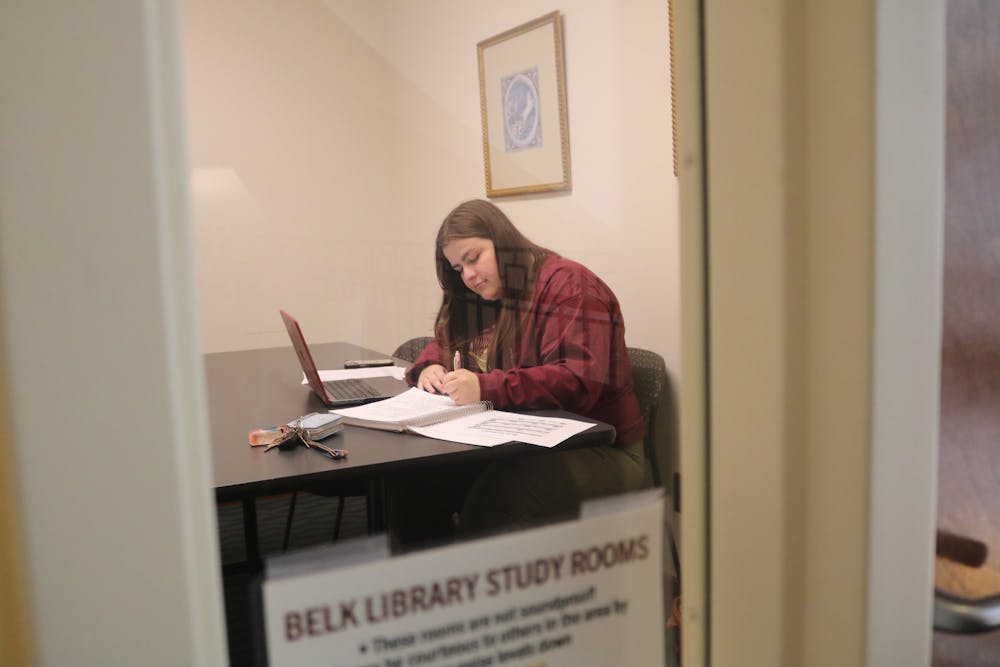
As graduation approaches for seniors in the nursing program at Elon University, many students say their final hurdle before officially becoming a registered nurse is actually after they walk across the stage.
The National Council Licensure Examination, better known as the NCLEX, is the standardized national exam required for nursing graduates to become licensed registered nurses in the United States.
“When a student graduates from a nursing program, they graduate with a BSN, a bachelor’s degree in nursing,” Cathy Quay, program director and associate professor of nursing, said.
“They still have to pass the exam in order to practice. So, just graduating from a nursing program does not allow you to practice.”
According to the National Council of State Boards of Nursing, Elon University’s Bachelor of Science in nursing program posted a 95% pass rate for first-time test takers from Dec. 2025 graduates during the Jan. through March 2026 testing period.
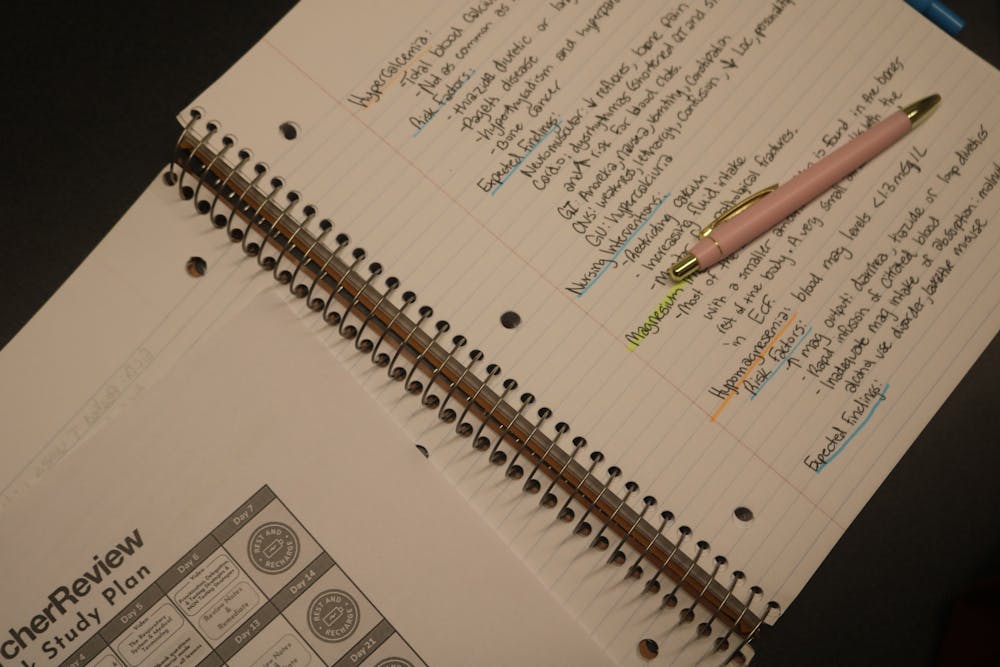
Quay said Elon’s Accelerated Bachelor of Science in nursing program, designed for students who already earned a non-nursing bachelor’s degree and completed nursing coursework in 16 months, had 19 graduates pass out of 20..
The national passing rate for BSN students is currently 69.90%, according to the NCSBN.
Freshman nursing student Ava Gaudet said that before arriving at Elon, much of what she saw online about the NCLEX focused on fear and failure.
“I saw a lot of students say how difficult it was or sharing stories about failing,” Gaudet said.
However, Gaudet said that after joining Elon’s nursing program, she said her perspective changed after seeing the preparation resources and support systems available to students.
For senior nursing major Julia Ricker, the reality of taking the exam is quickly approaching.
Both students said social media has played a complicated role in their NCLEX preparation. While online discussions can increase anxiety, they also provide reassurance that many nursing students share similar fears.
“I think seeing on social media that so many people come out of the NCLEX and just sit in their car and are like, ‘I have no idea what I just read,’ is kind of reassuring and nerve-racking at the same time,” Ricker said.
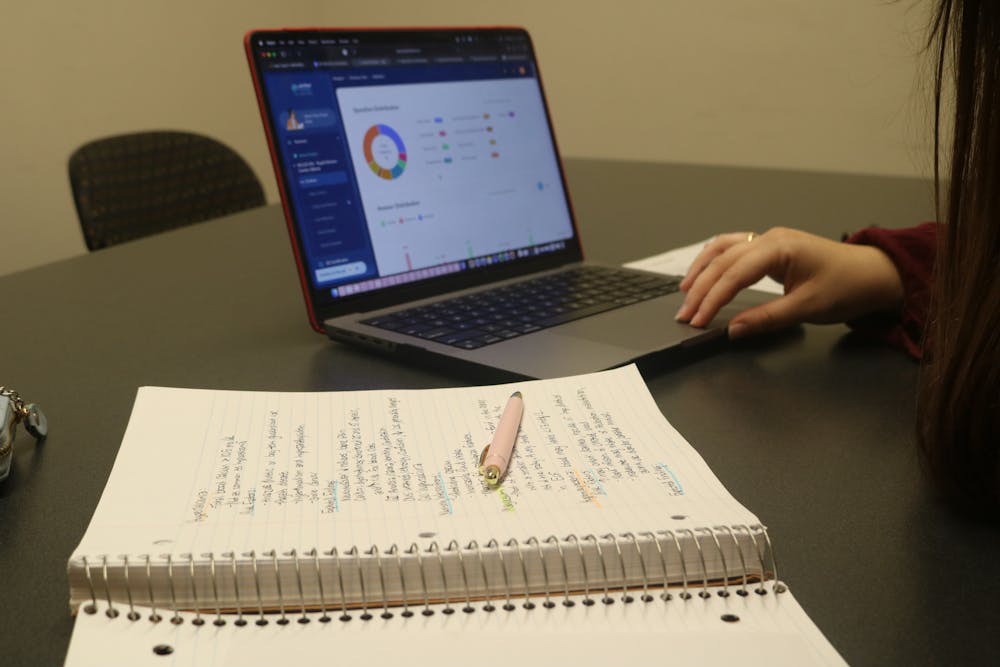
Ricker, who has already accepted a job as a labor and delivery nurse in Pittsburgh, said preparing for the NCLEX has become a major part of her daily routine. Nursing students at Elon use ATI, an online learning and testing platform provided through the program, but many students also purchase outside preparation programs to supplement their studying, according to Ricker.
“I personally am doing Archer because I’ve been told that it’s closest to what the NCLEX will look like,” Ricker said. “Some people recommend UWorld because they say it’s harder than the NCLEX, so the NCLEX can feel easier.”
Quay said students begin seriously preparing for the NCLEX during their junior year once they enter clinical coursework.
“That’s when they start their clinical coursework and they start to use some of the software that we have available in the program that is providing them with a lot of practice,” Quay said.
Students complete practice questions, virtual simulations and case studies throughout the program to prepare for both clinical practice and the licensing exam.
“They are receiving a holistic education and preparation for practicing as a nurse, which in turn prepares you to take that exam,” Quay said.
The NCLEX is a computerized adaptive test, meaning the exam adjusts difficulty based on how students answer questions. The test can end anywhere between 85 and 150 questions, depending on whether the system determines a student has passed or failed. Nursing students typically take the test following graduation, but it can be scheduled year-round.
Senior nursing student Jillian Freglette said the exam focuses heavily on patient safety rather than simple memorization.
“It’s not really a test on knowledge,” Freglette said. “It’s more so a test on critical thinking and if you’re able to apply knowledge to answer a question and more about safety.”
Ricker said faculty members structure exams throughout students’ coursework to mirror the style and format of NCLEX questions. Students also take predictor exams throughout the program that estimate their probability of passing the NCLEX and identify areas where improvement is needed, according to Quay.
Students like Ricker can secure nursing jobs before taking the NCLEX, but they cannot officially begin working until they pass the exam and receive their RN license number. If a student fails the exam, they must wait before retaking it.
“It’s not common for us to have students who fail,” Quay said.
Still, Ricker said balancing NCLEX preparation with senior year responsibilities, clinical work and graduation has been difficult. She said the pressure surrounding the exam can create feelings of imposter syndrome.
“You just have to keep reminding yourself why you’re doing this,” Ricker said. “There will be moments where you think, ‘This is so hard. I don’t know if I can do this.’ But I made it this far for a reason. I’m here because I deserve to be here.”
Despite the pressure, Ricker said she continues to remind herself why she chose nursing in the first place.
“There have been so many moments in clinical experiences where I’ve had a moment where I’m just like, ‘Wow, this is what I want to do with the rest of my life,’” Ricker said. “Passing and knowing that I can do this for the rest of my life is something I’m very much looking forward to.”