

Aoife Judge ’24 wants to become a doctor.
After getting her undergraduate degree in biochemistry, Judge is currently studying at New York Medical College for her master’s degree.
“You need about 500 research hours to apply to medical school to be, quote-unquote, a competitive applicant,” Judge said. “It was really easy to get those research hours at Elon.”
Not knowing how to get involved with research when first coming to Elon, Judge said the first step she needed to take was to ask.
“Then you ask, and everyone jumps into action,” Judge said.
For her research, she studied in wet labs and looked at different cancer cells. She said at Elon, it is interesting that students approach professors with their research ideas — and in her case, her mentor, Victoria Moore, knew the ins and outs of her project.
“I got to do collateral sensitivity, which is basically looking at different drugs, like chemo drugs when it comes to cancers, and seeing if I use them together, separately or different combinations, how they work better or worse,” Judge said.
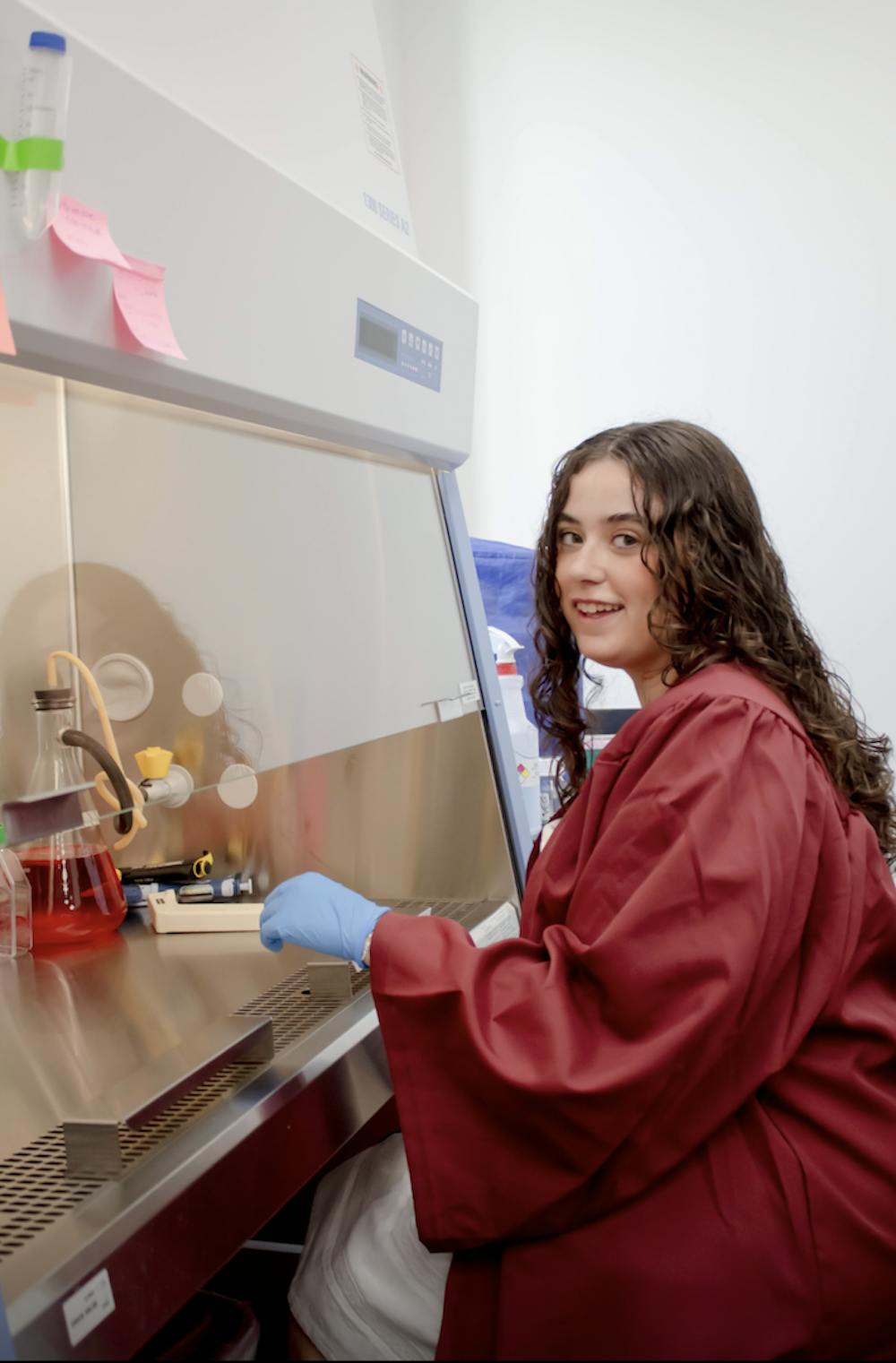
Judge said Elon allowed her to work in several labs without worrying about the funding side of her research because Elon helped raise money for her project.
“Because research is so expensive, and it was really good to develop those skills and see how they raised the money and got the grants and this, that, the other,” Judge said. “To do this research without having to have the pressure to do it yourself, especially in this day and age when money for science is a little bit hard to come by.”
However, aside from the funding, Judge said she is most grateful for the support of the Elon chemistry professors.
“The offices for all the professors, their doors were always open,” Judge said. “When my professor, Dr. Moore, wasn’t there, I could pop into someone else and say, ‘Hey, can you help me with this?”’
Elon has five Experimental Learning Requirements: volunteer service, internships, global engagement, leadership and mentored research. Each student must complete at least two of these experiences to graduate.
For the 2025-26 school year, 26% of undergraduate students have completed research throughout their time at Elon. Students can get the research ELR by either enrolling in one credit hour in a course numbered 4998 or 4999 or by participating in the Summer Undergraduate Research Experience.
With the highly mentored research projects comes a staff behind them.
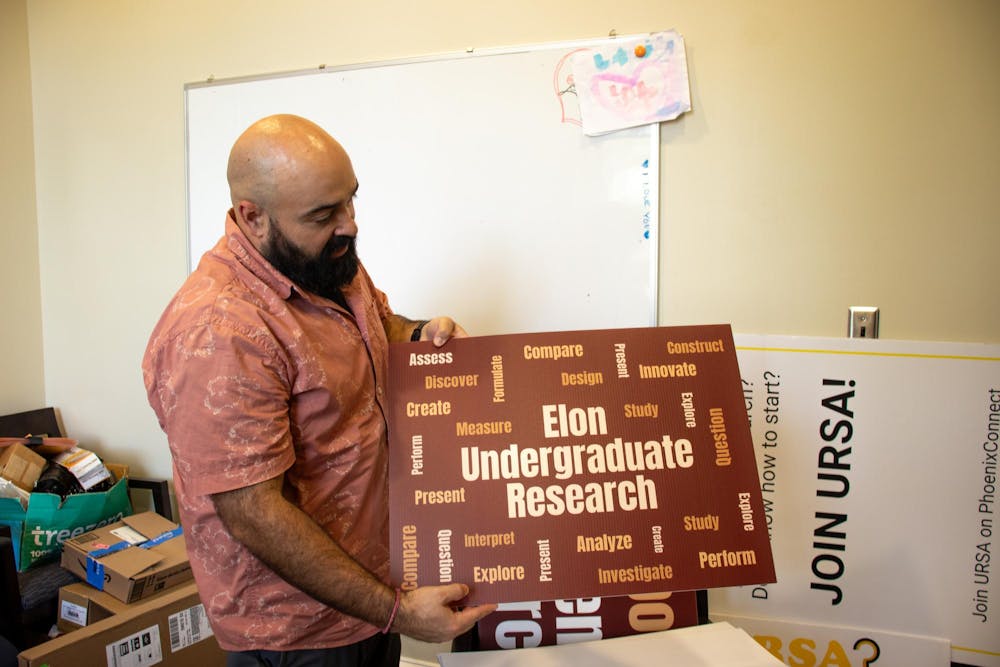
Justin Clar, director of Undergraduate Research, said the staff and himself work to oversee several different projects, such as the actual research, taking large groups of students to the National Conference for Undergraduate Research, SURE and the Spring Undergraduate Research Forum.
“We do all kinds of workshops to help new faculty learn how to be good mentors,” Clar said. “We provide grants for students to support their research in terms of travel or supplies.”
Without doing undergraduate research at the University of Richmond, Clar said he would never have become a faculty member at Elon.
“As I did more and more research, I found myself wanting to have more impacts across the campus,” Clar said.
Clar said there are many reasons for students to do undergraduate research, especially because in classes, students learn about a subject. However, Clar said, when students do research, they are actively involved in creating new knowledge in a subject.
“The experience of undergraduate research is providing you with the career readiness you can talk about in an interview, either for graduate school or jobs or fellowships, whatever else you’re doing,” Clar said.
Clar said he understands that some students may think beginning research can be scary, but he agrees with Judge — asking is the best and first step to get involved.
“The easiest thing to do is just ask somebody, ‘What’s your research like? What do you do?’ And then you can maybe find a way that you can collaborate,” Clar said.
Kaley Katz ’24 started her research as a sophomore through the Elon College Fellows program. This is a 4-year merit-based scholarship program that requires students to conduct undergraduate research within Elon’s College of Arts and Sciences.
In spring 2022, Katz was selected as an Elon Lumen Scholar — the top undergraduate research award at Elon, which helped her fund her studies in investigating the role of ASXL1 and ASXL2 proteins in leukemic cell lines.
Elon sophomores submit an application for the Lumen Prize during their spring semester. Each application must include the students’ plans for the future, specifically their vision for research, service projects or coursework. Scholars who receive the prize receive $20,000 to fund their projects.
Now, Katz is working as a genetic counseling assistant at Duke Cancer Center, but she’s in the process of applying to graduate schools to receive her master’s in genetic counseling.
“Having some undergraduate research under my belt is super helpful going into a thesis for my master’s,” Katz said. “Within my undergraduate research, I was able to present that research both as a presentation, orally and as a poster presentation.”
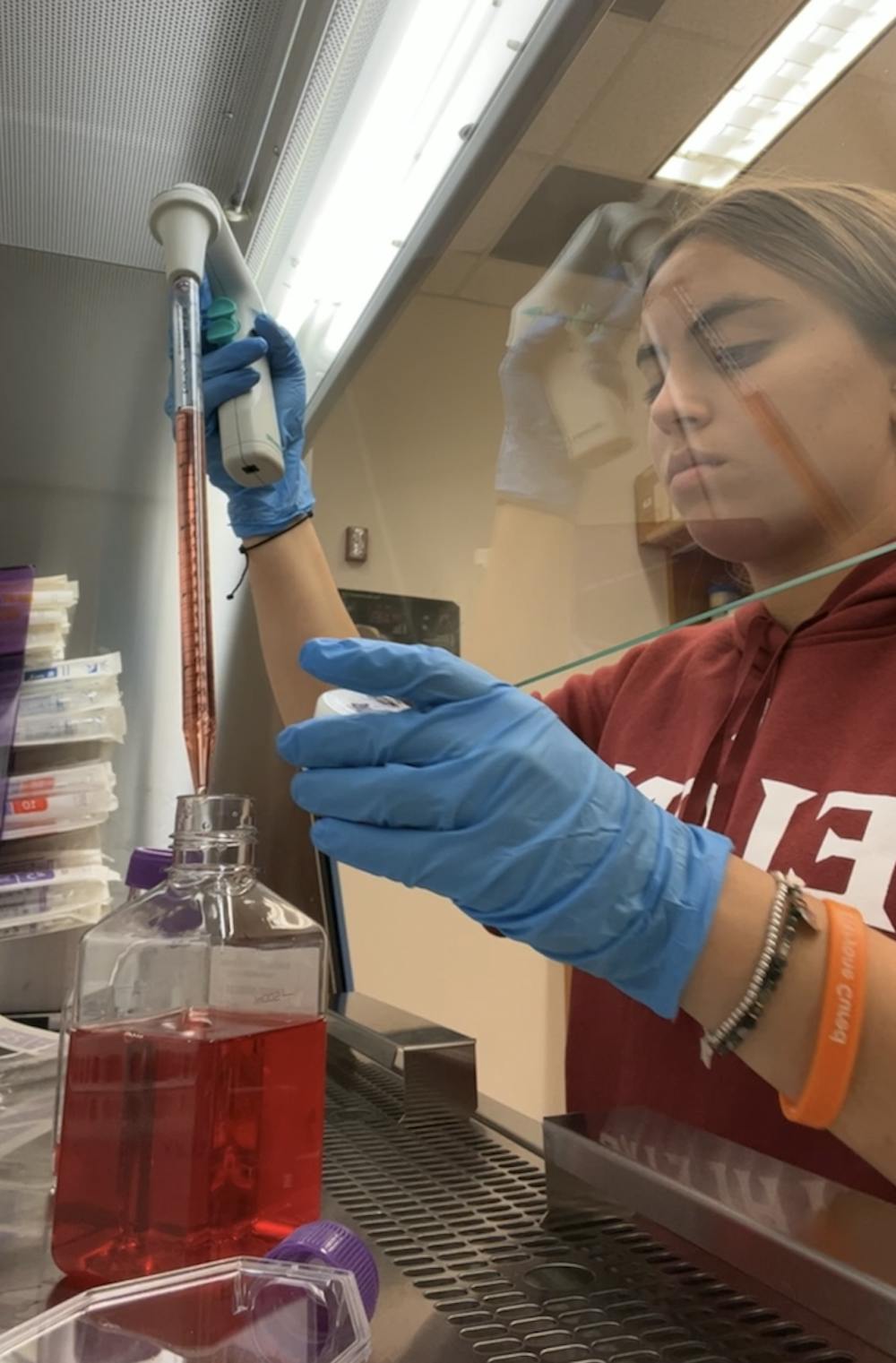
According to Katz, her research went in unexpected directions. She said that things don’t always go to plan.
“You learn a lot throughout the process and how to adapt and shift your research as your data presents itself,” Katz said.
One thing that Clar said he hears from upperclassmen is that they wish they had begun research sooner.
“They get these great ideas, but they end up graduating and they can’t finish all their work,” Clar said. “So if you start earlier, then you have the ability to really dig deep into some problems.”