

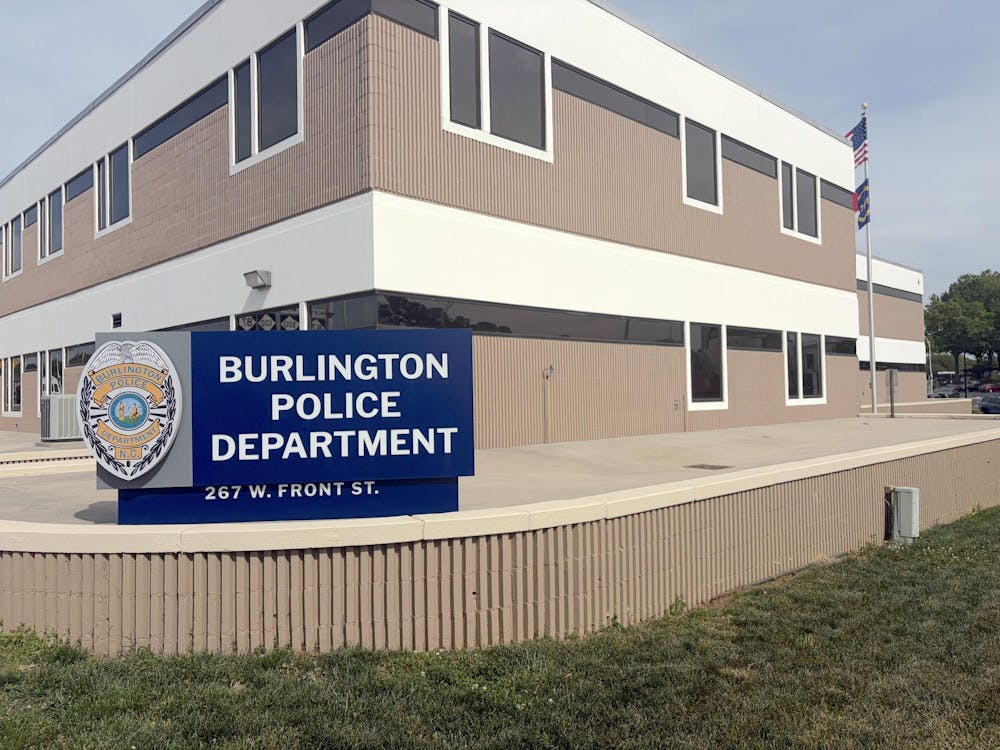
The Burlington Police Department may implement artificial intelligence to help officers write case reports.
The department is using a program called Truleo, which BPD Intel Sgt. Misha Braja said the department has already used for almost two years to analyze body-worn camera footage.
“Report writing is the bread and butter of law enforcement,” Braja said. “We have to document everything that we do.”
Braja said the department is still in the trial-stages of report writing with Truleo and the results are being evaluated. He said the human touch of a report is essential to its validity, especially since police reports typically include officer observations.
“It’s not just pulling from an AI program and the officers copy and pasting and sending that off to court, because ultimately, that report has to stand on its own,” Braja said. “They have to get up on the stand and say, ‘These are the observations that I made.’”
The department was the first in the state to roll out AI use for analyzing body-worn camera footage. The program connects with Panasonic, the system the department uses for its footage. Then, it takes in the video, transcribes the audio and flags moments that need to be reviewed, according to Braja.
Every three months, the department is required to put together quarterly body-worn camera analysis reports. Supervisors, such as Braja, are responsible for creating these reports, but also for giving feedback and coaching officers based on the footage.
“Honestly, it was a time consuming task, because you would have to stop what you were doing, come out of the field, get onto the program, find the right videos that actually had some substance to them,” Braja said.
According to BPD Public Information Officer Stephanía Garzón, there are around 1,000 hours of body-worn camera footage that need to be reviewed by the department each year. Truleo, she said, is reducing the amount of time officers stay behind their desks and helping the department stay up to date with new tools.
“The ultimate goal with this technology is to enhance the police service that we provide to our community, and by leveraging technology similar to how the private sector is doing it, so that we stay at the same level,” Garzón said.
Braja said that like any AI transcription, the program isn’t perfect. Sometimes ambient sound or slang interferes with the clarity of the audio files. This is why the department requires human-verification of everything AI touches. He said Truleo includes a “human-verified” checkbox so the department can monitor what has been reviewed.
Truleo is Criminal Justice Information Services compliant, which means it follows the FBI’s strict security standards for handling, storing and transmitting criminal justice information. Garzón said the program does not capture demographic data.
The program can also transcribe in languages other than English, according to Braja, however it is not able to translate the audio.
While in his previous role in BPD’s investigations unit, Braja also tried Truleo’s case analyst feature, to help with what he said was a time-intensive case.
“It simply puts what you put into it. It analyzes it very chronologically, organizes it really well, as if I had spent two weeks making flow charts and outlines and things like that,” Braja said.
Braja said police officers often only get 10 hours to complete all their tasks for the day. He said this technology is helping get officers where they are most needed.
“A lot of officers, you know, they do it well, but they didn’t sign up to be report writers,” Braja said. “They want to be out there. They want to be engaging with the community. They want to get the bad guys.”