

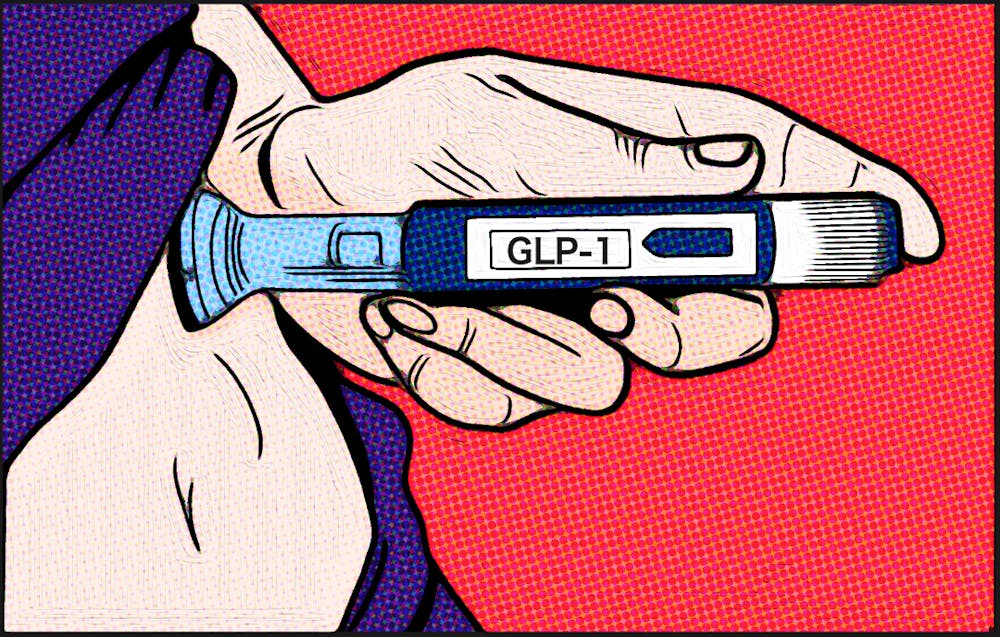
Junior Andrew Kochman has $1,350 sitting in his fridge. Every Tuesday, before he goes to bed, Kochman opens the fridge door and on the side finds his Wegovy shot, a weight loss medication. He lifts his shirt, injects the medication into his torso, and then discards the shot. He will repeat the same procedure next week.
Kochman is 20 years old and has been on Wegovy for about a year and a half.
“I was inspired by seeing all the stuff online about how much people are losing weight, and one of my friends from home had been on it, and she had lost a lot of weight,” he said.
Ever since elementary school, Kochman said he has struggled with his weight. He said he had tried all kinds of diets and programs like WeightWatchers, but always ended up gaining the weight back.
“I mean, I felt like I was eating nothing but dry Cheerios and plain bread and carrots,” Kochman said.
He also hated going to the gym – even calling himself “lazy.” However, in June 2024, Kochman hit a breaking point, especially when he was diagnosed as pre-diabetic. After that, he booked an appointment with his pediatrician. He said his doctor then recommended he visit a weight loss doctor, where they prescribed Kochman a 0.25 mg dose of Wegovy.
“It’s different for everyone, but for me, we gradually increased my dose once a month until we hit the peak of 2.5, and as you went up, you’re losing weight more rapidly as your appetite is going down,” he said.
Kochman said he lost 40 pounds in two months with a low appetite and minimal exercise.
The downsides of sizing down
Wegovy belongs to a class of drugs known as GLP-1 agonists. These drugs manage blood sugar levels and suppress appetite. Wegovy and another popular GLP-1 agonist, Ozempic, both contain the same active ingredient: semaglutide.
Ozempic was approved by the Food and Drug Administration for treating type 2 diabetes. The FDA approved Wegovy for people with obesity or weight-related health conditions in March 2024. Mounjaro and Zepbound are other similar drugs. Mounjaro is used for treating diabetes, while Zepbound is for people with obesity.
Professor of Physician Assistant studies Alexis Moore is a clinician by training and said it’s typically healthy for someone to lose one to two pounds per week.
Moore said in cases, similar to Kochman’s, losing weight at a rapid pace could have resulted in muscle loss. According to the National Institute of Aging, one of the 27 institutes and centers of the National Institutes of Health, most people don’t reach their maximum muscle gain until their mid-20s to 30s.
However, sometimes GLP-1s don’t cause rapid weight decline. An Elon senior, who didn’t want Elon News Network to share her name due to privacy reasons, is on Zepbound and lost 40 pounds within the past year since starting weight loss medication.
She had been overweight most of her life, but said she had hit a point where she started to feel uncomfortable in her own skin. So she went to her doctor and asked, “What do I do?” They originally recommended her Wegovy.
However, once on Wegovy, she began to feel serious side effects. The Elon senior said she would experience nausea and vomiting daily.
“I talked to one person last year who told me that she had had a similar experience throwing up on Wegovy,” she said.
Kochman said he’s also experienced vomiting while on Wegovy.
“All my friends know. They’re in the car, and I’m sitting on the side of the road puking,” Kochman said. “At some point it becomes just like, ‘Oh, there he goes again.’”
Kochman said that if he knew he had eaten a bigger portion that night, it would later come back up, whether it was on the drive back or in his home. With all the puking and stomach pain, in the fall 2024, Kochman was diagnosed with a paralyzed gastrointestinal system, otherwise known as a paralyzed stomach.
“We can’t say for certain if it was the weight loss medications, but there’s a high chance that it could be,” Kochman said.
Now, Kochman takes medication — around six pills daily — to ensure that what he eats is properly digested, but he said he doesn’t see the value in stopping Wegovy. According to a study conducted by the Pew Research Center in March 2024, Novo Nordisk, the company that produces Ozempic, Rybelsus and Wegovy, reported about $21.1 billion in revenue from the GLP-1s. This made up close to two-thirds of Novo Nordisk’s total revenue in 2024. For people without insurance, a one month supply of Wegovy or Zepbound can cost up to $499.
President Donald Trump suggested during an Oval Office news conference Oct. 16 that he could bring down the cost of weight loss drugs to $150 a month. However, Centers for Medicare and Medicaid Administrator Dr. Mehmet Oz said during the news conference that it wasn’t official.
The next day, stocks of Novo Nordisk and Eli Lilly, which makes Mounjaro and Zepbound, fell, according to Axios.
Costco and Sam’s Club both announced earlier this month that they will be offering Wegovy and Ozempic at a lower price for people whose insurance doesn’t cover the medications. The two companies partnered with Novo Nordisk.
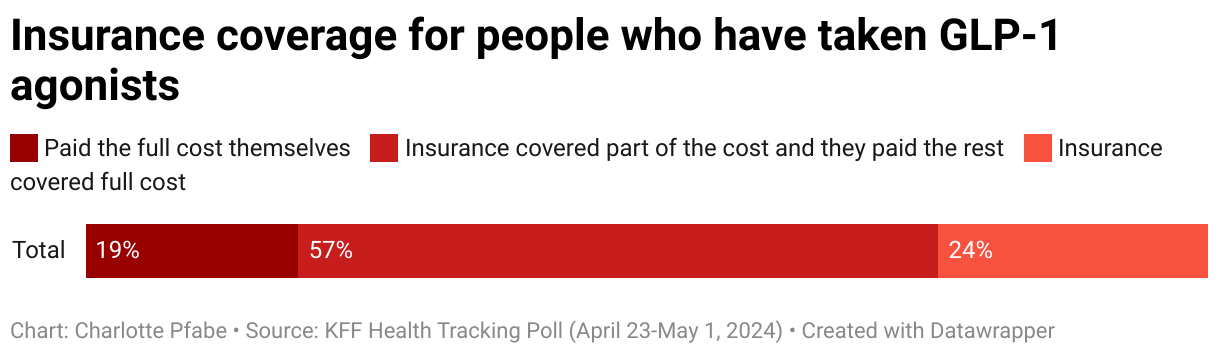
For Kochman, being diagnosed as prediabetic, he said his insurance covers his weight loss medication. The anonymous senior’s insurance did cover Zepbound in the past, but she said they recently told her they would not be covering the costs anymore. Now, she is going back to Wegovy.
“It just came down to me being comfortable in my own body,” she said.
The weight of perception
The anonymous senior said she doesn’t struggle finding clothes that fit her when she goes shopping anymore. She said what shocked her most was how people treated her differently once she lost the weight. For example, she found that more people held the door for her.
One area of research that assistant professor of psychology Ilyssa Soloman studies is body image.
“I use that word as sort of a neutral descriptor here. People who are perceived as ‘fat’ by others face very real prejudice in the world,” Soloman said.
Kochman said prior to losing weight, he was considered obese, one of the weight-related health conditions GLP-1s are prescribed to treat.
According to the Centers for Disease Control and Prevention, between 2021 and 2023, around 40% of Americans 20 years and older were considered obese. When combining the percentage of people considered obese and people considered overweight, the CDC found that a little over 73% of Americans 20 years and older are considered overweight.
The Mayo Clinic, a nonprofit medical center and research group, describes obesity as a medical problem that involves having too much body fat and increases the risk of other health diseases and health problems, such as diabetes and heart disease.
According to the Mayo Clinic, obesity can have a variety of causes, including genetics, physiological and environmental factors, and diet and exercise choices.

Soloman said it is easy for people to create assumptions about someone’s health if they are bigger than you. She said that “anti-fatness” stemming from this concept of willpower is one of the only prejudices to see an increase in the last decade.
Pew Research Center also found that around 65% of Americans believe willpower alone isn’t normally enough for people who are trying to lose weight and keep it off.
“I do think it raises some interesting questions about the tools that are available to people in pursuit of a particular body type, rather than in pursuit of some version of health,” Soloman said.
Soloman said social media also plays a big role in people making this lifelong decision. She said social media can fill one’s feed with content that pushes a certain body type or unrealistic ideals.
“In that version of it, the way that some people might be utilizing it, is in a way that reinforces the importance of how you look,” she said.
Despite the possible psychological concerns, Solomon said it is important to respect and not demonize someone for their decision to go on weight loss medications.
“Whatever someone decides between them and their doctor and what’s right for them is what’s right for them,” Solomon said.
Though Kochman is pretty vocal about being on Wegovy, the senior said only a few close friends know that she is on Zepbound.
“It’s not something I’ll bring up in casual conversation, usually, unless I trust a person, because there is kind of a level of judgment around it, because people think that you’re cheating,” she said.
From short-term fix to lifelong commitment
Moore said one of her main concerns is the accessibility of the GLP-1s for those who need it – like people with diabetes– especially during drug shortages.
“Is their accessibility as equal or as fair as people who don’t have diabetes, yet are able to get that medication?” Moore said.
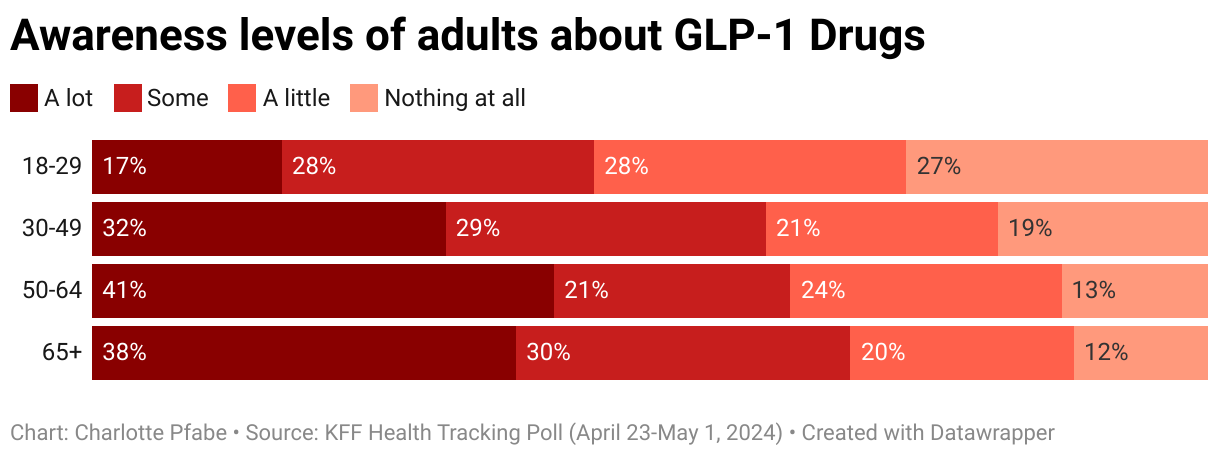
In late 2022 and into 2023, the American Diabetes Association reported a shortage in GLP-1s because of the increase in demand. But the shortage ended in the spring 2024, according to the FDA.
In another study, Pew found that 53% of people who know about GLP-1s think they are good options to lose weight for people who have obesity or a weight-related health condition, but 19% think they are not good options. 28% said they’re not sure. For people without a weight-related health condition, Pew found that 12% of respondents said GLP-1s are good options, while 62% said these drugs are not good options. 26% were unsure.
Moore said her concern with students on GLP-1s is the long-term effects.
“Since this drug is relatively new, we don’t know the outcomes over time.” She said as more people are prescribed GLP-1s, people will start to see how the drugs affect young people long-term.
Despite potential side effects, Kochman plans to stay on Wegovy for life.
Now 110 pounds down, Kochman said if other students are curious about weight loss medications, they should talk to their doctor. He also cautioned people about the side effects, and said if someone is seriously considering it, they should go to a weight loss doctor as well.
“I’ve lived a decade feeling uncomfortable in my body, and if this is something that makes me comfortable in my body, I’m going to be loud and proud about it,” Kochman said.