

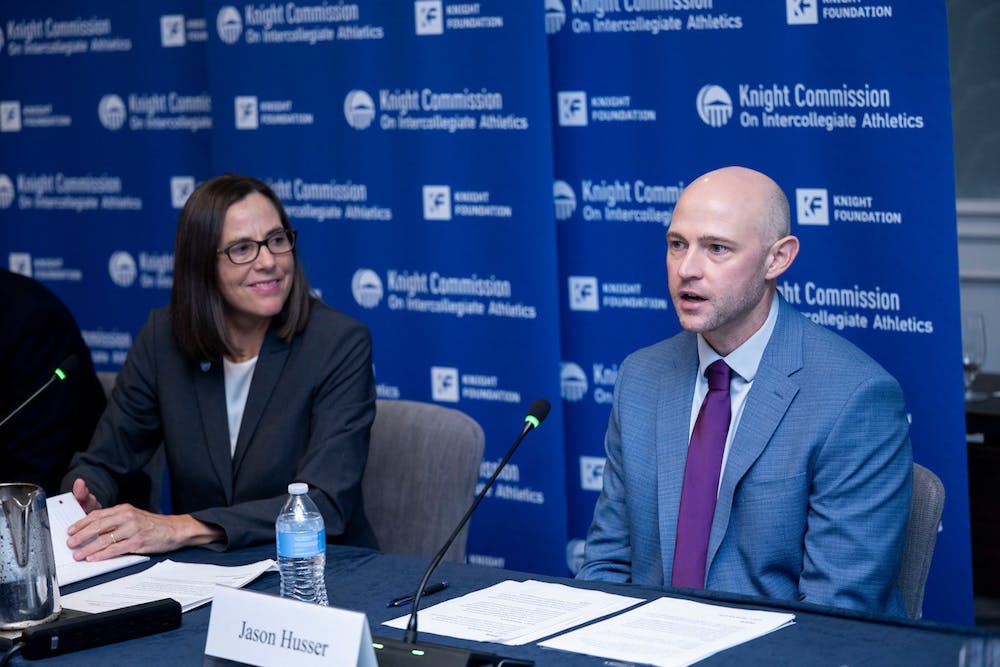
A recent poll published by the Elon University Poll and the Knight Commission on Intercollegiate Athletics showed concerns from National Collegiate Athletic Association Division I presidents, administrators and athletic directors about the state of college sports following the House vs NCAA settlement this past July. College athletes could previously get endorsed by other brands, but the House ruling now allows schools to contribute to name, image and likeness.
The Knight Commission is an independent organization that aims to strengthen the educational mission of college sports.
The settlement gave colleges the right to directly pay their athletes. In the aftermath of the ruling most of the respondents surveyed think this could result in a currently flawed Division I sports system getting worse over time.
Director of the Elon University Poll Jason Husser conducted Elon’s end of the survey. Husser said it’s difficult to envision the current model of athletics as sustainable in the future. Husser also said the response rate for this poll was much higher than normal, with a response rate of 26%
“When I see consistently high-stakes issues I see a signal of shared urgency and clarity among Division I leaders that is notably rare and complex,” Husser said.
Another big takeaway from the poll was the commitment from Division I leaders to maintain academic support for college students.
CEO of the Knight Commission Amy Privette Perko said during the meeting that 98% of respondents emphasized its importance while 99% of respondents believe in college athletes graduating at some point.
The majority of support from leaders also goes for postseason play. Privette Perko added that members would like to see teams continue to meet academic standards even when they are competing in the playoffs.
“The strong support for these standards emphasizes the collective viewpoint of these leaders that the academic mission remains central to the purpose of Division I sports,” Privette Perko said.
In addition, many respondents expressed disapproval over the amount of freedom athletes are granted through components like the transfer portal.
One of the Knight Commission members, Peter Roby said during the conference that around 86% of people surveyed think the transfer portal has had a negative effect on college sports.
Roby also said that 84% of respondents are displeased with the current rules which allow athletes to transfer as much as they want. Since 2024, athletes are able to transfer wherever they want as long as they fulfill certain academic requirements.
One response that was somewhat varied was the future of college sports following the settlement. Roby said that although 76% of Division I leaders believe the ruling will create a negative impact on college sports as a whole, most athletic directors believe it will create a positive individual experience for athletes playing specific sports. Most of these sports involve football and men’s and women’s basketball.
However, there is still uncertainty over the futures of female athletes in their respective sports. Another Knight Commission member, Beth Brooke, said that 55% of Division I leaders surveyed predict female athletes will be in a worse situation following the House settlement. She noted that the ruling already poses questions over gender equity and the impact Title IX could have on institutions providing financial benefits to athletes.
“A clear takeaway from these findings is that DI leaders are concerned about the impact of the house settlement and the implication of this on women’s sports,” Brooke said.
As for financial components such as name, image and likeness, Privette Perko said a majority of leaders agreed to future regulations. The results of the poll concluded that 86% of respondents believe in a national standard to limit NIL compensation toward athletes.
“We believe these findings can inform lawmakers and leaders as they work to build a new model provision of college sports,” Privette Perko said.