

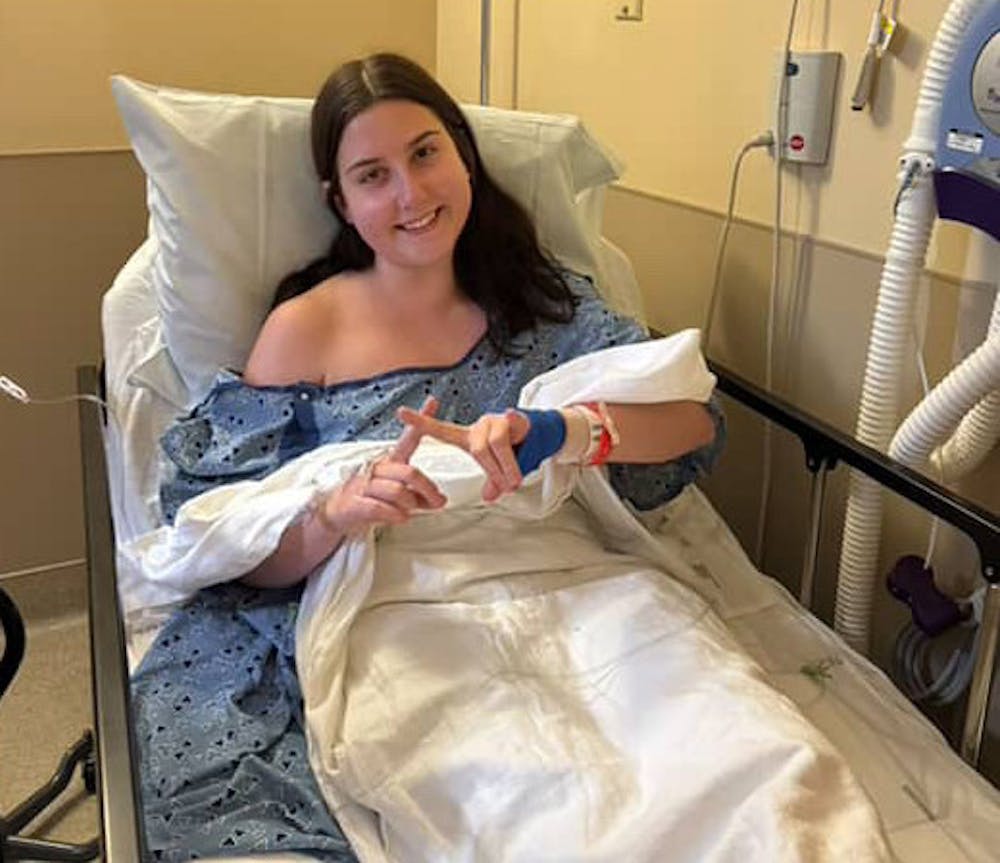
Lexi Rogers didn’t expect to have to celebrate her 21st birthday back home.
“Worst 21st birthday ever,” Rogers said.
Rogers finished her first round of chemotherapy right before her birthday in February.
But her journey started when she began to feel sick while studying abroad in Sorrento, Italy, in her junior year as an Elon University student. She said she noticed swelling on the right side of her throat and thought she had pulled a muscle in her neck. She decided to go to the doctor, who told her it was probably nothing but to get a thyroid scan when she got home to Tennessee.
However, when she lost her voice two days before New Year’s Day, she started to worry that it was something more. She got an ultrasound on her throat, which didn’t show any issues, but later, Rogers would learn that the lump she had been feeling was her thyroid being pushed out by her tumor.
“They were quite literally ultrasounding over my tumor since it grew up into my neck and displaced my thyroid,” Rogers said.
After more doctor appointments and tests, doctors told Rogers her right vocal cord was paralyzed, but she was told time and time again that she most likely had a bad infection that her body was struggling to fight off.
Her gut told her to keep pushing for answers.
“I’m just really not feeling good. My voice still isn’t back. I’m starting to have night sweats, and I’m running unexplained fevers,” Rogers said. “And I had messaged my primary care. I was like, ‘Hey, I think I have lymphoma.’ And she was like, ‘I really don’t think you do.’”
But Rogers did have lymphoma, and she finally got an answer through a message in her online medical portal while waiting to fly back to Elon for the spring semester.
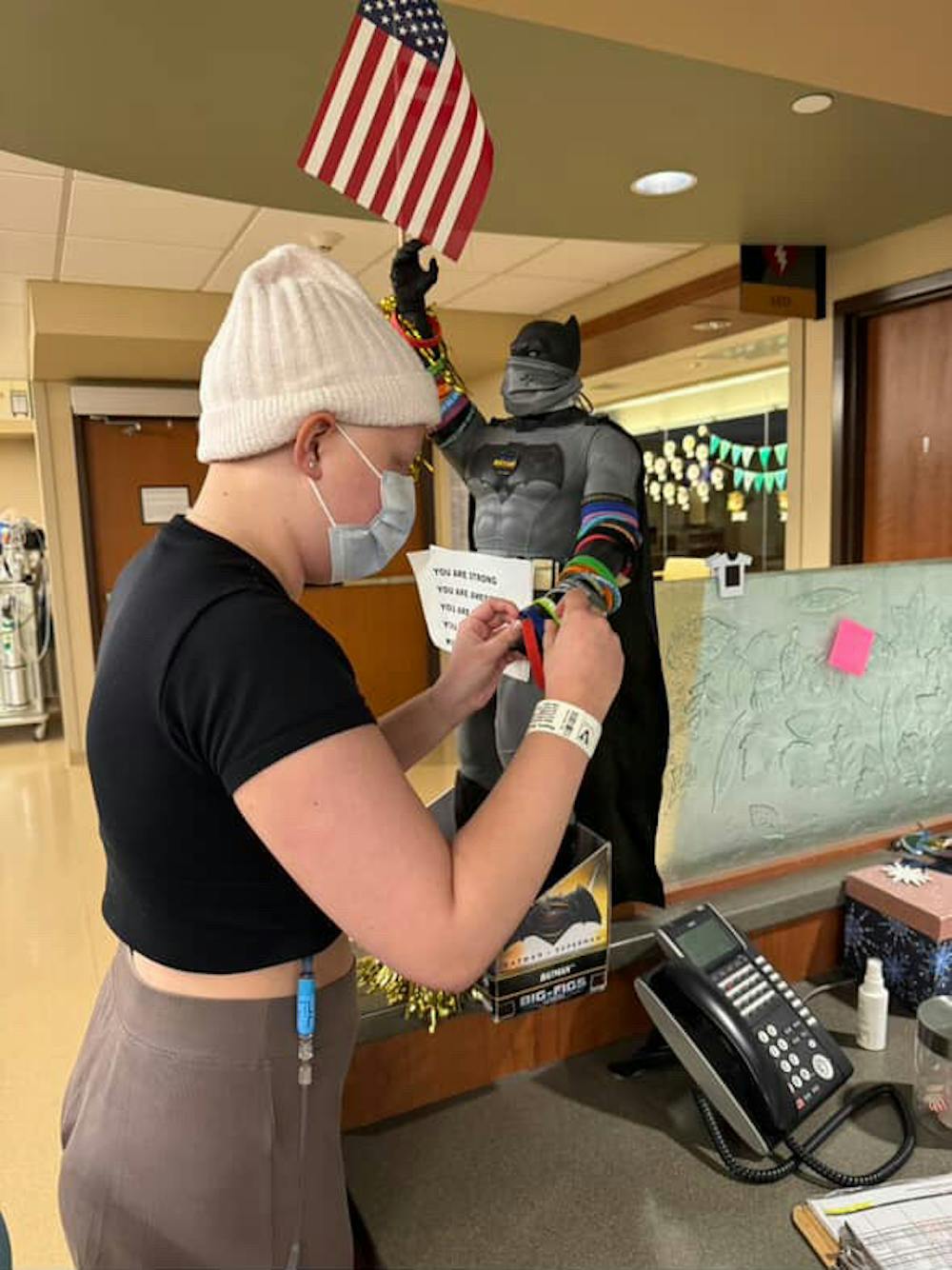
Lexi Rogers puts a “Lexi Strong” bracelet on a Batman figurine in the hospital. She said she was the youngest person in the hospital’s cancer unit when she was recieving treatment. Courtesy of Lexi Rogers.
“I just opened it up and literally the only thing I saw was ‘There is a large impeding mass,’” Rogers said. “I passed out fully in the airport.”
Rogers was later diagnosed with a rare form of non-Hodgkin lymphoma called primary mediastinal B-cell lymphoma. PMBCL makes up 2% to 3% of all cases of non‐Hodgkin Lymphoma, according to the Thoracic Cancer journal. In 60 to 70% of cases, tumors are larger than 10 centimeters in diameter.
According to the Thoracic Cancer journal, Lymphoma is a cancer that impacts the lymphatic system of the body, which includes organs, glands and lymph nodes. The lymphatic system is part of one’s immune system. For Rogers, her cancer started in her white blood cells — specifically her B-cells — which fight germs.
After the diagnosis, she stayed in Tennessee to start six rounds of chemotherapy. Rogers said she was on a 21-day cycle — five days straight of chemo in the hospital with 16 days off.
“I was cripplingly anemic because chemo just destroys red blood cells,” Rogers said. “My white count would be below two. I was neutropenic and couldn’t leave the house because I’d get sick.”
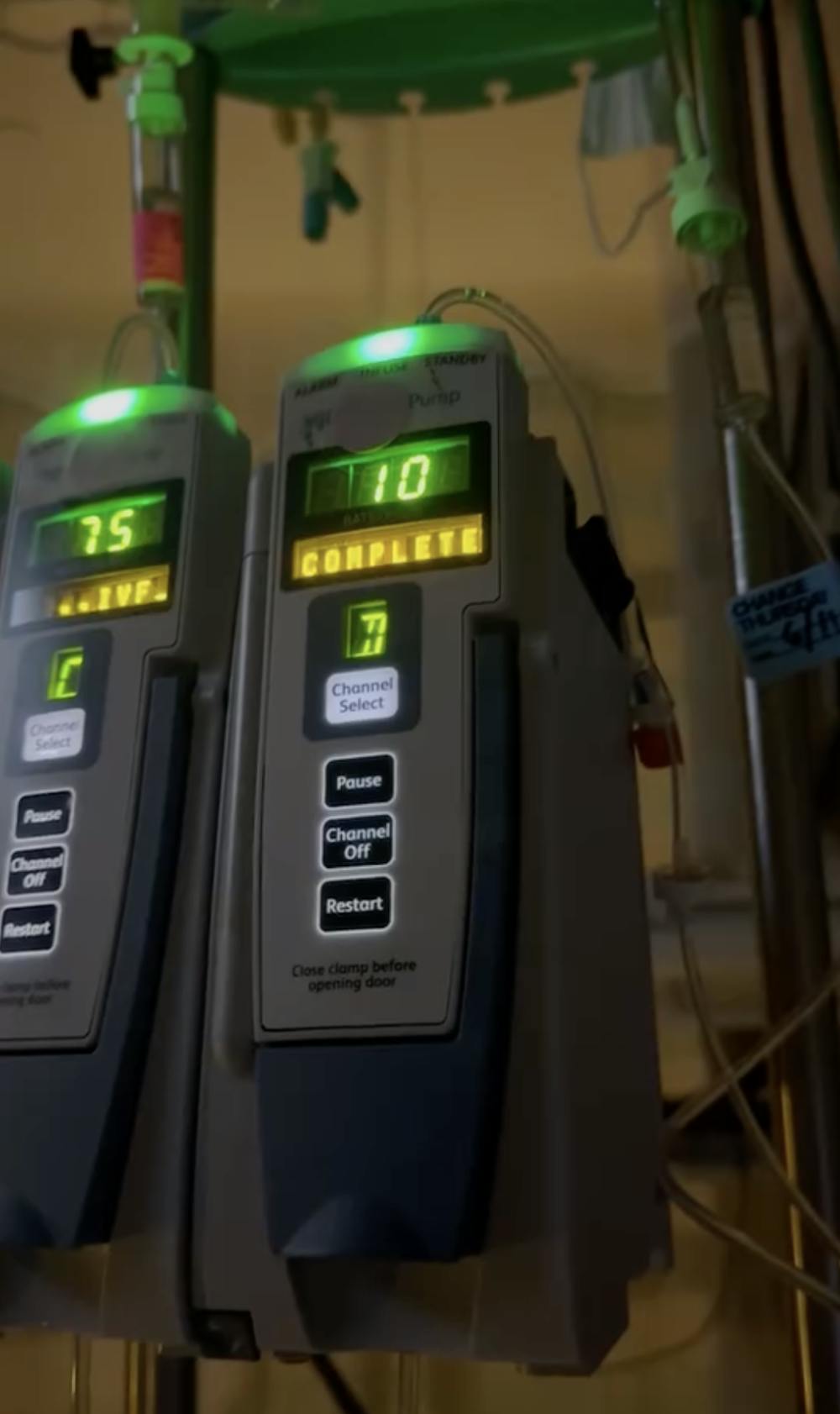
Lexi Rogers finished her chemotherapy in the spring and is now in remission. Rogers said she was on a 21-day cycle — five days straight of chemo in the hospital with 16 days off. Courtesy of Lexi Rogers.
While she received treatment, she said she was the youngest person in the hospital’s cancer unit and turned to social media for a sense of community. Through TikTok, she’s connected with people across the world, including in Australia and in Europe.
“What I really love is all of us kind of got diagnosed around the same time, and we all kind of started posting videos around the same time. So we also all rang the bell around the same time, which is really, really sweet,” Rogers said.
Rogers said it’s a common misconception that ringing the bell means you are cancer-free. She said it only commemorates the end of treatment, and cancer patients, like herself, typically still have other scans to see if they are in remission.

Lexi Rogers is in remission after her battle with cancer. She rang this bell when she completed her chemotherapy treatment. Courtesy of Lexi Rogers.
After months of doctors visits and tests, Rogers said she hopes that people who hear her story will advocate for themselves when they feel sick.
“If you’re going to get cancer in college, it’s going to be lymphoma,” Rogers said. “So if I can even help one person just realize that something’s wrong and go to the doctor, even if they don’t have lymphoma, just to go to the doctor and get everything checked out, like that’s all I could really ask for.”
But even during her treatment, Elon University was still in the back of her mind. She was about to start her senior year, so she called her academic adviser and mentor, professor Anthony Hatcher.
“Her worry was, ‘Can I finish on time? I want to graduate with my friends,’” Hatcher said.
Hatcher, along with other Elon professors, came together to support Rogers, as she took summer classes to make up for her time on medical leave during the spring semester.
“I looked at her OnTrack audit 10,000 times to figure out how to juggle and move the pieces around,” Hatcher said.
Summer classes also posed a challenge for Rogers, as the effects of chemo were catching up. However, she said she was grateful for professors who allowed her to have extra time on assignments.
“I couldn’t formulate sentences,” Rogers said. “My short term memory was awful, like I’d retell the story five times. So I was like ‘this will be good, just to kind of get things moving again.’”
This semester, Rogers is a peer educator, or teacher’s assistant, for Hatcher’s Elon 1010 class. She previously worked as his PE during the fall of 2023.
“We communicated and she said, ‘Are you doing Elon 1010 again?’ in fall of 2025,” Hatcher said. “And to be honest, I had not planned to be an educator for Elon 1010, but I decided, ‘If you’re going to be my TA, yeah, OK.’”
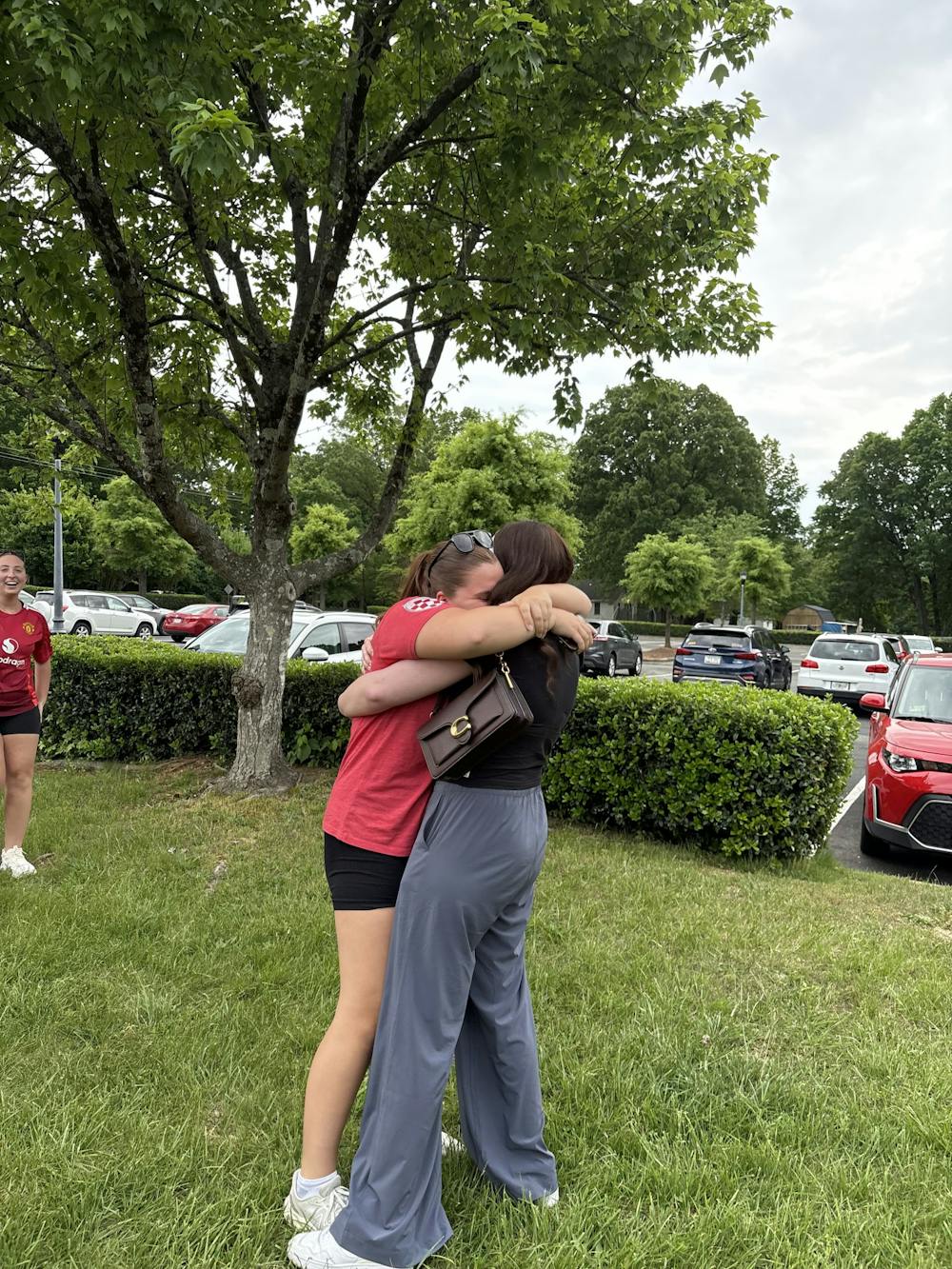
Lexi Rogers hugs her friend while visiting campus for a wiffle ball tournament organized by some of the Greek life organizations. The tournament was hosted in the spring semester to raise money for Blood Cancer United. Courtesy of Lexi Rogers.
Rogers is proud to say she’s now been in remission for three months. She is back on campus with her friends and is set to graduate with the rest of her class. Her close friend, junior Emily Fricker, said she is excited to have Rogers back on campus.
“Now that she’s back at Elon, we hang out all the time, we’re constantly together, we have such a good bond,” Fricker said.
But Rogers said she’s not the same person she was last year. She’s coming back to campus with a different perspective on life.
“You think you’re invincible until you’re not,” Rogers said. “And, I mean, until you’re having to sit there and sign a will at 20 — things like that just really put it into perspective.”