

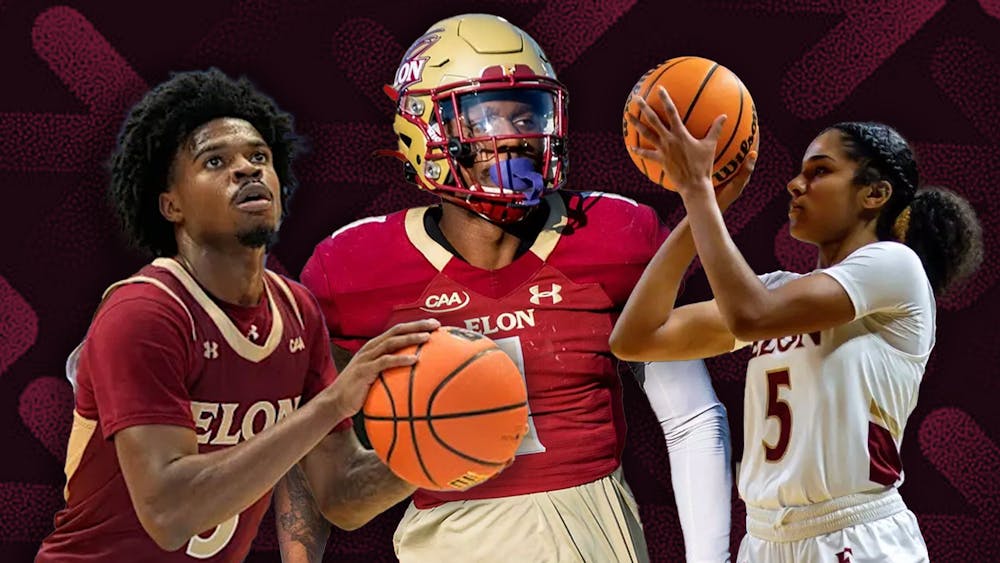
A successful college sports team requires many things such as premier coaching, experienced leadership and quality team chemistry. But since 2018, a new factor has become essential to building a winning program.
The transfer portal.
The NCAA transfer portal was created by the association’s Division I Council in 2018. Additional rules passed in 2022 and 2024 gave student-athletes even more transfer flexibility. Since then, the number of student-athletes entering the portal has increased by 20% from 2022 to 2024.
Every school has been impacted by the rise of the transfer portal, including Elon University. Elon’s Athletic Director, Jennifer Strawley, said she has seen that impact first-hand.
“The world has become more transactional,” Strawley said. “College athletics is operating in a more transactional nature, nationally and holistically, as opposed to more relationship and development-based.”
In 2024, 24 student-athletes transferred from Elon athletic teams. In 2025, the number increased to at least 33, a program high.
These transfers include nine from men’s basketball, eight from football, six from baseball, five from women’s basketball, two from women’s tennis, and one each from men’s soccer, women’s soccer, and volleyball.
From the opportunity to compete at a higher level of competition to potential NIL benefits, multiple Elon athletes were presented with compelling reasons to transfer.
TK Simpkins, who led Elon’s men’s basketball team in points per game last season, transferred to the University of Oregon. The Ducks were ranked No. 5 in the NCAA March Madness Tournament last year. Elon has never made the tournament.
Alex Duffey, who was named to the Coastal Athletic Association All-Conference Second Team this past season, will transfer to play baseball for the University of Kentucky. The Wildcats went 49-15 last season. The Phoenix went 25-32.
Brandon Smiley, Carlos Moore Jr, Cazeem Moore, Cody Hardy, Heidi Bulger, and Raven Preston are all transferring to schools within the Atlantic Coast Conference. These student-athletes are transferring to a conference often ranked within the top four most competitive nationally, referred to as the Power Four. The CAA is not included in this group.
Although losing these talented players is not advantageous for Elon, Strawley said it can be viewed as a success story. In her eyes, all transfers are not the same.
“There are good reasons to transfer, and there are reasons that are not fully educated,” Strawley said. “For our coaches and staff, we have to think, if there’s a young person with a real opportunity, how do we help them?’
Over the last five years, over 50% of Elon’s transfers are athletes who have already received their degree, according to Strawley.
“In that case, we’ve met success,” Strawley said. “I’m proud of that fact, because when young people come here, that’s a really important piece.”
As the prominence of the transfer portal continues to grow, so does Elon’s opportunity to offer athletes a chance to find the same result. Although Elon lost at least 33 athletes to the transfer portal this year, it also brought in over 37 members.
That includes eight new additions to each men’s basketball and baseball, six to men’s soccer, five to football, three to women’s basketball, two each to women’s tennis and softball, and one to volleyball.
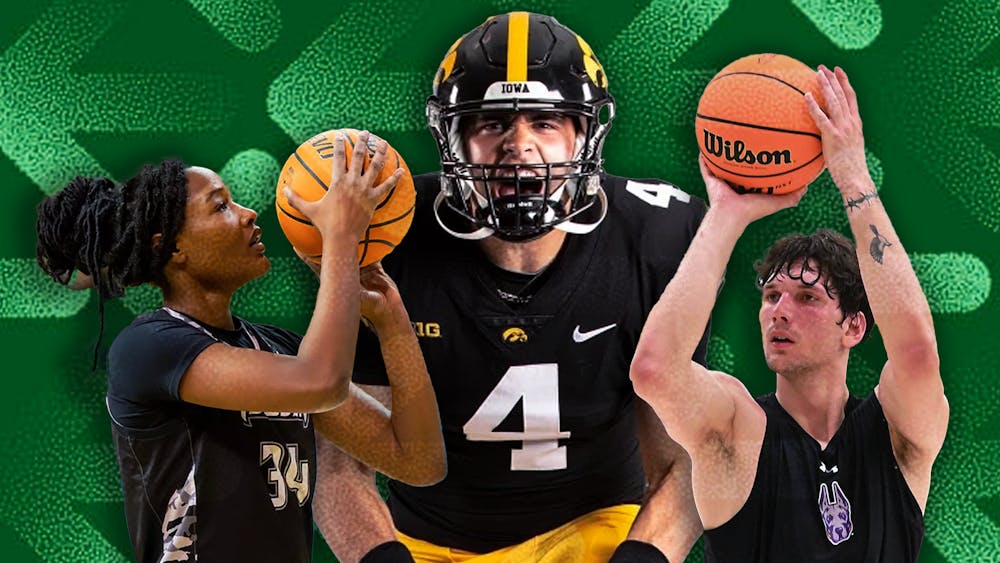
This group of transfers mostly comes from two different pools. First, are athletes joining a conference of greater competition. That includes the following athletes:
- Graduate transfer Ja’Juan Carr, who made 89 starts for the University of North Carolina Pembroke men’s basketball before transferring to Elon.
- Junior Alexis Nyborg, who won seven matches at No. 1 singles for the University of North Carolina Asheville women’s tennis team.
- Junior Tyana Walker, who averaged 11.8 points per game in her rookie season for the Howard University women’s basketball team.
The second group is players transferring from other competitive programs. This includes the following athletes:
- Quarterback Marco Lainez, who spent two years as a backup at the University of Iowa. Now, he’s competing for Elon’s starting quarterback position.
- Sophomore Weston Jonke, a midfielder transferring from West Virginia University to contribute to and elevate Elon men’s soccer.
- Sophomore Bryson Cokley, who appeared in 9 games for George Mason University men’s basketball in his first year.
In a world where understanding and using the transfer portal is continually becoming more vital, Strawley said Elon’s strategy will not radically change. It’s about understanding what the school does best.
“I don’t think Elon’s strengths are in transaction,” Strawley said. “You have to be innovative, but also identify where your strengths are. Our strength is in relationships.”
Those relationships and a strong school environment could be a factor in convincing athletes to buy in.
“The focus is really on how to provide a holistic student-athlete experience,” Strawley said. “How do we create the education and knowledge around pros and cons to transfers, to have honest conversations with young people when they're making those decisions?”
As transfer numbers continue to rise in college athletics, Strawley believes Elon’s strong environment is what will lead to success.
“We really believe in the four-year education model,” Strawley said. “The strategy focuses on providing the best possible student-athlete experience that young people want to be a part of, all the tenets of Elon education, and creating programs where young people have opportunities to compete at the highest levels.”
Strawley knows athletes will leave. Right now, their focus is on creating an environment that’s great for student-athletes. This is for student-athletes already at Elon, and ones looking for something new.
“It’s okay to understand that we’re going to have transfers,” Strawley said. “But it’s also okay that there are some other young people who didn't start here, but realize that this is the right place for them. And so how do we allow that to be part of the narrative as we talk about it?”