


Dust storms, the Colorado River, a large thunderstorm and a flood — all major plot points of Elon University’s production of “Grapes of Wrath” where technology plays a large role.
The show, based on the novel by John Steinbeck, will be performed April 3 to 5 in McCrary Theatre.
“Grapes of Wrath” is set in the mid-1930s during the Great Depression and the Dust Bowl. The show follows the Joad family as they lose their home in Oklahoma and go on a journey to California in search of a better life.
The story of the Joads is not unusual for the time period as the director of the show, professor of the performing arts Julian Stetkevych, said many people were fleeing the Dust Bowl.
Throughout the first act of the show, Stetkevych said the setting changes often, and these changes are portrayed with the help of lighting and sound design.
“Light design tells the story through shifting which parts of the stage we’re lighting, which lets us know we’re in a new location. Sound design will do some of that work as well,” Stetkevych said. “When we have a transition, there’s sound during it, either played live or recorded sound, and that, again, helps the audience understand we’re moving, something’s changing.”
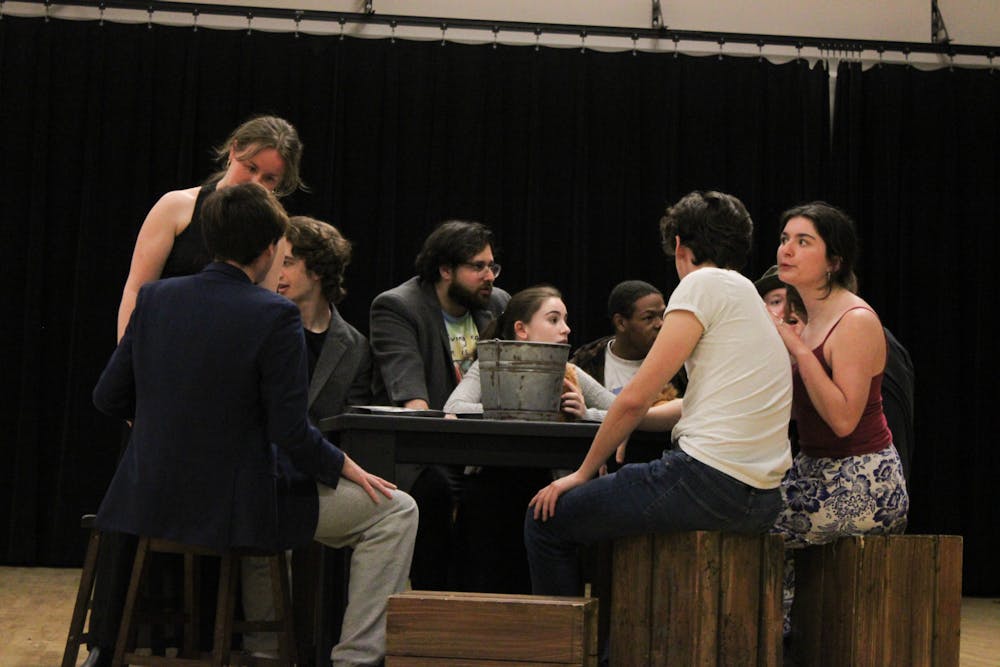
Lighting design is being produced by professor of the performing arts Mitch Fore. He said that there are many elements where lighting will play a large role.
“There’s a dust storm that’s being staged at the beginning to sort of set the scene,” Fore said. “Then they reach the Colorado River halfway through the first act, and then there’s a storm and a flood and all kinds of stuff at the very end.”
Fore said lighting is important in theatre to set the mood of scenes and establish where onstage audiences should be focused.
“Very often the highest compliment you can pay to lighting is that you don’t really notice it, but it seems to fit and is appropriate,” Fore said.
Much of the process for figuring out the lighting for the show Fore said will happen once the show begins technical production rehearsals in McCrary Theatre this week.
Before spring break, Fore said he attended a rehearsal run-through to get ideas ahead of time. He said the lighting for the show is meant to be more theatrical than realistic for each setting in the show.
“We’re not recreating Oklahoma and Colorado and California and all those places that they stop on the way, nor are we recreating the different places that they are in California,” Fore said. “It’s all very theatrical and presentational.”
Junior Parker Felumlee plays one of the leading characters, Tom Joad. He said he sees lighting as important to help audience members interact with the fictional world of the show.
“I know that lighting in particular is super important in that world that we’re building,” Felumlee said. “The lights alone are going to set us up in individual scenes and create a river and things like that, which I’m really excited to see.”
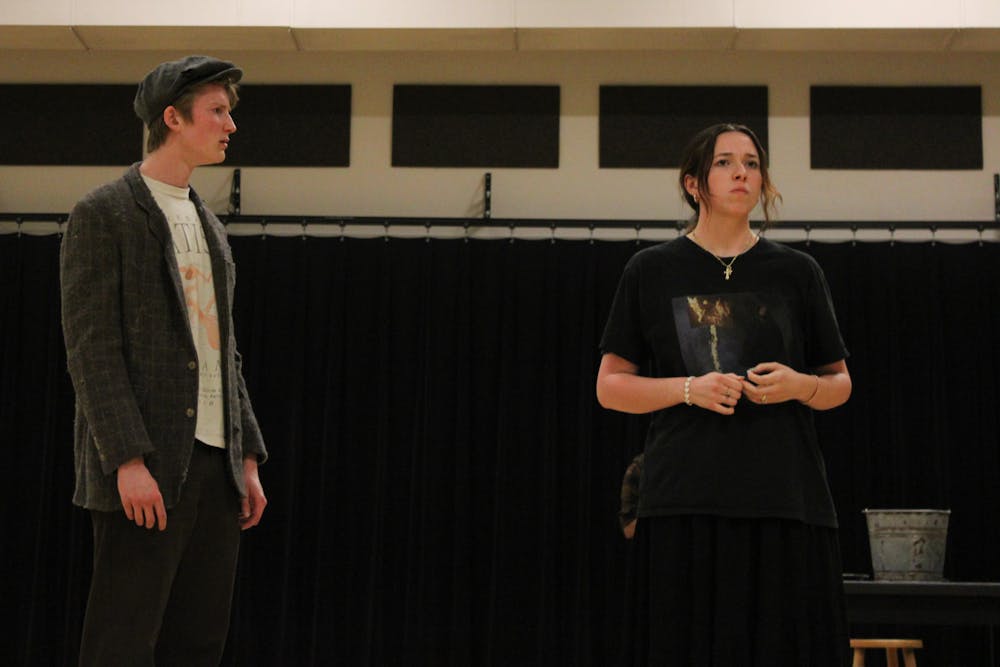
Sound design is being produced by professor of performing arts Michael Smith, who said that sound plays an important role in showing emotions and key themes through both sounds and music.
“Sounds create mood, create atmosphere,” Smith said. “They can heighten the sense of awareness. They can change focus.”
Smith said the process for sound usually begins with pulling ideas from the script of the work. Some of the key elements of sound include placing speakers as well as deciding the volume and timing of sounds, he said.
For “Grapes of Wrath,” Smith said there will be speakers placed in the balcony of McCrary Theatre to help create the distant sound needed for the storm scene in the show. He also said that the sound will have a certain feel to it to match the time period of the show.
“A lot of the sounds are going to have a certain kind of sonic texture to them that plays into what the Dust Bowl is,” Smith said. “These people are struggling. These people are gritty. These people are earthy. These people have a certain property to them, and I think that the sound needs to portray that.”
Junior Caroline Moore plays another leading character, Ma Joad, and said she feels sounds from both actors playing instruments onstage and the ones added by Smith will be impactful to the show.
“The sound cues that are going to come from the rain or the wind and the tree crashing at the end, and just really big sounds that we can’t make as an ensemble are going to be some of the most impactful things to add underneath our acting,” Moore said. “It’s going to help us as actors really hone in on the story and the circumstances, and it’s going to help the audience have a much better picture painted than if it wasn’t there.”
Felumlee said the show has a pretty heavy tone including events that happen before the show begins such as the family losing their home and his character killing a man. Stetkevych said he had the cast improvise and pretend to experience these events during rehearsal so that when they are mentioned in the show, the actors would have emotions to draw from.
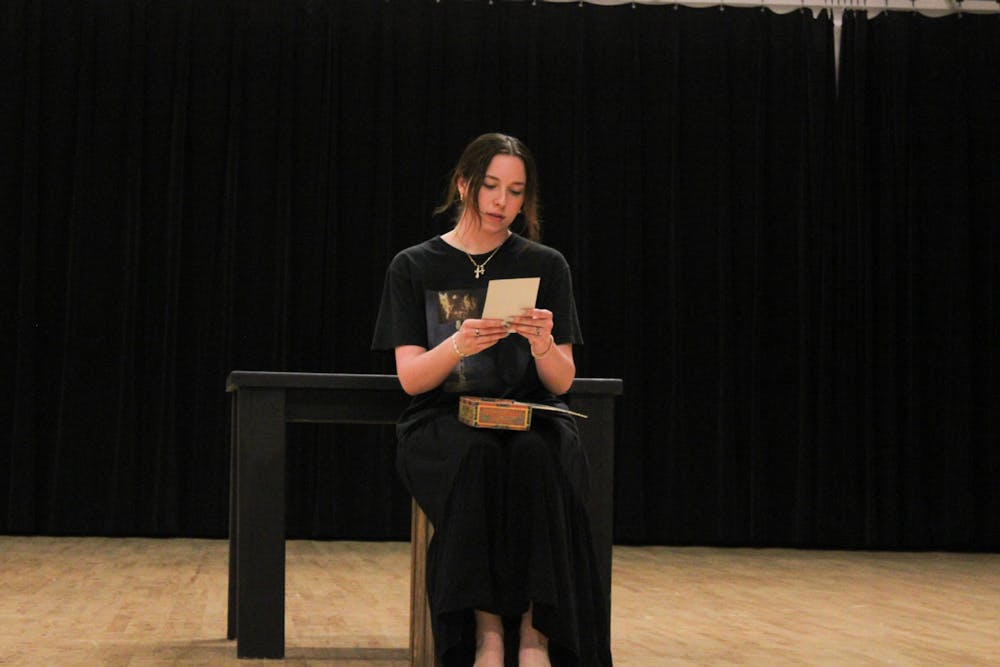
Despite the dark tone, there are moments of joy. For Moore, she enjoys the dance scene that she gets to watch most of the cast do together.
“Although I’m not dancing with them, it’s so joyous to just watch them having so much fun and putting their characterizations into their movement,” Moore said. “It’s just a really happy part of the show in general as well, and I think the audience is really going to appreciate that moment of just pure bliss and fun on stage while everyone’s dancing.”
Stetkevych said he enjoys the joy of the scene where the Joad family reaches the Colorado River in Act One after being surrounded by the dustiness of the Dust Bowl.
“It’s one of those other moments of joy in kind of, a cleanliness way, or as you can imagine all your family getting to the river after a long family drive or walk, and everyone jumps in,” Stetkevych said. “There’s something joyful about water.”