

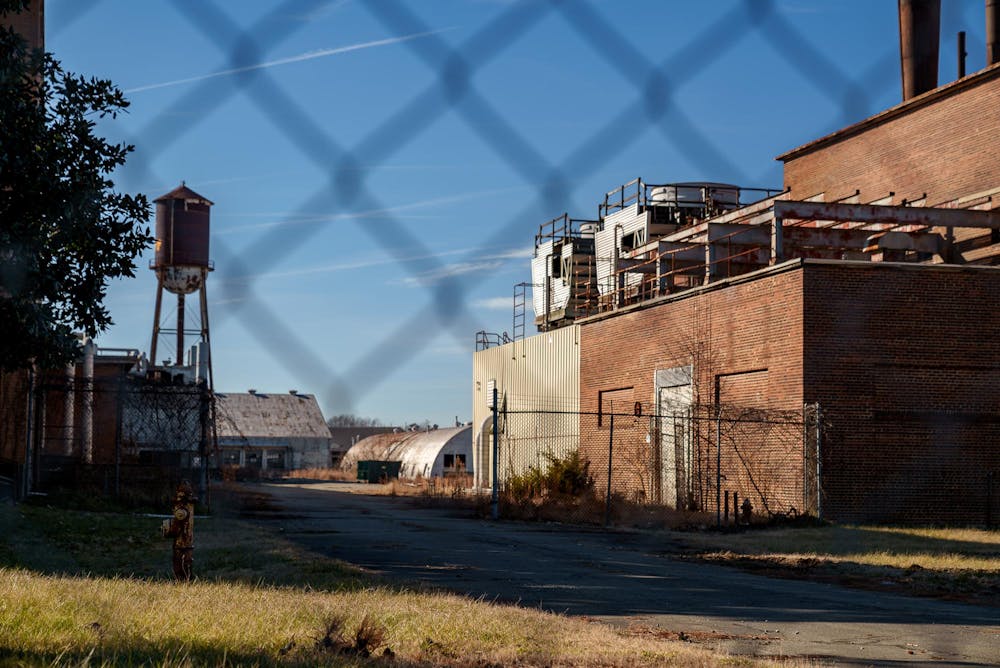
Just five miles east of Elon sits a 22-acre property called by different names within the east Burlington community. Some refer to it as Western Electric, others, the Tarheel Army Missile Plant. The property’s buildings are dilapidated and come with a list of public health concerns. Because of this, Donna Vanhook, an Alamance County soil and water conservation district supervisor, believes it needs to be torn down.
“My thing is, I don’t trust it. It has been 30 plus years since it’s closed, and I don’t trust it at all,” Vanhook said.
Originally constructed in 1927 as a synthetic fabrics factory, the 22-building site has a checkered past and present. The Defense Plant Corporation purchased the property in 1942, leasing it out to several different companies to manufacture components for military operations, including being used as a research and construction facility for Western Electric and Nike Ajax surface-to-air missiles in the Cold War. The U.S. Army Aviation and Missile Command held jurisdiction of the land in 1962, and it leased out the space to AT&T— where Vanhook worked as a security guard until its closing in 1992 — and Lucent Technologies. The U.S. Department of the Army sold the property in 2004.
During the Cold War, the plant provided nearly 4,000 jobs for Alamance County, as well as a small neighborhood adjacent to the property to house workers. What was once an opportunity for economic growth is now a collection of run-down buildings and broken glass, creating public health concerns for the surrounding neighborhood.
Throughout its operation, chemicals seeped into the soil and groundwater beneath the buildings due to accidental spills and poor regulation of their disposal, according to reporting done by NC Newsline. The plant has since polluted the surrounding area with a variety of contaminants including various carcinogens, asbestos, lead and even radioactive materials, according to a study done by federal contractors called Terracon in May 2023.

Vanhook said the plant has decreased the property value of the adjacent homes, creating a high turnover rate of families who live there. The neighborhood is made up of primarily low-income people of color who are moving in and are the most affected by its pollutants.
Although it can’t be exclusively attributed to the plant, east Burlington has an average lifespan expectancy 11 years shorter than west Burlington, its wealthier counterpart, according to a 2018 Alamance County health assessment. Life expectancies can be affected by a multitude of factors, including income, lifestyle, education and nutrition.
“As the plant started, it used to be booming in the area. I have talked to people who retired from there and they talk with glee about their job,” Vanhook said. “People have good memories about it and that type of thing. But as I understand it, it began to be more Black and brown as the plant started to close."
Since the ’90s, the past and current private owners have applied and been denied from national and state programs designed to assist in the cleanup of contaminated areas. In the mid-1990s, samples of soil from the property were taken to test for eligibility for the Superfund, a national program that brings public engagement to polluted sites, according to Newsline. Doing so would have informed the surrounding community of the hazards relating to the site.
However, the plant scored too low to be considered a national priority, although the soil test has since been questioned. Underserved communities are also underrepresented on the Superfund list, and the tests did not include the recently discovered levels of PFAS compounds, also known as “forever chemicals.”
The U.S. Department of Defense and other previous owners are responsible for the cleanup of the land, according to the city of Burlington.
Jessica Merricks, an Elon professor of biology, explained how these man-made chemicals were designed to be difficult to break down. Because of this quality, PFAS compounds are used to make things waterproof, stain proof, non-stick and grease resistant. This means they can commonly be found in products like makeup, kitchenware and clothes and usually spread to the environment through drainage and sewage systems.
“The PFAS that sloughed off of a skillet 40 years ago is still around. So that means we have seen an accumulation of PFAS compounds in the environment over time,” Merricks said. “Now we are starting to see significant threats to the wellbeing of the environment and plants and animals.”
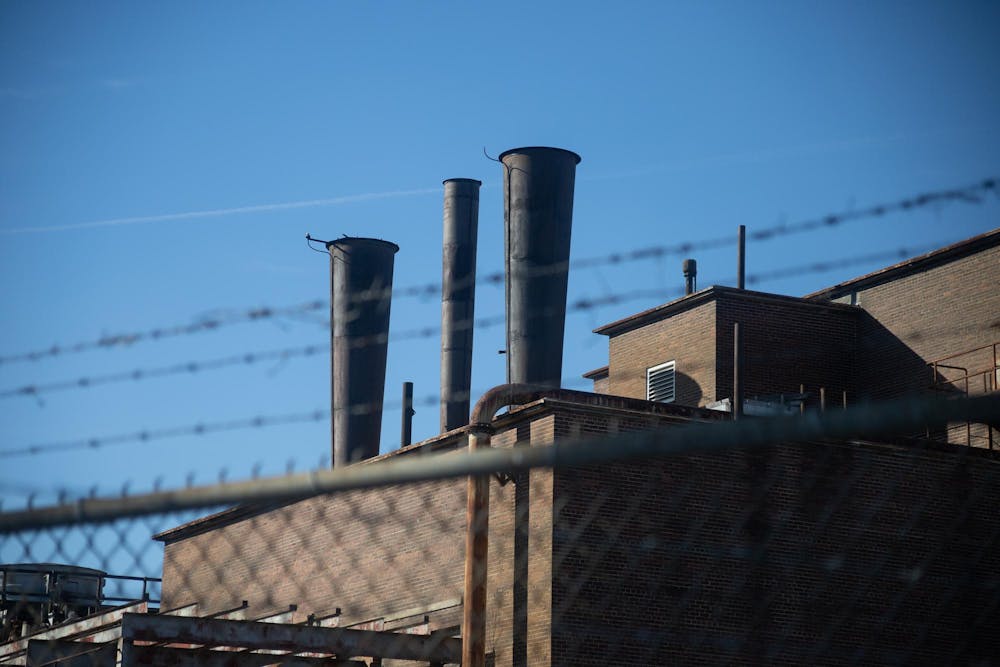
In January 2023, the groundwater and soil beneath many of the buildings was found to have levels of PFAS that neared or surpassed the EPA’s health advisory limit of 70 parts per trillion in drinking water. Newsline reported on these findings in April 2024, right after the EPA pushed for lowering the legal limit of PFAS compounds to 4 ppt. This is an important difference from the health advisory limit of 70 ppt, according to Merricks, which was not enforceable and had no legal consequences.
Newsline reported that the tests from the plant identified high levels of two specific PFAS compounds, PFOS and PFOA. The groundwater beneath one building at the plant showed levels of PFOS at 210 ppt and PFOA at 39 ppt. Another spot found levels of PFOS and PFOA at 43 ppt and 93 ppt, respectively.
“If I haven’t made that clear, those levels are astronomical,” Merricks said. “This is a lot. This is not good.”
Because of PFAS compounds’ structure, natural systems, such as the environment or the human body, can’t break them down. This leads to the buildup of PFAS over time in both humans and animals, Merricks said. This accumulation can interfere with the endocrine system, potentially causing fertility and thyroid problems as well as increasing the risk of cancers, such as prostate and kidney cancer.
The groundwater feeds into a stream that cuts directly through the surrounding neighborhood, a stream which people wade and play in. From there, it merges with Service Creek which feeds directly into the Haw River.
Without national or state-level recognition, advocates like Vanhook have struggled to garner enough support to properly tackle the remediation process, despite concern within the community.
“I use my voice as a community member because I’m kind of between campus and the actual site, but I’m just concerned about the people,” Vanhook said.
Due to a lack of tests, the levels of pollution in the air and surrounding soil is undetermined, yet many residents remain apprehensive about drinking tap water or gardening in their own backyards.
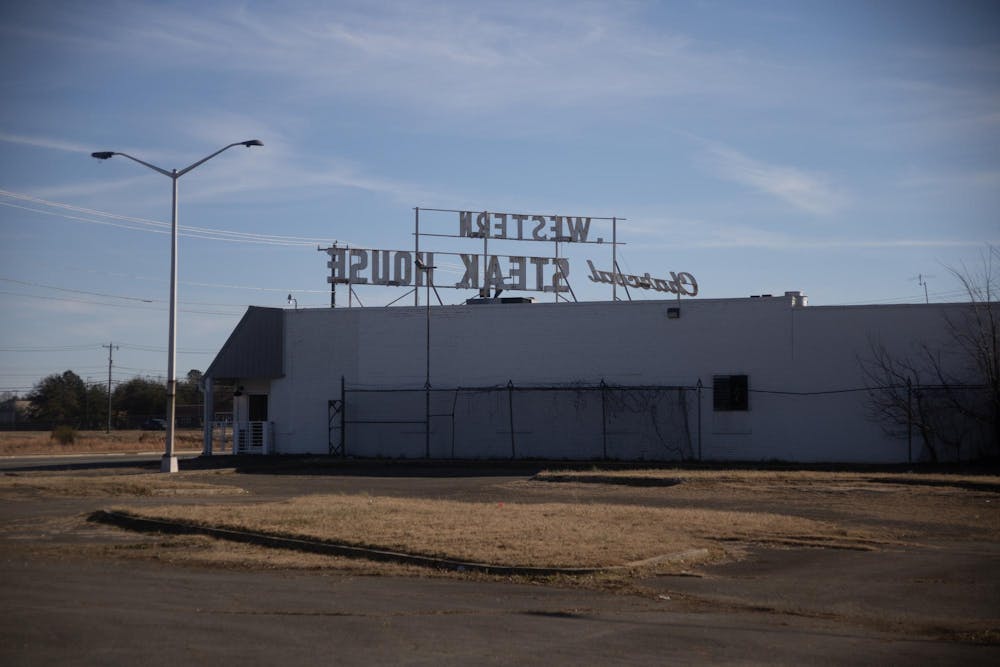
A lack of access to proper nutrition is also a concern of Vanhooks. Across from the plant is an empty field, which Vanhook said was supposed to be a Lidl grocery store, until the plans were abandoned because of the plant. East Burlington is left with a Food Lion and Walmart to buy food from. Vanhook prefers to drive out of the area, to stores such as Sprouts Farmers Market and Wegmans to get her fresh fruits and vegetables.
Right now, the DoD is working on removing the source of contaminants, adding to the groundwater barrier and conducting research and investigation, according to the city of Burlington. According to the schedule posted on the city of Burlington’s website, there will be a feasibility study conducted in April, which will lead to a proposed cleaning plan in May. There will be public comment for the plan in August.
However, after a lack of government interference, Vanhook turned to local efforts. In November 2023, a forum was held through WERA, the West End Revitalization Association, in order to fast track the cleanup process. WERA aims to promote positive environmental change in local communities of color. Additionally, some community members have formed RAB, the Restoration Advisory Board for the Western Electric Property, which informs and provides the local community a voice.
“This is shaping up so that the conversation can go beyond Alamance County. That’s with all of the environmental science and that’s with how to relate to the community in such a way that is not always talking about science,” Vanhook said. “We’re bringing it to a lay person’s level."