

Updated as of 2:14 p.m. on Nov. 23 to include student perspective.
Beaten. Stabbed. Shot. Suicide. Run over by car.
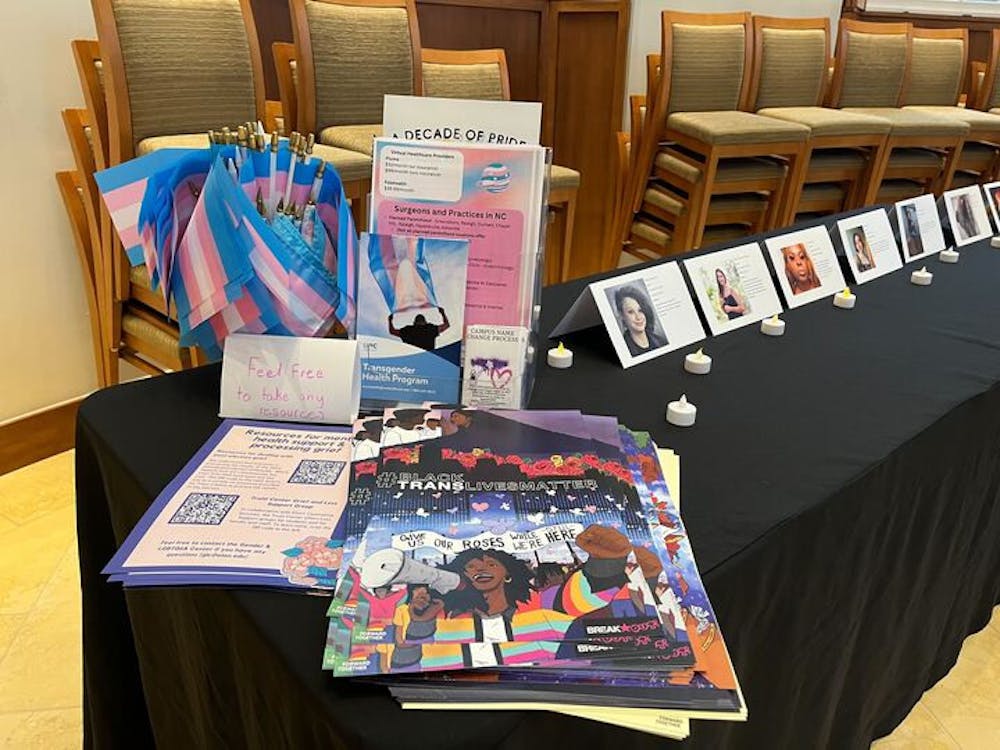
These words seemed out of place next to the names, ages, photos and heartfelt stories of the 67 transgender and genderqueer people memorialized in Numen Lumen. Yet, these gory details were the reason those people’s stories were printed, crisply folded and placed carefully on a table next to small candles in the Numen Lumen Sacred Space on Nov. 20.
Elon students, staff and community members honored National Transgender Day of Remembrance on Nov. 20 with a Remembrance and Resilience ceremony, during which people could read stories and see faces of those whose lives have been lost to transphobic violence or suicide in 2024 so far.
Transgender Day of Remembrance was first established in 1999 on the last day of Transgender Awareness Week in memoriam of Rita Hester, a trans woman who was killed in Massachusetts.
Gender and LGBTQIA Center Associate Director Becca Bishopric Patterson said the resilience element of the GLC’s event was added a few years ago to bring a hopeful element to the somber gathering.
“We wanted to speak to not only remembering those that we had lost, but also upholding and validating the resilience that it takes to be trans in a world where there’s so much oppression — so many forces working against trans folks to just be who they truly are,” Bishopric Patterson said.
Quiet, calm instrumental music played and shoes squeaked on the floor. The room was otherwise silent, the air heavy with grief and contemplation. Posters to express these thoughts and feelings read, “Why is it important to have these conversations?” “What is one word/phrase that comes up for you when reading these stories?” and “What’s beautiful about being transgender?”
Elon sophomore Aidan Fishkind said some responses on the posters stuck out to them.
“‘Why is it important to have these conversations?’ Because otherwise people might not survive,” Fishkind said. “Because if we stop, then we become unaware of the problems. Whether you talk about this stuff or not, it’s still happening. And the more ignorant we allow ourselves to get, the more problems are going to occur.”
Bishopric Patterson said it’s important to remember that the people who were depicted on the tables were only the victims who were properly identified and reported — noting there are many more who were not reported nor displayed. She said that transgender people can be misgendered and dead-named in their obituaries, which means they are listed as a gender that does not align with their identity and their preferred name is not used.
“I think that there’s a real power in grief,” Bishopric Patterson said. “I think we try to sugar coat everything, which is important. It’s important that we highlight all of the amazing qualities of our trans siblings and friends. We also have to be able to hold space for our grief about how hard it is to live in this world and survive in this world sometimes.”
Fishkind said the photographs of victims next to their names and stories were a perfect and necessary addition, showing glimpses into their worlds and interests.
“When you just see names and words, it’s easy to dismiss,” Fishkind said. “Seeing their face, knowing that this is a real human being, most of which are pretty young — that very well could have been somebody that you had a class with that sat right next to you. I saw people and their interests and was thinking, ‘That person could have been my best friend.’”
Bishopric Patterson said an artistic element is included each year, from names forming shapes to fabric squares making up a trans flag. This year, she said the posters were meant for people to be able to express themselves and see messages of support from their community.
“We know that people are grieving and scared right now in a different way than they were a few months ago,” Bishopric Patterson said in reference to the recent election.
She mentioned that the 558 bills making changes to LGBTQ+ rights that have been introduced across the country are not going to stop harming the community.
“The discrimination and hatred towards LGBTQ folks unfortunately isn’t something we’re newly navigating,” Bishopric Patterson said. “It’s always there to some level, but might be a little bit more present right now, and a little scary in terms of what’s going to come. And so all the more reason for us to have events like this and show support and solidarity.”
Fishkind emphasized the importance of emergency resources highlighted at the event and the importance of checking in with people in an effort to prevent them from becoming a face in an exhibit.
“If you just check in with your friends now, then the odds of anything happening diminish greatly, because you never know what’s going on, even if somebody seems perfectly happy,” Fishkind said. “So just check in on your loved ones.”
Call or text the Suicide & Crisis Lifeline — a free, confidential service — at 988 to connect with a trained crisis counselor 24/7. Text HOME to 741741 to reach the Crisis Text Line. Elon University offers 24/7 free and confidential virtual mental health support and services through TimelyCare.