

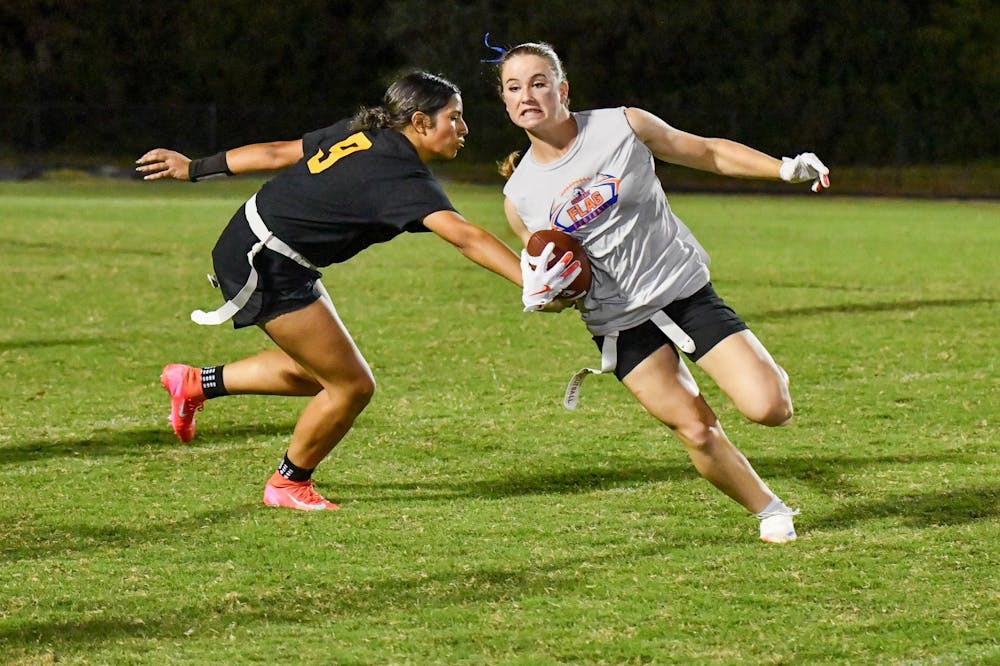
Five teams, one field, and a level of competitiveness that had teammates on the sideline unable to contain their excitement.
“There were some competitive environments, and those girls, they were getting after it,” said BJ Condron, athletic director at Southeast Alamance High School. “There was all the intensity from the sideline, and just all the cheering and energy that they showed was something that I loved.”
That’s the memory that stands out for Condron from the Southeast varsity girls flag football games at Alamance County’s first round-robin tournament last year.
Now, he prepares for the first sanctioned season of girls flag football in North Carolina history — a sport that barely existed in Alamance County two years ago.
From two schools to five
The North Carolina High School Athletic Association’s board of directors voted to approve girls flag football as an official high school sport over the summer, capping a rapid rise for the sport over the last two years.
According to Eastern Alamance Athletic Director Brad Costa, the push began around the summer of 2024. ADs from the county met with representatives from the Carolina Panthers, who have invested over $2.5 million into growing the sport statewide over the last four years.
By spring 2025, Costa and Condron realized both schools had enough interest to start growing programs in Alamance County. It was just a matter of finding competition.
“We said we’re going to make this happen, even if it’s just us two playing,” Costa said.
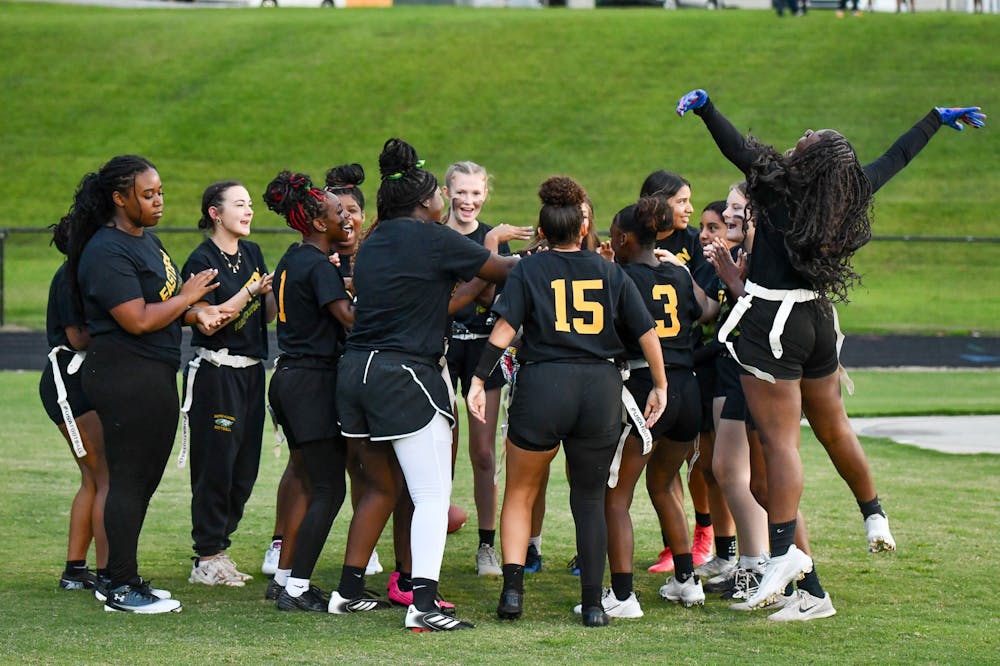
Costa ended up recruiting teams from beyond the county line, pulling in Northwood High School and Seaforth High School in Pittsboro, plus Jordan-Matthews in Siler City to round out a five-team, unsanctioned league last year. Eastern hosted the first tournament.
“It was such a cool atmosphere,” Costa said. “You could see the excitement from the girls, and it was just a really great thing.”
Condron said the response from athletes at Southeast caught his coaching staff off guard — in a good way. The new fall sport has drawn students who hadn’t necessarily played for the school before.
“It put together a group of kids that I don’t think normally would have been together,” Condron said. “Offering that to our students was kind of a no-brainer.”
Both ADs described a level of competitiveness that surprised them.
“You can’t go into it half-hearted, because those girls want to win,” Costa said, calling it his biggest takeaway from the first season.
Condron said he had to make one thing clear to his players early on: This wasn’t “powder puff football.” Once that distinction was set, he said, “those girls, they were getting after it.”
Finding a home on the fall calendar
Approval of the sport didn’t come as a surprise to either athletic director, but the timing carried some uncertainty. Costa said he expected the NCHSAA to formalize the sport as early as last winter, and the delay stemmed largely from figuring out where flag football belonged on the calendar rather than whether it belonged at all. Different regions of the state had already built out programs on different schedules, from fall leagues in Charlotte-Mecklenburg, Wake and Guilford counties to a spring season in Charlotte.
Costa argued fall was always the better fit because spring already carries a full slate of competing girls programs like softball, soccer and track.
Former NCHSAA President Stephen Gainey, who recently stepped down from the board, said sanctioning wasn’t a surprise either — the association requires two years of data showing at least 25% of member schools’ participation before a sport qualifies.
Girls flag football cleared that bar this year. Now, 154 high schools across North Carolina are committed to fielding girls flag football teams for this upcoming season, according to the Carolina Panthers website.
What sanctioning actually changes
The upgrade brings a formal governing structure, but also new headaches. Condron said Southeast could play two games on one field last year. Now, under sanctioned rules, fields can only host one game at a time, complicating scheduling as more schools join a shortened, modified first season.
Costa said the seven-and-a-half-week regular season allows for up to 18 games, with matches beginning in early September and the state playoff window opening in mid-to-late October.
Costa expects Eastern’s roster to land around 20 players, while Condron said Southeast’s turnout could push closer to 25. Considering only seven players can be on the field at a time, both AD’s thought the only issue with roster size would be potential cuts.
“The problem will be, do we have too many out there, and are we going to have to turn people away?” Condron said.
Three more county schools — Western Alamance, Southern Alamance and Williams — have committed to starting programs, with Cummings also showing interest. But Condron says all schools are hesitant to try something new and fully invest into the teams.
Condron is hoping that a planned Eastern-Southeast showdown, with the other teams watching and scrimmaging afterward, will nudge the holdouts to commit.
Not every school has jumped at the opportunity yet, and Condron was candid about why.
“I think they’re just reluctant to jump in at this time, just because it’s something new,” Condron said. “We can make excuses, and there are obstacles, of course. But I feel like once you get started and you see the impact it has on some kids, or maybe you see that kid that doesn’t play anything else, but they’re down to play this, and the joy that they have for it, that’s worth it.”
A sport built around changing interests
Gainey framed the sanctioning of girls flag football and boys volleyball as part of the same story — an athletic association responding to what students actually want to play.
“It shows the athletic association’s continued movement towards interests of students as interests change,” Gainey said. “I’m very proud of the board and very proud of all the people who got behind this sport.”
Condron said this new step makes an impact on student-athletes, on and off the field.
“We know the benefits of athletics and kids that participate,” Condron said. “They’re going to come to school more. They’re going to have better grades. They’re staying active, just generally. And so the more opportunities we can give them to do that, the better off things are.”