

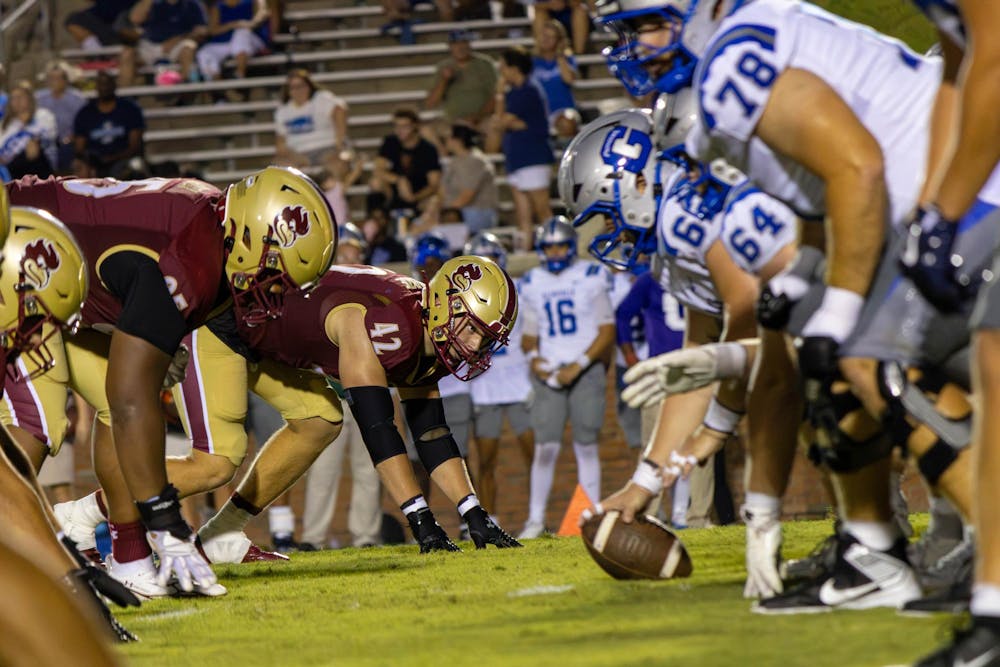
During a two-hour practice, Elon football head coach Tony Trisciani made sure his players knew that being off the field does not mean being out of the game.
“Mental reps! When you’re off, you still should be doing mental reps,” yelled Trisciani, a familiar echo after the team’s first game.
For Trisciani, the instruction is about more than simply knowing where to line up. It’s part of a larger emphasis that has defined Elon’s offseason and carried into the 2026 season.
Accountability.
After two consecutive 6-6 seasons, a 4-4 conference record last season and ranking of third in the Coastal Athletic Association preseason poll, Elon enters 2026 with a clear goal: improve and win the conference. But to do so, Trisciani believes the Phoenix need to develop the habits that have eluded them in the moments that mattered most.
“We’ve lost some football games where it came down to little details,” Trisciani said. “Was it a pre-snap penalty? Was it an undisciplined decision? Poor judgment after the whistle? Was it a selfish decision that impacts the whole team?”
Those details have become a point of emphasis throughout the program.
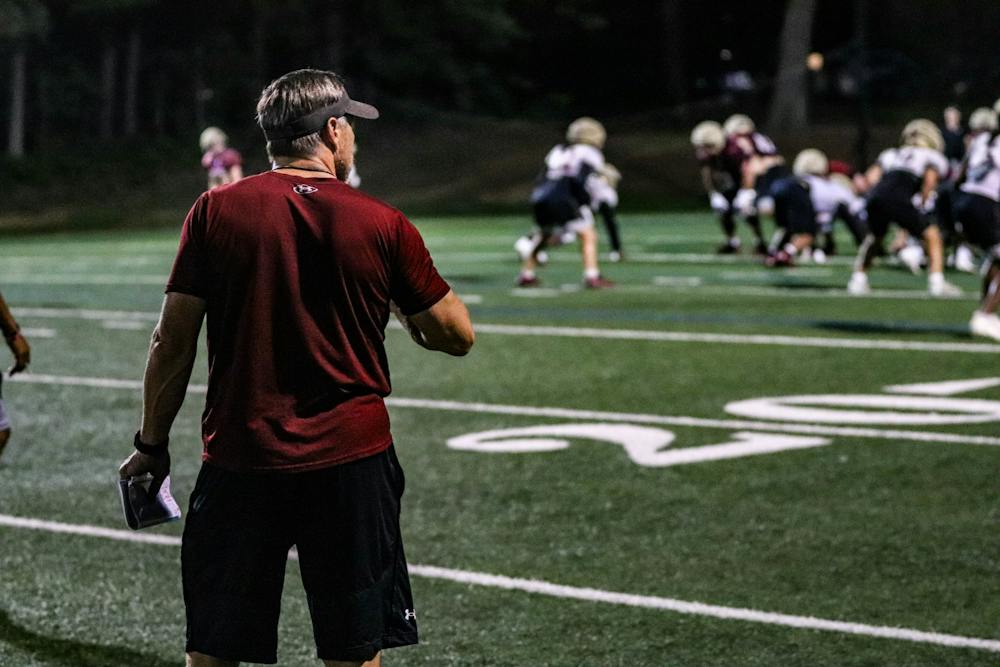
Elon football head coach Tony Trisciani surveys his defense during a practice on Sept. 1.
Lessons in leadership
Co-captain and graduate receiver William Lankford said discipline has been one of the biggest differences he’s noticed compared with previous Elon teams. Even seemingly minor details, like keeping shirts tucked in or making sure the correct foot is on the line during sprints, have been emphasized throughout the offseason.
The goal, Lankford said, is to eliminate mistakes in practice before they become mistakes on Saturdays. That emphasis isn’t limited to the coaching staff.
Trisciani said Elon has intentionally made accountability a player-led responsibility, with older players expected to hold teammates to the program’s standards.
Among those leaders are Lankford and his fellow captains, graduate Tim Hogan, graduate Jevean Brown and redshirt junior Brodie Carroll, alongside senior Jimmyll Williams, redshirt junior Dylan Magazu and others.
The program has also spent the offseason intentionally developing those leaders.
Elon’s players were divided into smaller teams of 12, led by some of the program’s top veterans. Those groups competed throughout the offseason, accumulating points and earning rewards such as new sneakers.
The program also brought in Chris Leupold, an Elon leadership professor, to work with the players and staff on developing leadership skills.
The purpose was simple: create a team where accountability doesn’t stop when the coaches leave the room.
“It’s player-led,” Trisciani said. “There’s certainly accountability from the top with coaches, but player-led leadership and accountability is important.”
That work extended to team bonding during summer workouts. Trisciani purposefully put players who normally wouldn’t cross paths — like a freshman defensive back with a senior offensive lineman — together to encourage connection across the team.
Brodie Carroll, the team’s star linebacker, thinks that will make a difference.
“That’s been huge, just to build that bond,” Carroll said. “I feel like you need to have that bond off the field.”
That leadership will be especially important for a team that blends veteran experience with an influx of younger contributors.
Under new NCAA rules adopted in June, Division I athletes were granted a five-year window to play college sports, adding an extra year to every player’s eligibility. That’s allowed Elon to lean into its recruiting philosophy.
Trisciani said the Phoenix remain heavily reliant on high school recruiting, meaning the roster is “bottom-heavy” in terms of age. Instead of worrying about preserving a redshirt season, Elon can now play younger players when they are ready to contribute.
Elon opened the season with a 42-7 win, holding Glenville State University to just 125 total yards. Among the young players who saw meaningful action was offensive lineman Will Tellers, who started his first college game as a true freshman — something Trisciani called rare at the position. Trisciani said his intelligence and reflexes helped him get on the field, but he wants Tellers to get stronger.
New faces, new defensive opportunities
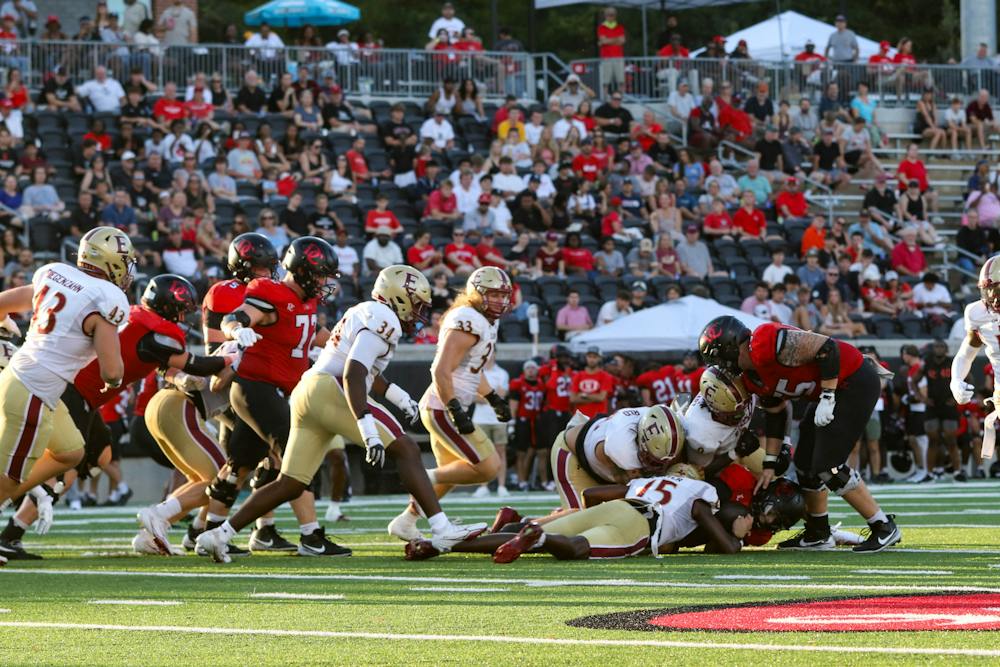
Redshirt junior Tony Hart III, redshirt sophomore Rashad Reid and freshman Xavier Porter combine for a sack on Davidson quarterback Casey Bullock in Elon's 38-0 win against the Wildcats on Sept. 5.
On defense, young players such as second-year linebackers Derek Hite and Ryder Duffy are playing alongside Carroll, while freshmen Xavier Porter, Tyler Dent and Tyler Owens are working their way into the secondary rotation.
Trisciani called Carroll the “quarterback of the defense,” pointing to his football IQ and preparation. Carroll, an All-CAA second-team selection last season, recorded 103 tackles in 2025.
“He’s always studying the game,” Trisciani said, boasting about his linebacker. “He’s going to be prepared and a step ahead.”
That experience will be valuable for a defense that lost several contributors from last season’s defensive line, which Carroll credited for a large amount of his success.
Elon finished 2025 with 39 sacks, the most in the CAA. But several of the players responsible for that production are no longer on the roster, including Kahmari Brown, who transferred after breaking the program’s single-season record with 12 sacks.
Still, Trisciani believes the group has enough depth to compensate.
Sophomores Chaz Knox, Rylan Shibley and Rashad Reid form a young interior group that Trisciani described as disruptive, while graduates Dillon Pardue, Trey Woods and redshirt junior Nhycer Kelly provide experience on the edge.
The secondary, meanwhile, is undergoing more turnover. The younger defensive backs will be led by captain Jevean Brown, who Trisciani said has brought maturity and a strong football IQ to the group. That can be seen at practice, where Brown is constantly guiding his teammates, on and off the field.
Changes on offense
Offensively, Elon will also look different.
Brady Stober has entered his second year of college football and first season as Elon’s starting quarterback after transferring from Samford University. Elon had recruited Stober since high school, and the Phoenix were his first official college offer.
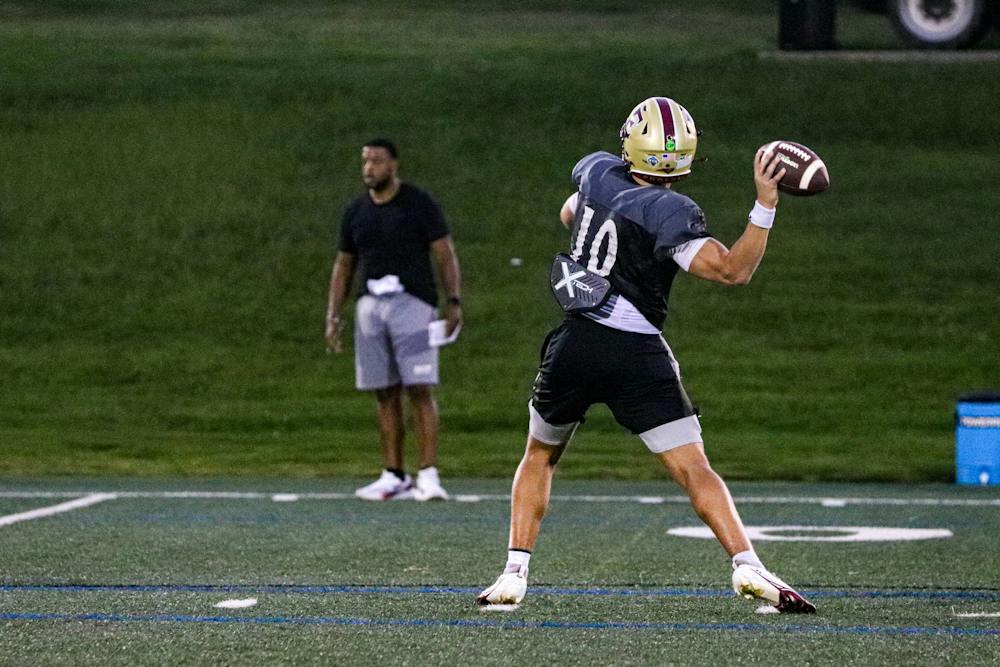
Now, Trisciani said Stober’s maturity, composure and command have stood out since he arrived in January. Lankford said he was impressed by Stober’s immediate impact on the team.
“He’s a great guy, and he’s just come in and been a leader as soon as he came here,” Lankford said. “I just know he’s going to be successful, and I’m super excited to see that.”
Stober injured his hand in Elon’s second game of the season against Davidson College on Sept. 5. Elon Athletics said there is no definitive timeline for his return. Backup quarterbacks TJ Crews IV and Tanner Payne have both taken snaps in Stober's absence.
Trisciani said he remains confident in the team, regardless of who’s at quarterback.
"Do I have confidence in our quarterback room? Yes," Trisciani said after Elon's 31-10 loss to the University of Rhode Island on Sept. 12. "We've got to continue to coach those guys, develop them, and we also need to rally around them as a team, really in all three phases of the game.”
Elon has a deep receiver room to catch passes from those quarterbacks — touting a trio of veterans and a variety of young options. Trisciani was quick to point out that Elon’s pass catchers go beyond the receiver room, including three running backs with different styles.
Jimmyll Williams provides a physical, downhill presence, freshman Kamerin McDowell-Moore brings speed and explosiveness and redshirt senior Dan Fredrick provides a combination of strength and length.
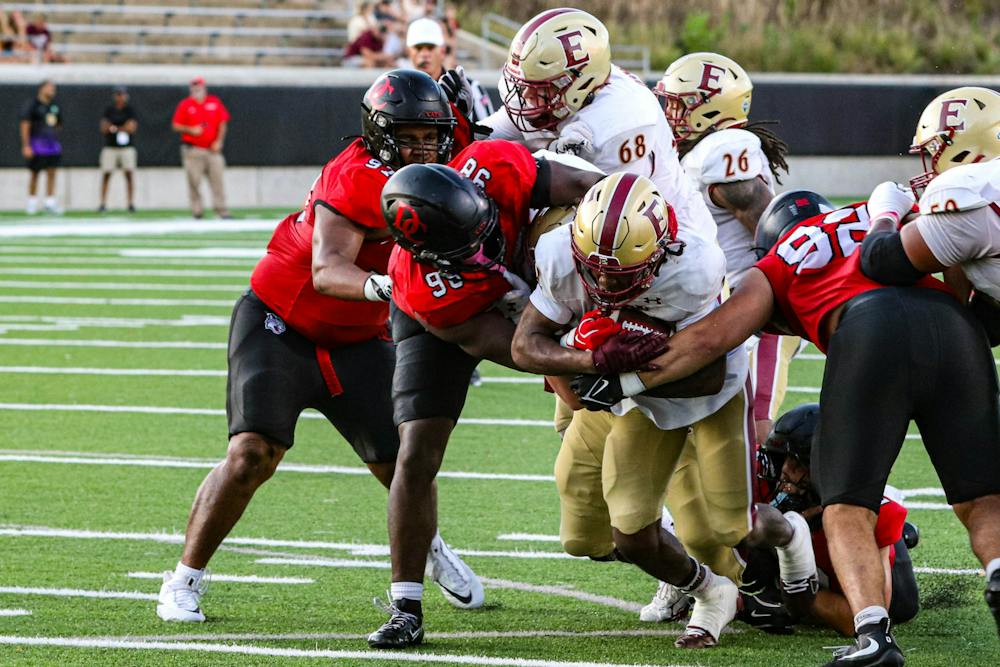
Freshman running back Kamerin McDowell-Moore powers past two Davidson College defenders in Elon's 38-0 win against the Wildcast Sept. 5. McDowell-Moore rushed for 88 yards and two touchdowns in his second game as a Phoenix.
That versatility fits what Trisciani describes as an “equal opportunity offense.”
“If you get open, create separation, you can get the football,” Trisciani said.
And while the offense and defense may receive most of the attention, Trisciani said special teams remain a critical piece of the team’s identity. Field position and hidden yardage, he said, can determine the outcome of games — particularly for a team trying to turn close losses into wins.
For Trisciani, those margins provide a clear target for a team that has spent the offseason focused on eliminating small mistakes. Ultimately, however, the pieces only matter if Elon can put them together.
Trisciani’s goals haven’t changed: win a CAA championship, return to the playoffs and advance once there.
“We’ve been close, knocking on the door,” Trisciani said. “We need to knock it down.”
Miles Hayford assisted in the reporting of this story.