

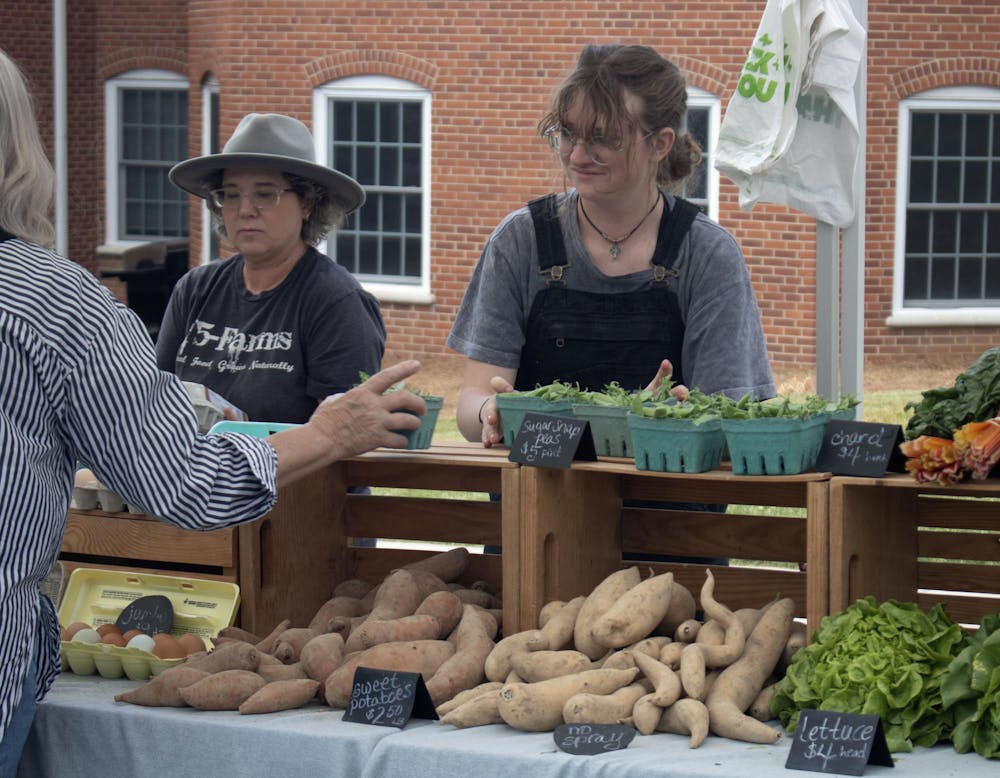
With much of North Carolina having faced drought conditions for several months, Audrey Thompson, a farmer at T5-Farms, said the drought has added extra steps to work on the farm.
“The main thing that it affects is our timing of getting things in the ground when they need to be, because in order to work ground up we need it to be a certain level of moisture,” Thompson said. “It’s also keeping water to all of our animals, like the pigs always have mud to be in. It adds a little bit.”
Alamance County, along with most of the state, is in extreme drought conditions. These conditions mean long water shortages, damages to agriculture and fire risks. According to the National Integrated Drought Information System, as of May 1, 54.8% of the state is in an extreme drought or worse. Counties in these conditions are advised to limit their water use, and check their local water supply system to find any restrictions that are in place.
Drought conditions started in September 2025, though North Carolina did not see a majority of severe drought conditions until Jan 13, 2026. The Global Drought Information System estimates 9.5 million North Carolina residents are in areas of drought, with this March being the 5th driest March since 1895 with only 1.85 inches of precipitation.
Exceptional drought conditions emerged in part of the southern Piedmont for the first time since March 2008. Union County has implemented Stage 1 water restrictions because of exceptional drought conditions. These restrictions include limiting sprinkler usage to certain times and requiring plumbing issues to be fixed within 48 hours.
Raleigh is under Stage 1 water restrictions, Charlotte will be under water restrictions effective May 15. North Carolina is still under a burn ban while drought conditions persist. Alamance County has not issued restrictions as of May 1, but according to the North Carolina Drought Management Advisory Council residents are advised to eliminate nonessential uses of water, such as filling swimming pools.
Alamance County farmers are having to quickly adapt to the worsening conditions. Goat farmer Charlie Ross said his farm is using more water than expected.
“Goats can get a lot of their moisture needs when they forage, but with the lack of rain there’s a lack of growth, and there’s not as much forage,” said Ross. “We’ve had to give hay longer into the spring than we normally would have, because there would normally be more regrowth formed to graze.”
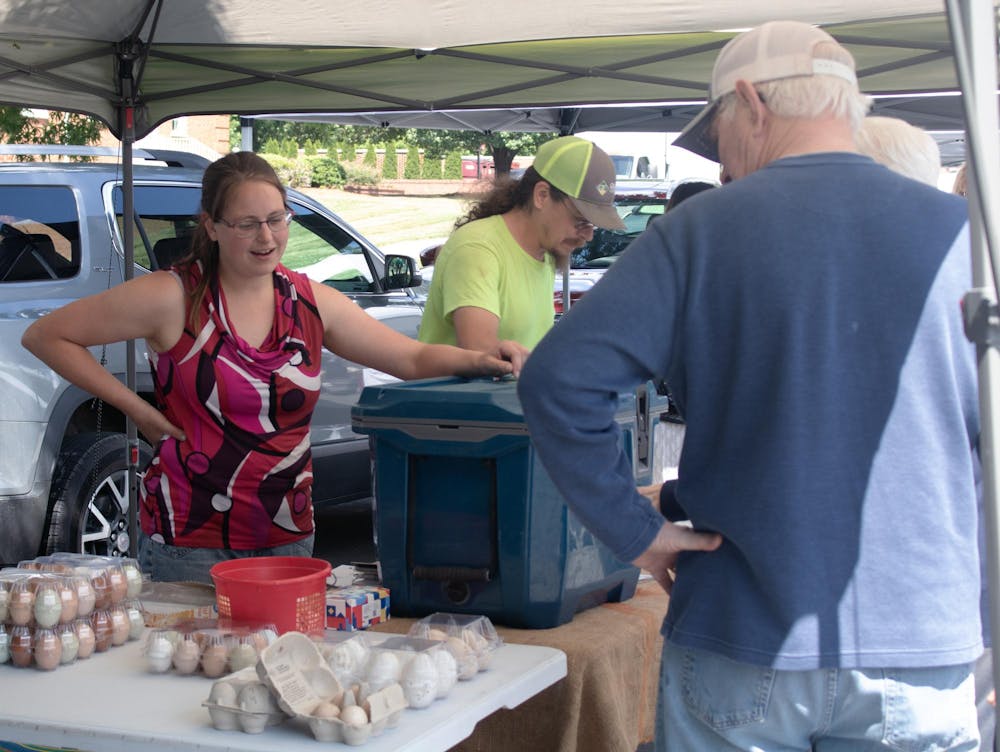
Nolan Carter, the Haw River Trail Coordinator for Alamance Parks, said as the Haw River’s levels have decreased, he’s seen parts of the river become more challenging for paddlers.
“Historically speaking, spring is a great paddle season, so that’s when a lot of people get out on the water river sections,” Carter said. “I think the biggest impact is some of those options aren’t really out there right now, unless you want to walk your boat through pretty good size sections, it just doesn’t create a great experience.”
Scott Stevens, director of landscaping for Elon University, was unavailable for an interview but wrote in a statement to Elon News Network that the university has safeguards in place for drought conditions.
“If and when there are restrictions this will only affect a small portion of the campus landscape and we will follow the County’s guidance,” Stevens wrote. “Water stewardship begins many months and years in advance of a drought or drought conditions.”
Water usage on campus is not limited to landscaping.
Elon University publishes water usage for Founders Hall and Innovation Hall, as well as Schar Hall and Steers Pavilion. According to the report, Founders and Innovation used 9,086 gallons of water from April 4 to May 2. This is an increase of almost 15% from the previous 30 day period. Schar and Steers also saw an almost 15% increase in water usage during that time frame, with 39,272 liters of total water usage.
The worst recorded drought in North Carolina was in 2007, where two thirds of the state was in exceptional drought conditions at the peak. While less of the state is in exceptional drought conditions now, the North Carolina State Climate Office reports that overall deficits are similar to what they were in 2007.
Klaus Albertin, chair of the North Carolina Drought Management Advisory Council, said his team has been monitoring rainfall, ground water, stream flow and reservoir levels over the last six months. He said while many levels have raised concerns, the cooler weather has lessened the damage.
“This one started last September, and so even though the rainfall deficits are pretty similar, the impacts up to now are nowhere near the same,” Albertin said. “Winter time, there’s not much demand, a lot of the ecosystems are dormant, not much evaporation. So impacts have been pretty manageable.”
According to WRAL News, the drought is expected to continue through July in Alamance County, while western North Carolina may see some improvement in conditions. With most of North Carolina being six inches behind average rainfalls, the drought will likely continue until rainfall becomes more consistent.
For Alamance County, ending the drought would require nine inches of rain in one month.