

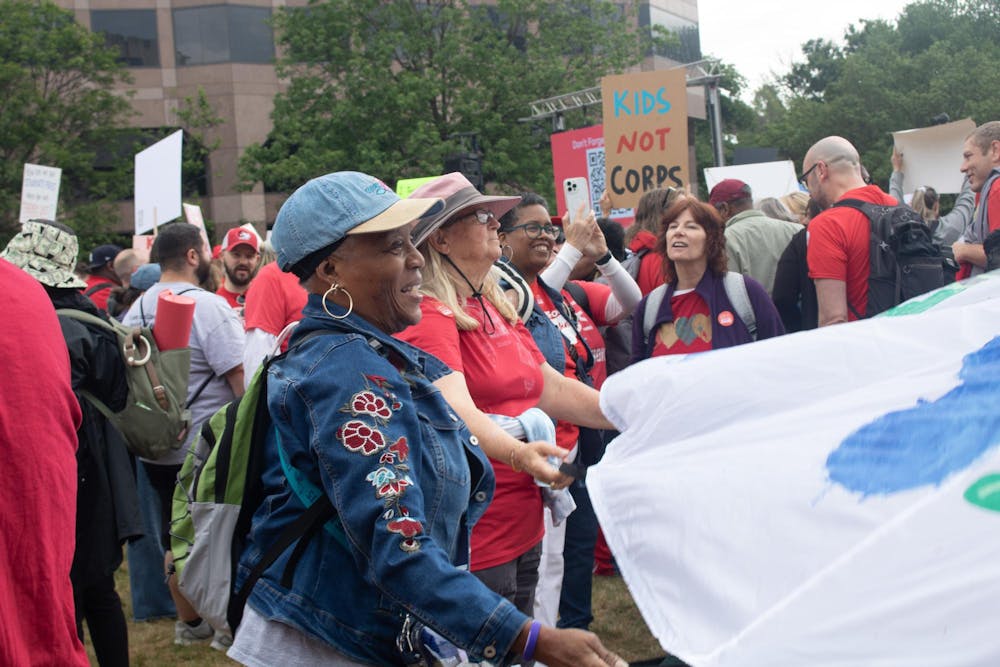
As North Carolina remains the only state without a budget, it is also the only state where teacher salaries have decreased since last year.
According to a report by the National Education Association, North Carolina’s average teacher salaries decreased by 0.58% in the last year. The national average salary increased by almost 3%.
According to the report, North Carolina ranks 46th in the nation for average teacher salaries in the 2025-26 school year, down from 43rd last year. The average salary in NC is $59,971, behind the national average of $76,552. Adjusted for inflation, North Carolina teachers are making almost 10% less than they were 10 years ago according to the NEA.
Emily-Lynn Adkins, Alamance-Burlington School System’s chief communications officer, was not available for an interview, but sent a statement to Elon News Network saying that cost increases for state benefits contributed to the decrease in teacher salary.
“Since there has not been a state budget, state salaries have remained the same,” Adkins wrote. “However, with the new, higher cost of state health plan benefits, staff are seeing a decrease in take home pay.”
Low teacher salaries across the state makes it harder for districts to fill positions in classrooms. According to WRAL News, more than 6,700 North Carolina teaching positions were not filled by a qualified person on the 40th day of the 2025-26 school year. This accounts for 7.4% of all teaching positions in North Carolina.
With North Carolina state legislators back in session in Raleigh, teacher pay is a top priority when discussing a state budget. North Carolina was unable to pass a budget in the previous sessions, stalled by divisions between House and Senate plans. Leaders in both parties agree that teacher salary raises are needed, but were unable to decide how much to increase salaries.
House Republicans proposed an average raise of 8.7% over two years for teachers, while Senate Republicans proposed an average 3.3% raise over two years, citing long-term cost concerns. The Senate plan would supplement teachers with one-time bonuses.
Representative Dennis Riddell serves as a member on the Education K-12 committee, and said that he sided with the House Republicans’ plan because he said he’s talked to many Alamance County teachers who hope for increased funding and safety in schools.
“I’ve made my voice already clear to our appropriators that hold the line on education not to fold,” Riddell said. “I would be very disappointed if we ended up with just a 3% increase for teachers over the budget, that would not be satisfactory.”
Gov. Josh Stein proposed a plan that would increase pay for teachers with master’s degrees, increase compensation for veteran teachers and school leaders, and give an average 6% raise in teacher salary.
The previous state budget was passed in 2023 and gave teachers an average raise of 7% over two years. North Carolina passes a budget biennially, appropriating funds for the next two years.
Amanda Fratrik, senior director of the office of school business at the NC Department of Public Instruction, said that along with not having a budget, North Carolina public schools are facing the expiration of federal funds given out during COVID.
“Everyone knew that those funds were non-recurring funds, but there were districts that used the funds for recurring money,” Fratrik said. “I think that hopefully something will happen that will help them out.”
Another issue with school funding is school voucher programs. School voucher programs allocate state funds to allow parents to send their kid to the school of their choice, including private schools. North Carolina’s Opportunity Scholarships program functions as a voucher program. According to the North Carolina State Education Assistance Authority, the Opportunity Scholarships program provides over $14 million in funds to over 2,000 students in Alamance County.
In North Carolina, public school funds are given out based on enrollment numbers per school. Critics of the Opportunity Scholarships program argue the program will decrease funding for public schools if students transfer to a private school. Representative Riddell said that he believes the program gives more choice to parents.
“Most parents choose public schools in Alamance County and across the state, but for those that want to choose something different, I think they should not be penalized and have to pay twice for education,” Riddell said.