

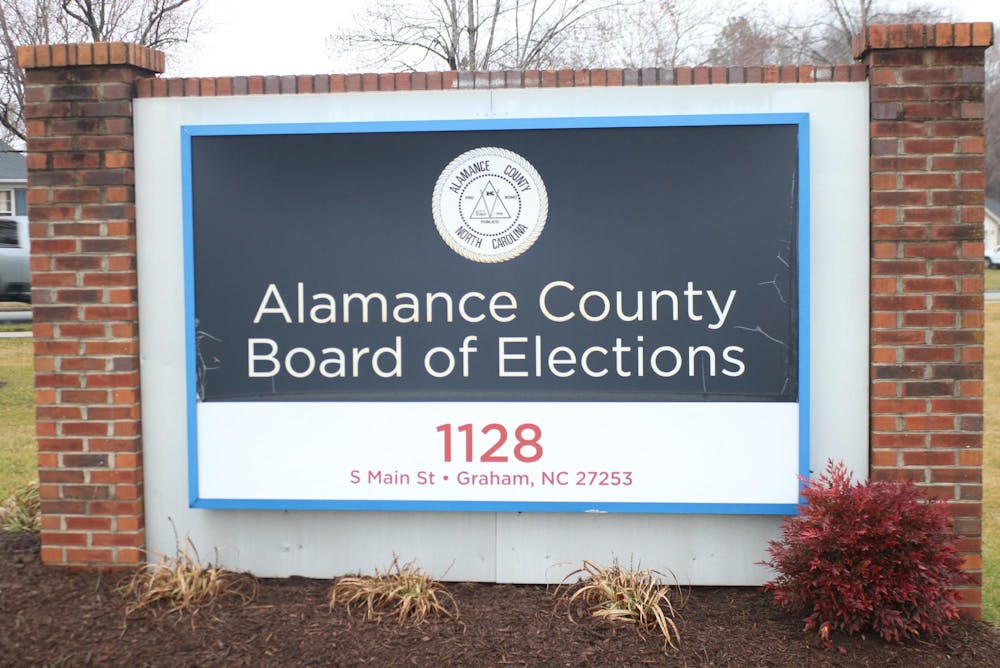
The North Carolina primary election starts today. With some voters being able to vote for a Democratic or Republican candidate, unaffiliated voters will have a different experience at the polls on election day.
Unaffiliated voters can pick one party’s primary or choose a nonpartisan ballot. Voting in a party primary doesn’t change their unaffiliated status, and their choice carries into any runoff.
In North Carolina, a runoff or second primaries are not automatic; it must be requested by a second-place candidate, and the first-place candidate must have received less than 30% of the votes cast. North Carolina’s reserved date for a second primary is May 12.
According to the Alamance County Board of Elections, unaffiliated voters will be asked at the polling place to declare the party they would like to vote for in the primary election. If there is a second primary for this election, the voter must vote for the party declared in the first primary.
Associate Professor of Political Science at the University of North Carolina, Greensboro, David Holian said the share of unaffiliated voters has been rising, and they now make up the largest single group of registered voters in the state.
“So about 40% of North Carolina's registered voters call themselves unaffiliated, and then the Democrats and Republicans are right around 30% apiece, with a handful of folks who affiliate with a minor party,” Holian said.
According to the North Carolina Forward Party, unaffiliated voters have become the largest group in North Carolina, reflecting long‑running shifts in party registration.
Since 2009, Democratic registration has dropped by about 16%, while Republican registration has grown by roughly 13%, putting the GOP on track to surpass Democrats by 2029. National data shows a similar pattern, with 43% of U.S. adults identifying as independent in 2023. This is the most recent data available about voting patterns.
Holian says that the growth in unaffiliated voting shows a pattern over the years.
“It's a sign of what we've increasingly been seeing in American politics, which is that it's sort of this paradox where we have a really increasingly partisan and polarized political space,” Holian said.
Holian said that voting in primary elections is particularly important due to its lower voter turnout.
“Voting certainly matters, and especially in a primary, which is usually low turnout: usually, primaries, on average across the country, might entice about a third of eligible voters to cast ballots,” Holian said. “They're much more lower participation. Often it means that candidates who are more extreme tend to get through to the general election because the people who are voting tend not to be unaffiliated and independent.”
Holian emphasized that primary voters should take time to research the candidates themselves before deciding whom to support
“If you're familiar with politics, you're probably familiar with some of these races, or you don't necessarily have to be familiar at all,” Holian said. “You can just look at the world around you, and consider whether you approve of what's going on or not, and then make a decision based on whether you like what's going on.”