

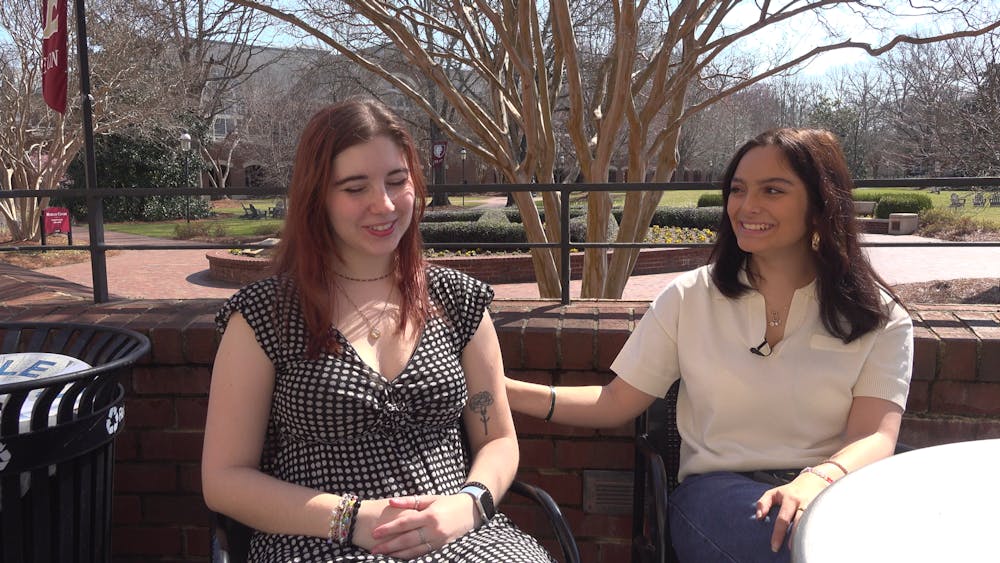
When freshman Nikki Guevara realized sophomore Lucy Sharp had gone into cardiac arrest, she sprang into action. After using her skills to save another student’s life, she encourages everyone to get trained.
“I had no idea I was going to use it that day, but I did,” Guevara said. “I think that if there was more education around it and other people also were retaining their CPR knowledge and information, that she probably could’ve been helped a little quicker than what the response time was.”
Guevara was walking through the Colonnades neighborhood last fall when she noticed a group of people waving for help.
“I’d ended up walking over and seeing what was going on, and she was blue,” Guevara said. “I started calling 911 and giving chest compressions and directing other people to go get an AED.”
Sharp said she has no memories from that day and ended up seeing what happened through security videos. She said you can see in the video how Guevara took control of the situation, ultimately saving her life.
“I could just see everyone who was involved in the immediate response, like the person who waved Nikki down, Nikki, and then the fire team, EMS,” Sharp said. “Everyone just treated the situation with a really great amount of care, and it was really cool to see that.”
Guevara was first trained in CPR in high school and has kept up with the skills as she looks to pursue a healthcare career.
Sharp said her story is an example of how unpredictable medical emergencies can be.
“It’s very odd that it happened to me at 19 years old, but it’s something that can happen to anyone,” Sharp said. “The most important thing is immediate action.”
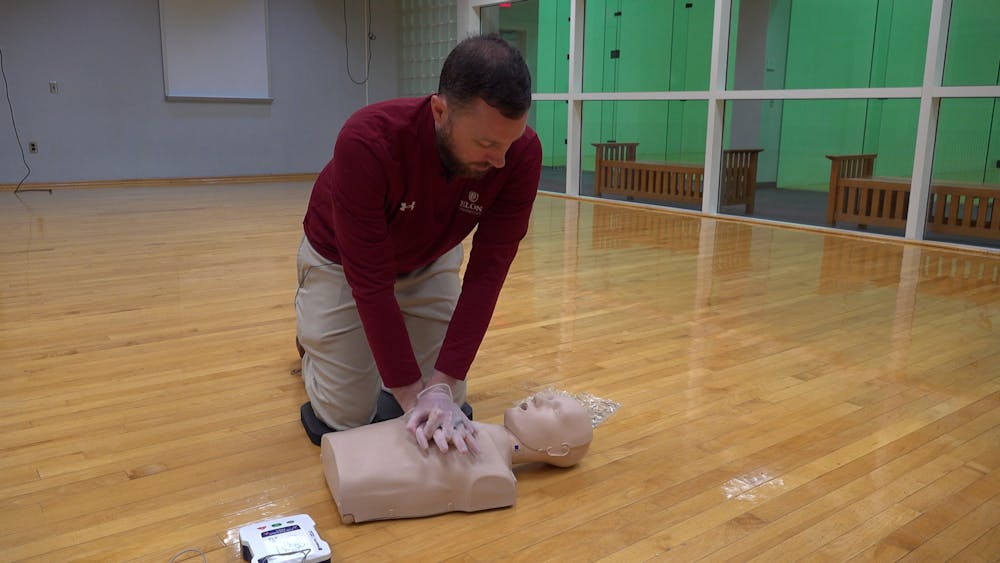
Director of Koury Center facilities and aquatics Zach Gentz trains staff at the gym on CPR. Gentz said continuously studying the material will help retain the skills.
“The best way to prepare is to go through these trainings properly,” Gentz said. “Study your skills, read through stuff, make sure you're kept up to date with all the recent updates to almost make it a muscle memory instinct rather than hyping yourself up or preparing yourself for that adrenaline rush.”
Automatic External Defibrillators, or AEDs, are portable devices used to treat sudden cardiac arrest. The device analyzes the person’s heart rhythm and delivers a shock to restore to normal function.
Gentz said AEDs can be located across campus, and specific locations can be found on the PulsePoint AED app.
Step-by-step instructions on how to use AEDs are on the device. Gentz noted that it’s important to stand clear of the shock so it doesn’t register someone else’s heartrate and to make sure no one’s in a puddle of water or on a conductive metal surface where the shock could pass through to them.
Gentz said these events can happen anywhere and to always be alert and ready. Those looking to be trained in CPR can visit the Red Cross website to find classes nearby.