

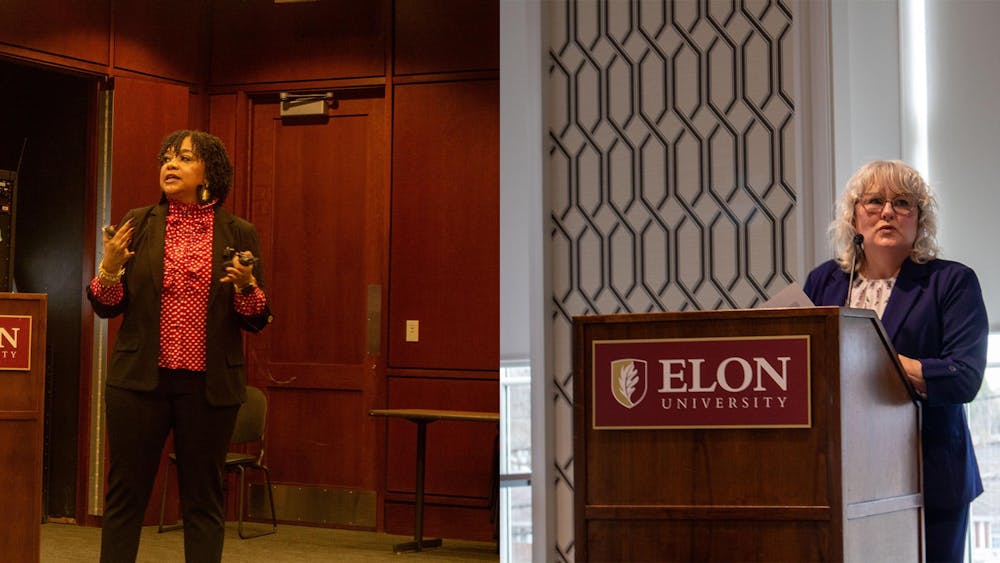
Candidates for the next dean of Student Health and Well-Being at Elon University presented in front of the Elon community in recent weeks as part of the selection process. The position is currently held by Jana Lynn Patterson, who is retiring in fall 2026 after 40 years at Elon University. The dean will lead the HealthEU Initiative and the Boldly Elon strategic plan, while supervising departments like Counseling Services and Student Health Services. They will also manage the new 135,000 square foot HealthEU building, set to open in fall 2026.
The first candidate to present was Kelly Hogan, who most recently served as associate vice provost for health & well-being at Indiana University. She also served as the associate dean of health & wellness at Central Washington University, where she led COVID-19 campus response efforts, secured more than $1 million in new funding, and developed plans for a 45,000 square foot integrated health and wellness facility. She also worked at the University of Chicago, Oregon State University and the University of Notre Dame.
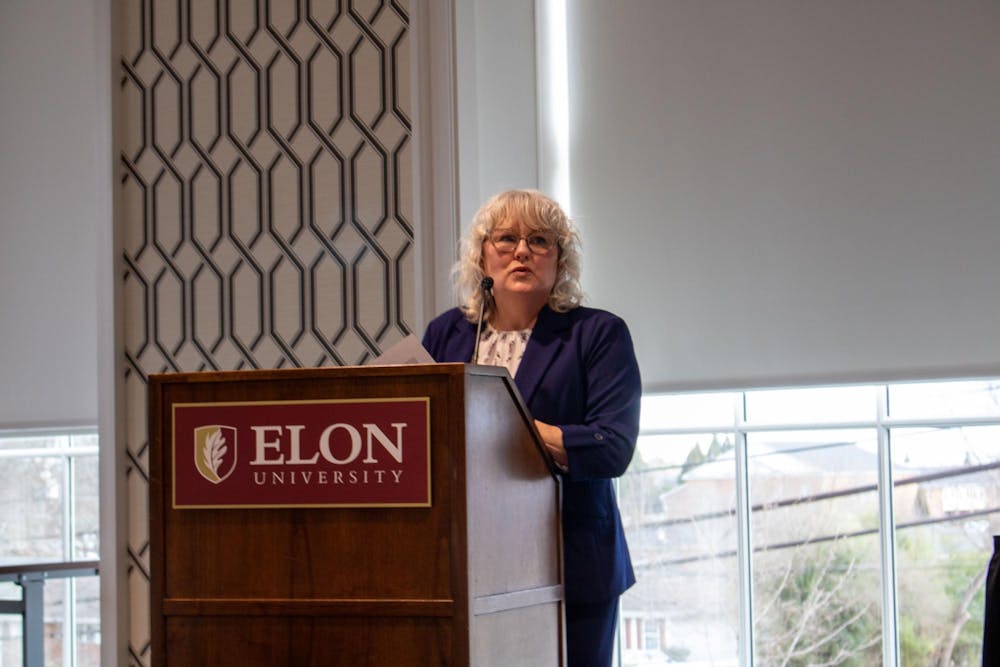
In her talk, Hogan emphasized that as dean, she would focus on campus culture and implementing health and well-being into that culture.
“Campus culture shifts when health is embedded in policy and campus structure, not treated as add-ons,” Hogan said. “It shifts when environments that's included in academics, residential and recreational consistently support well-being. It shifts when partnership across campus are strong, not siloed.”
Hogan said she envisions her role as dean as being someone who works to ensure that well-being is how Elon works and lives every day.
“Well-being isn't something that students experience only when they walk into the counseling center or the student health center,” Hogan said. “It shows up in academic life, in residential and wellness programming, in leadership decisions and in everyday environments that we create.”
Promoting well-being also involves long-term student success, according to Hogan.
“How we cultivate student well-being now shapes lives long after graduation,” Hogan said. “Isn't that why a lot of us show up to work? Right? We're investing in today, but also into their future selves.”
A big focus of Hogan’s was improving student counseling services into something that offers care before the crisis happens.
“If we only respond once a student is in crisis, we'll always be behind,” Hogan said. “We're the dog chasing the car, if you will. The goal is a system where students experience support early, and where prevention is built in the way in which that we operate.”
While at Indiana, she developed an eight-step care model that reduced counseling wait times from 17 days to under 24 hours. She said it was important to recognize that not everyone is ready for the same step of counseling.
Hogan said she has been impressed by Elon. She said that she can notice well-being present in every building she walks into. Hogan said that Elon is on a mission with many exciting things in the works, like the Boldly Elon plan, the Elon-Queens merger and the incoming HealthEU building. Hogan said she wants to be a part of it.
Joi Alexander, the director of the Wellness Empowerment Center at Georgia Tech, also presented to the campus community. Alexander is also a doctoral-trained health professional. She has also worked at Florida State University and the University of Florida. Alexander, a Greensboro native, has also taught courses in a number of wellness-related subjects, including community health and resilience.
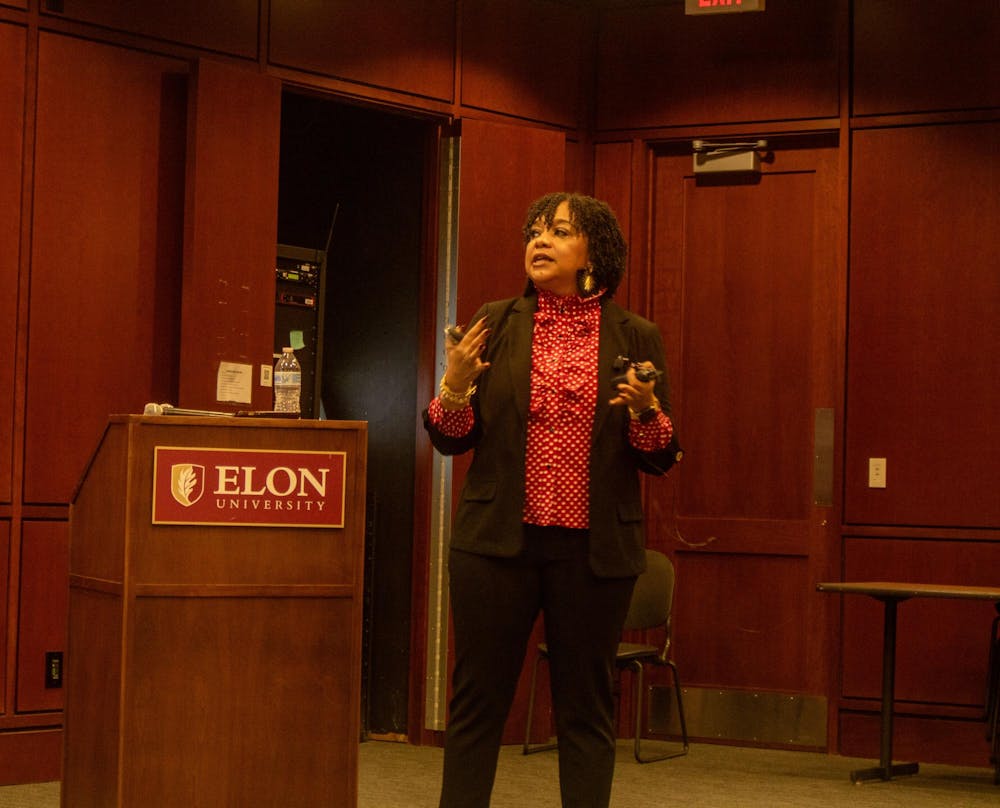
In her presentation, Alexander discussed how, as dean, she would want to remove silos. She said campus recreation, counseling, health services and health promotion all make up an integrated environment.
She said it is vital for her to learn Elon’s identity before coming to try and change anything. She also said it is important for her to take a look at data and trends about Elon. Data was a big emphasis of her presentation on how she would approach well-being at Elon.
“Data has to be the foundation,” Alexander said. “We have to make sure that we're telling our story. What is our story right? What is it that we do, and how do we do it? Well, because I think that there's a lot of data and lots of ways to tell the story, and there's missed opportunities when we're not going out there to tell people this is who we are, this is our identity.”
Alexander also discussed the need to not overburden the community with initiatives.
“Programs are good right, but policy lasts,” Alexander said. “Programs are an initiative. An initiative starts the conversation. But how do we make it lasting? And that often has to go through policies.”
Alexander also said she is approaching the position with a public health lens, which means that she wants to prepare incoming students for well-being before they step foot on campus. Alexander said that at Georgia Tech, they require all incoming students to take online courses on alcohol education, sexual violence prevention and mental well-being education.
“I'm looking at it as how are we developing students for skills in resilience, so that they can bounce back when adversity strikes?” Alexander said. “Because adversity is a part of the college experience, and it's our responsibility to ensure that students have a toolkit to create, to make sure they have things to pull from. So the stressor is a moment and not a lifetime.”
Alexander discussed the Boldly Elon plan and how she would work within it. She described herself as a people leader and data-informed. Alexander stressed that as dean, she would always look for continuous improvement.
“You've never arrived with well-being,” Alexander said. “Well-being is a journey and not a destination, and that journey, you have to be willing to understand that there's going to be ebbs and flows, which is okay, but we always have to be trying to push the needle.”