

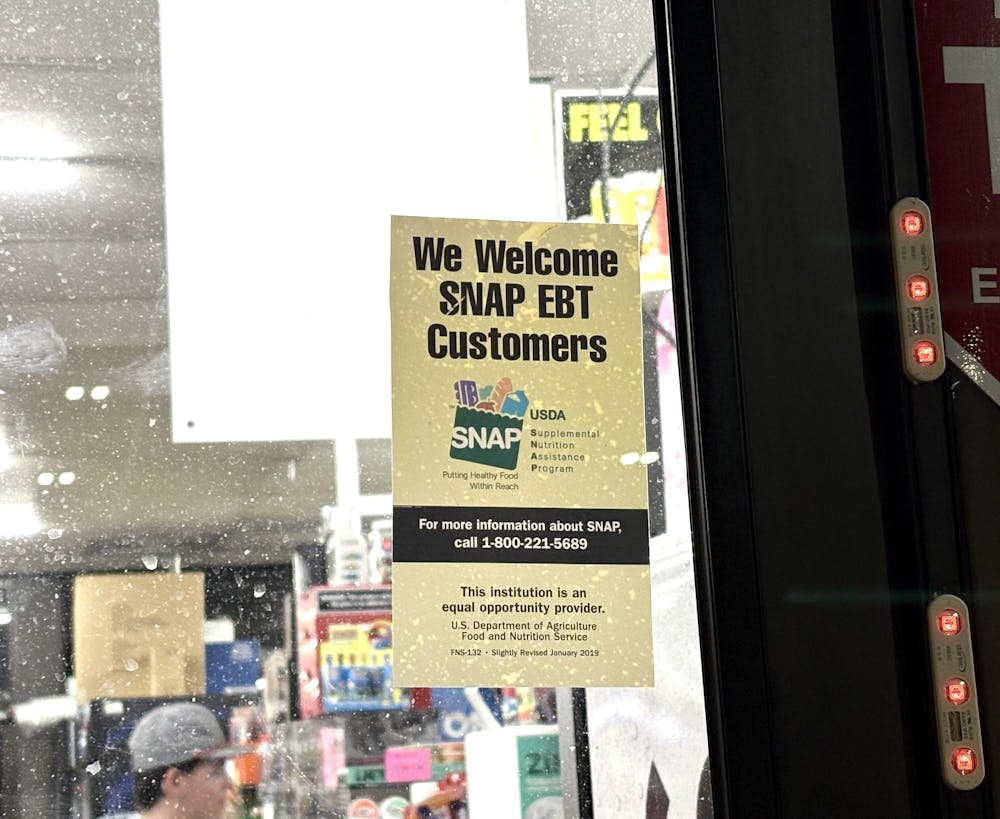
SNAP is a program that provides food assistance to lower-income individuals and families to help offset the cost of groceries. The program is funded by the federal government and state governments offset administrative costs. According to the United States Department of Agriculture, over one million North Carolinians receive SNAP benefits.
The Supplemental Nutrition Assistance Program has been reshaped by the One Big Beautiful Bill, signed into law by President Donald Trump. The bill has placed new work requirements that SNAP recipients must meet to receive the benefits. These work requirements have already been in effect for North Carolina's SNAP recipients.
The bill has extended the work requirement age limit from 18 to 54 years old to 18 to 64 years old for able-bodied adults without dependents. Work exemptions for parents with a child 18 years old and younger have been lowered to only include children under 14 years of age. Homeless people, veterans, and those aged 18 to 24 years old who recently left foster care previously were exempt from work requirements but no longer receive those exemptions.
To qualify for SNAP benefits, a person must prove they have spent 80 hours a month doing paid or unpaid work, volunteering, participating in job training, or a combination of the three.
The Congressional Budget Office estimated that about 2.4 million people nationwide will not participate in SNAP benefits over the 2025-2034 period. The office estimthat ated 800,000 able-bodied adults without dependents and 300,000 able-bodied adults living with dependents will be part of this 2.4 million estimate.
The Trump administration has cited fraud as a major reason for the SNAP overhaul. Professor of political science at North Carolina State University, Steven Greene, said while there may be a reasonable attempt to ensure no one commits fraud, there will still be people who are unable to get benefits they are entitled to because of bureaucratic hurdles.
“To some degree, that's always going to be a trade-off if you want to make 100% sure that nobody cheats the system, I can absolutely guarantee you that deserving people who qualify for and need the benefit will not be able to get it,” Greene said.
Greene cited Medicaid as an example of how adding work requirements can save the program money, but at the expense of qualified people not receiving the benefits because of how much time it takes to fill out paperwork.
“We have this idea that you shouldn't go hungry in America, and a big way to prevent that is SNAP benefits, and if people are still going hungry, and if people who really need those benefits are not getting them because of the bureaucratic hurdles. We need to rethink that,” Greene said.
The North Carolina Department of Health and Human Services reported that as of April 2025, 24,925 people in Alamance County received SNAP benefits. With the new work requirements, those on SNAP benefits in Alamance County may be affected and may have to rely on nonprofit organizations that offer food pantries and meal services in order to get groceries and meals. Allied Churches of Alamance County offers Joe’s Diner, a service that provides meals twice a day, five times a week. In the past year, ACAC served over 30,000 meals to citizens.
Executive Director of Allied Churches Jai Baker said the work requirements open an opportunity for people to volunteer at non-profit agencies to fulfill their work requirements. Baker did say there are extenuating circumstances that are not considered, which may affect people's ability to work.
“There's a lot of logistics, I think at play, that when we just said blanket volunteerism in these 20 hours, I don't think that the general population really understand that that's going to be a logistical nightmare, and that could be nightmare for the person that's receiving the SNAP benefit, or it could be a nightmare too for those agencies that are trying to help people become self sufficient and sustaining and receiving those benefits,” Baker said.
Baker said ACAC started receiving calls in January from people who wanted to volunteer. He said he expects other agencies across Alamance County to also be experiencing an influx of people who want to volunteer to keep up with the hours needed to receive SNAP benefits.
To maintain their operations, ACAC accepts donations from the community and works with local grocery stores and restaurants to keep their kitchen stocked. They also apply for grants. Baker said the need for the grants may be higher for food pantries to support operations with an influx of people who are not on SNAP anymore, but that does not mean more grant money will become available.
Baker said he believed the government should focus on providing communities with access to grocery stores and fresh food sources.
“I also think in that we need to figure out how to make sure we're revitalizing areas and we're increasing areas that we need to keep access to fresh fruits and vegetables,” Baker said. “At the top, it needs to be a priority. Right? Do people have access to fresh fruits and vegetables? Can every part of the county, east, west, north and south have access to that type?”