

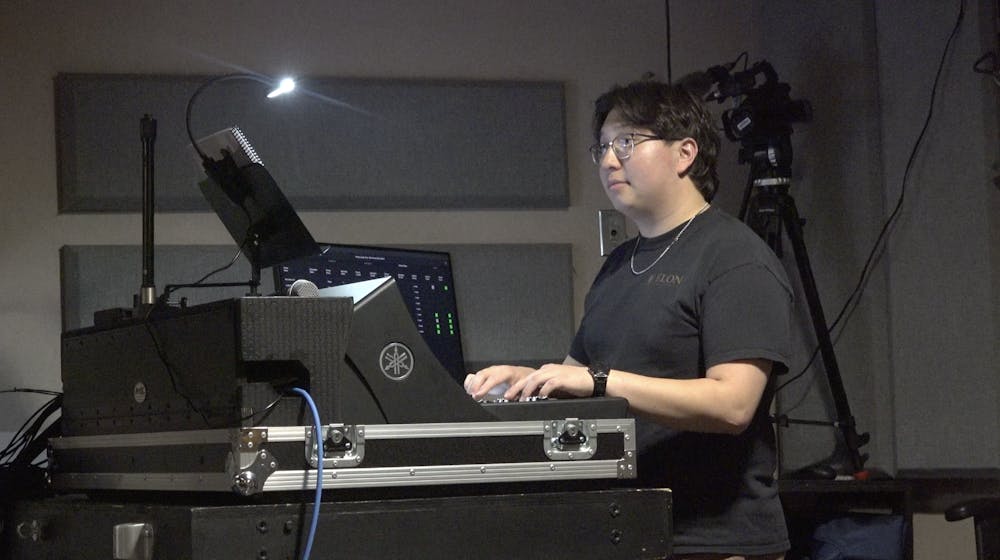
With 10 speakers and an immersive sound setup, audiences heard a different version of McCrary Theatre for Elon University’s Performing Arts production of “Rent”.
All four performances of “Rent” were sold out, according to Elon’s Performing Arts website. The show ran from Feb. 13-15. This means that around 575 people watched and listened to the show each night and experienced the first-ever immersive audio setup in McCrary Theatre.
“Immersive audio gives you a lot more space to work with, so it allowed for certain room and cool things from a mixing perspective that we can't do with just a left and right stereo,” said sound designer Brandon Cericola.
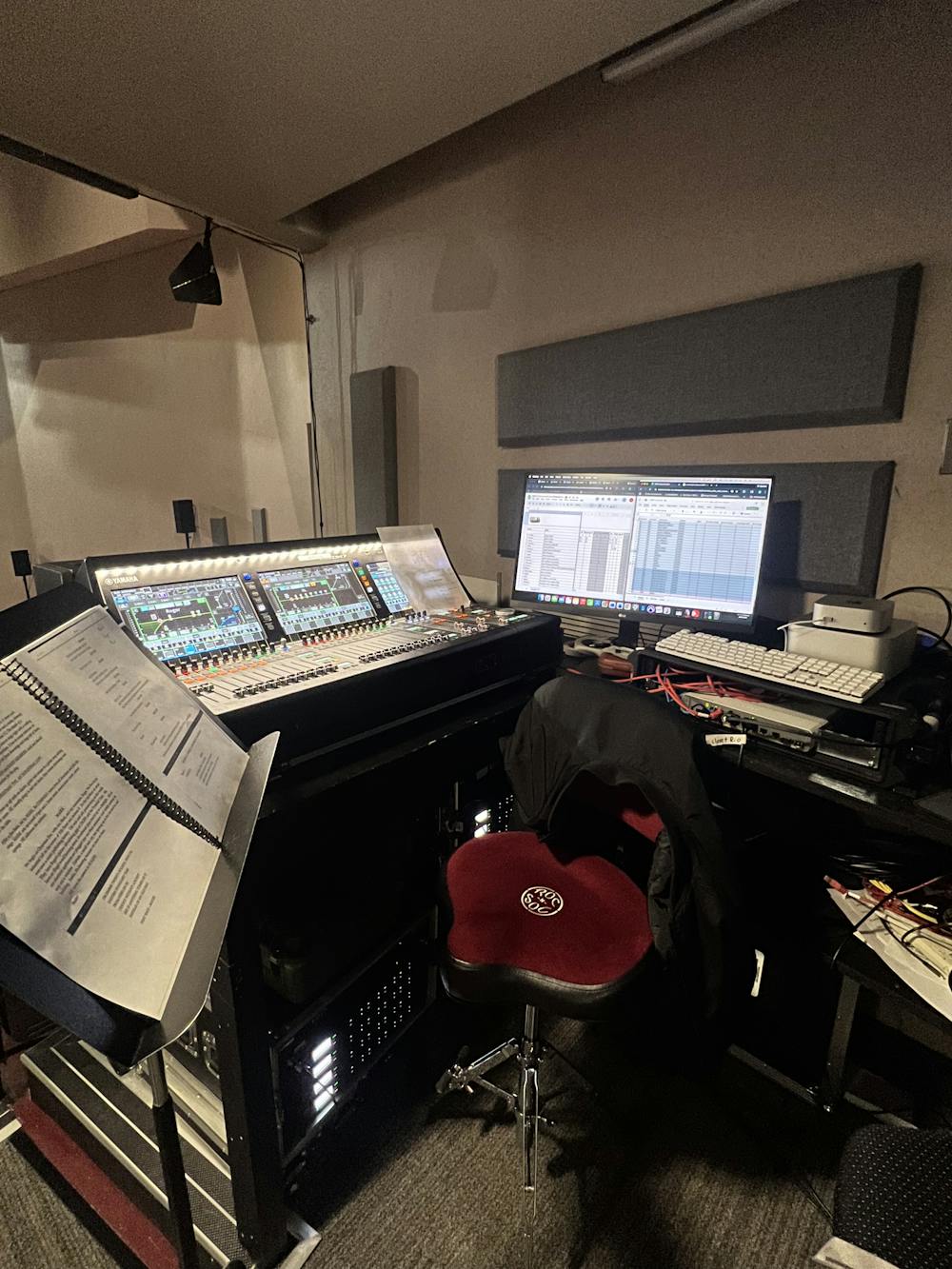
Cericola, an Elon senior, is majoring in music production and recording arts. Alongside two mentors, he designed the system.
Immersive audio setups come in many different forms and are often designed based on the dimensions of a specific room and the type of sound being played. This type of audio mixing allows sound to be heard from all directions, instead of only left and right, like what is typical in musical theater.
The system includes ten speakers — two in the front, closest to the stage on each side, two in the middle and two in the back of the theater, right before the balcony. The other four include two at the stage and two in the back on the balcony level.
The best seat in the house, or what Cericola called the “money seat”, is right in the middle of the theater. This is where the sound from all the speakers meets, surrounding the listener with sound all around.
During rehearsals and while testing the sound design, Cericola said he would run between that seat and his audio booth in the back of the theater, making changes to the audio each time. He said the process was filled with trial and error, and after each rehearsal, he took notes about what went well and what needed to change.
“It's been this constant feedback loop that has just improved every single night,” Cericola said.
To test the space, Cericola said the team took detailed measurements of the theater. He said they used a laser measuring device, which records how long it takes for sound waves to bounce off of the surfaces in a space. Then, Cericola said they crunched some numbers to determine how much to delay each speaker, so there were no unwanted overlaps between the speakers.
Comb filtering was one of the unwanted issues. Comb filtering happens when the same sound arrives at different times at a listener’s ears with a very small delay between the signals. The delay is only a few milliseconds, but it causes certain frequencies to be canceled out and others to be amplified.
Cericola said that since McCrary Theatre wasn’t built to be an immersive soundscape, there were some limitations to the design, such as the balcony not having the same surround sound setup as the floor.
“Rent” was the first time Cericola worked as a sound designer for a musical. He said it was much different than his experience in orchestral sound.
“There was a huge learning curve involved in that,” Cericola said. “How do you manage 22 mics when there's 22 people belting at the same time? Where do you put things? You have all these options in the freedom of choice, which can turn into a decision paralysis.”
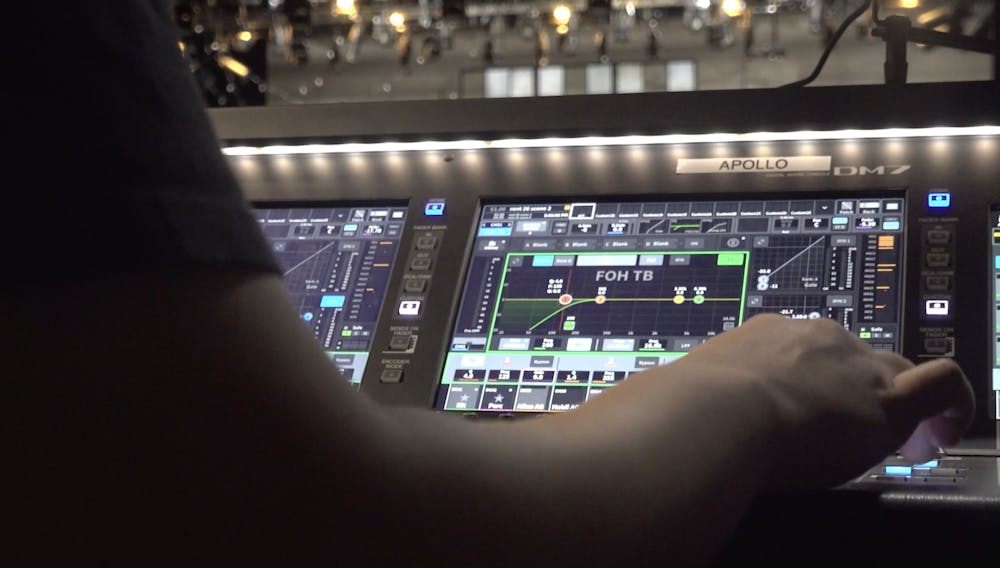
With nearly 84 different audio inputs, between the live band and actors, Cericola decided to chunk the channels into 11 different “scenes” so that he had 24 buttons to manage at once.
“It's a huge amount to manage, and no human can manage, like, 120 buttons at once,” Cericola said.
However, even though the process was challenging, he said the hard work paid off.
“Throughout the show, we have these big moments where the immersive just lets the audience feel like they're a part of the cast in a way,” Cericola said. “And that they're included in the show, whether that's felt or heard or experienced.”