

CORRECTION: The original version of this article said Western Electric produced Nike Ajax surface-to-air missiles but Western Electric produced Nike Ajax surface-to-air missiles guidance systems. Elon News Network regrets this error.
For years, there have been local efforts to remediate the 22-acre property once called the Tarheel Army Missile Plant. From 1942 to 2004, it was owned by the U.S. Department of Defense and previously leased to Western Electric, an electrical engineering and manufacturing company, to produce Nike Ajax surface-to-air missiles guidance systems. Now, it remains abandoned under private ownership, creating more than just an eye sore to East Burlington, according to the Rev. Donna Vanhook, an Alamance County Soil and Water Conservation District Supervisor.
“It’s a monstrosity,” Vanhook said. “It needs to be torn down.”
The plant has long had a multitude of environmental and public health risks associated with it as a result of the poor waste management during the Cold War, according to Vanhook. Despite being abandoned for more than 20 years, the plant’s past is still affecting the surrounding area, something that the West End Revitalization Association is trying to address.
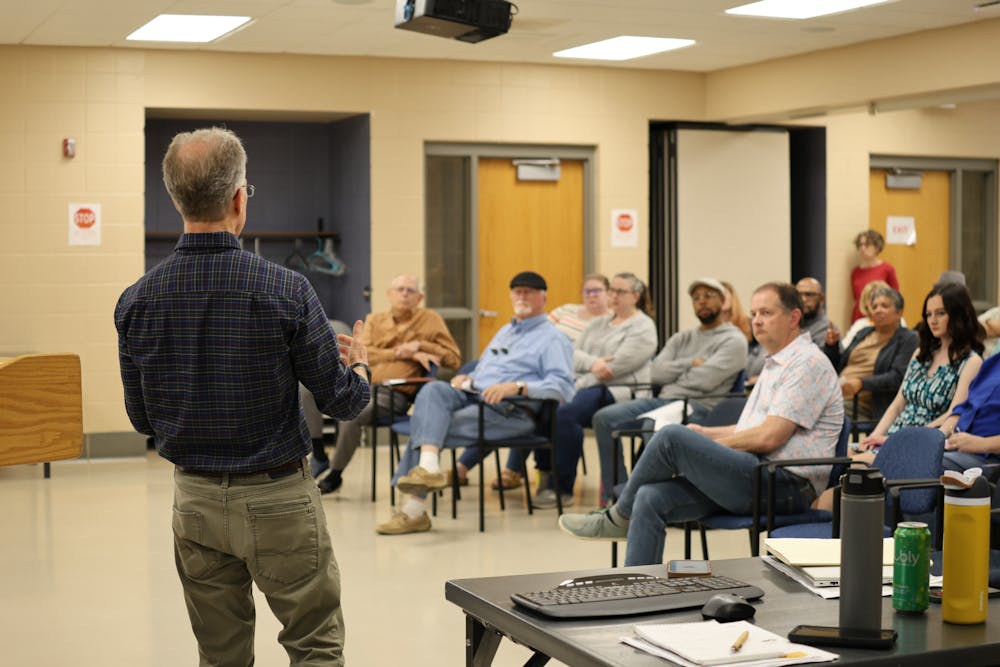
To involve community voices, the U.S. Army Environmental Command established the Restoration Advisory Board late last year as a way to gain input on the remediation process. The RAB had its first meeting of the year April 17 to discuss the current progress of the cleanup. There were around 35 community members who attended the meeting at the Kernodle Senior Center in Burlington to hear the discussion. The RAB has 19 board members, including an army chairperson and community chairperson.
The plant’s complicated history includes accidental spills and poor regulation of the disposal of chemicals and contamination of the surrounding soil and groundwater. Many of the surrounding homeowners have expressed concerns over the quality and safety of their own backyards and water. While it cannot be exclusively attributed to the plan’s potential harms, east Burlington has a lifespan expectancy 11 years shorter on average than the surrounding area, according to a 2018 Alamance County health assessment. Omega Wilson, a member of the board and co-founder of WERA, said this statistic was “shocking.”
“You cannot get those lives back that are already gone, but you can improve the lives of the ones who are still here and the ones that are moving into the area,” Wilson said.
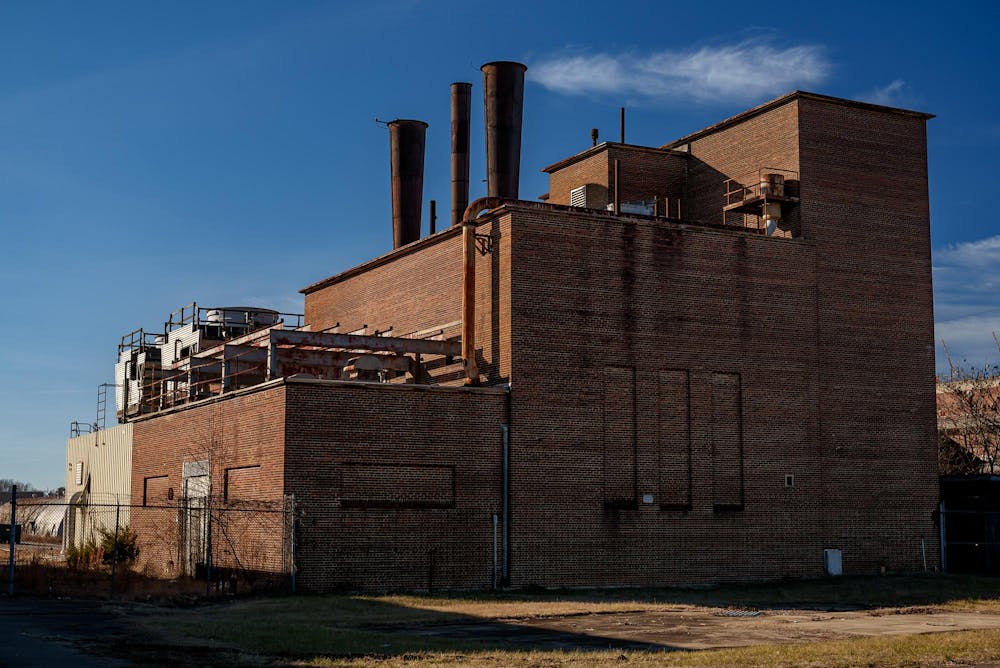
Legal technicalities surrounding the cleanup responsibilities and ownership have complicated the remediation process so far. Legally, the Department of Defense is only responsible for all of the below-ground contamination on the site; the private owner is responsible for the buildings and structures above-ground.
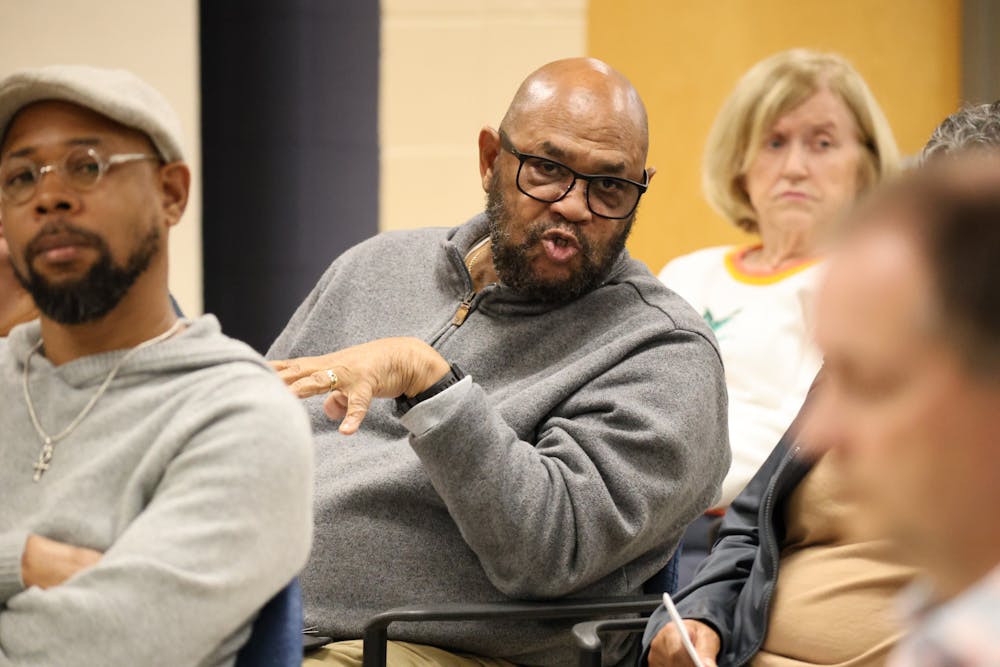
Along with Wilson, his wife and co-founder of WERA Brenda, as well as their son Ayo, are also a part of the RAB. They were appointed to serve and play key roles as representatives of the stakeholders involved in the plant’s cleanup along with other appointees, both apart and outside of the community. Although the official RAB meetings only began late last year, Omega insisted that the community’s involvement has been ongoing for years.
“We’ve been pushing this issue in a formal way, with community stakeholders leading the way, including our organization and Reverend Vanhook,” Omega said.
Omega expressed his concern over how WERA and other organizations had been looked over since the Army’s relatively recent active involvement in the cleanup process in 2016, when it began a remedial investigation. The meeting on April 17 discussed the DOD’s ongoing action, which is holding a feasibility study to assess how to move forward with the cleanup, specifically regarding the presence of Trichlorethylene, a chemical classified by the Environmental Protection Agency as a human carcinogen, in the groundwater beneath the plant.
“They were writing it up as if they were the first ones who started this interchange,” Omega said. “We don’t want to use the term first related to this meeting. It’s not the first.”
WERA was formed with the intention of ensuring that basic amenities for people of color are protected. It has taken on many projects within central North Carolina, including advocating for the removal and remediation of the plant. In 2023, WERA facilitated a meeting with officials from the White House, the National Institute of Environmental Health Sciences and the Department of Health to discuss the issues surrounding the site, Omega said.
Omega was adamant about the language used to describe the cleanup process. According to him, the DOD keeps using the term “restoration,” while WERA uses “removal and remediation.” To him, it doesn’t make sense to “restore” the plant when its previous state was even more polluted than it is now.
“It’s the Restoration Advisory Board. Our question is, shouldn’t it be torn down, above-ground and below-ground, and remediated instead of restored?” Omega said. “Remediated means you clean up the waste, you clean up the chemicals, you remove it and we repurpose the site.”
Many ideas have been suggested for the plant after its remediation, including a center for low-income housing, which Omega disagrees with due to the plant’s history of contamination. He thinks the site should be converted into a solar facility to provide clean energy to the area.
“A solar site would provide a positive use of the energy that comes off of the sun and could create a model for the city to do something positive like this in an urban area,” Omega said. “It would be an opportunity to encourage growth and development in that area.”
But, none of this can be achieved until the site’s cleanup is complete.
The DOD’s formal active involvement in the remediation process began early last year with a remedial investigation of the site in partnership with the North Carolina Department of Environmental Quality.
Nathan Edwards, project lead at the DOD, said this included examining the underlying geology of the site as well as the nature of the local hydrology. The investigation was then reviewed by the state of North Carolina in order to move forward with treatment plans based on the data collected. In order to gather data, the DOD installed a network of monitoring wells to measure the ongoing contamination. In an attempt to remove a large portion of the source, much of the contaminated soil was extracted and tested.
Removing the soil was considered interim remediation, which are temporary measures done to address risks and concerns at a site before a final remediation plan is finalized.
“It’s more like we expedited the process versus we did something that we didn’t have to,” Edwards said. “I think it’s the best management practice to try and get this process moved quicker.”
Morgan Lasater, the community engagement director for the city of Burlington, reiterated how uncommon interim remediation is in these kinds of situations.
“I think that’s an important piece of this puzzle because they really took swift action to go in and cut the head off. To, you know, just pull it out of the ground,” Lasater said. “That was a long time coming, so that was really a success, I believe, and I don’t know that our community understands how good that was for us.”
A primary goal of the NCDEQ and the DOD is to dismantle the misinformation surrounding the plant, particularly about the quality of the drinking water at the site. Many people believe the tap water, specifically from those houses immediately adjacent to the plant, is contaminated with PFAS compounds, also known as forever chemicals, and TCE from the groundwater. Lasater insisted that this wasn’t true because there are no water reservoirs at the Western Electric site. This was also echoed by Ethan Dinwiddie, an employee for Terracon, the company contracted to clean up the area, at the April 17 meeting.
“Folks are fearful and they don’t always trust information sometimes,” Dinwiddie said. “That’s something that, as a communicator sitting in those meetings, has been very clear to me. We’ve got some work to do to dispel any fear that might be in the community.”
A big concern among community members was the perceived lack of transparency in the restoration process. Ayo Wilson spoke similarly of trust between the government and the community at the RAB meeting.
“Through this community with elected officials and powers that be and the people that live in the community, they don’t trust you,” Ayo said. “I’m just saying that to this process, you got to be focused on building trust with the people who live in this community and the people in this county.”
The common concern has repeatedly come back to the community and those affected by the plant. On both sides, the bottom line has been the well-being and representation of east Burlington, something that is meant to be protected by the formation of the RAB.
“The RAB is about keeping the community informed and also with a voice,” Vanhook said. “The more voices we have, the more impact we can create.”
Avery Sloan contributed to the reporting of this story.