

To many, the legendary festival held annually in New Orleans defines Mardi Gras. The celebration originally served a distinct religious role, one with far purer purposes than those adopted by the bead-strewn revelers seen every February in the streets of The Big Easy.
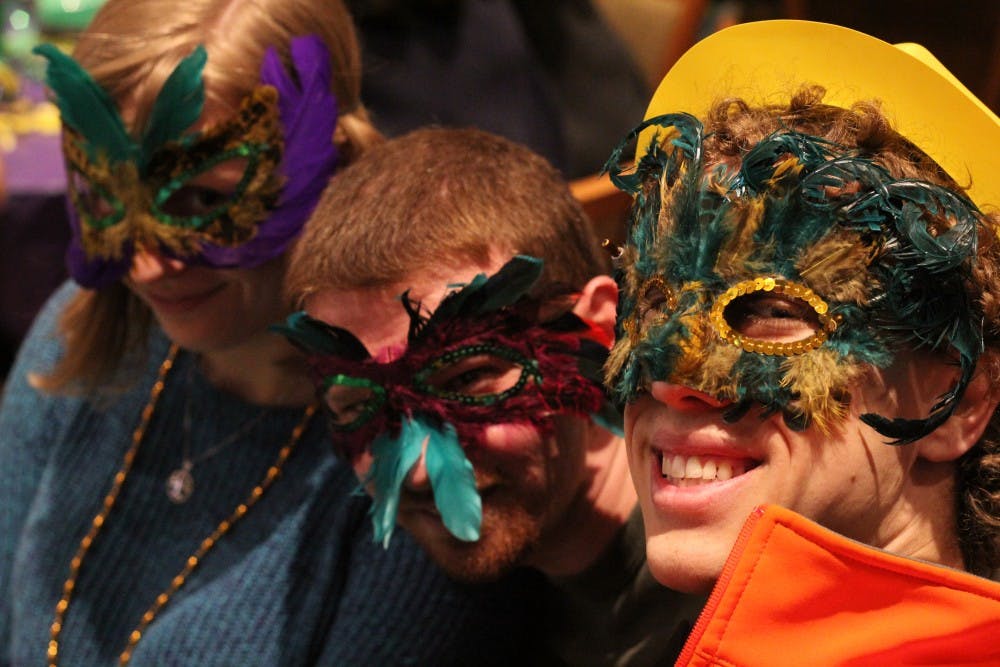
Elon University's Catholic Campus Ministry and the Truitt Center for Religious and Spiritual Life sponsored an on-campus dinner Tuesday night in the Numen Lumen Pavilion in honor of Mardi Gras.
“Tonight, we feast and celebrate because tomorrow, we fast,” said Joel Harter, associate chaplain of Protestant life at Elon.
Father Gerry Waterman, associate chaplain for Catholic life, delivered a blessing after Harter’s introduction.
Students then enjoyed various dishes such as red beans and rice and chicken gumbo, homages to the cuisine found in New Orleans. A jazz band comprised of Elon students gave the event an even more traditional atmosphere.
Several students, including freshman Taeghan Hagood, offered their perspectives on the celebration.
“Half of my family comes from New Orleans, so it makes me think of family and togetherness,” Hagood said. “But I’ve never been to the city during the event. Truthfully, I think my parents would be wary.”
Hagood is acknowledging the less-than-religious nature the festival represents to some. Today, many associate the event with heavy drinking and partying.
But Mardis Gras, which means "Fat Tuesday" in French, was established in Medieval Europe for Christians to eat rich and fatty foods before the ritual fasting known as Lent.
According to a pamphlet provided at the event, the first written record of Mardis Gras celebrated in New Orleans took place in 1699. Mardi Gras was later made an official holiday in Louisiana in 1875.
Despite some of the heavier partying that may take place during Mardi Gras, Harter said he does not find all of Mardi Gras’ modern traditions, such as parades, costumes, dancing and music, to be out of line.
“This is still a celebration rooted in Catholic tradition," Harter said. "To some, the celebration in New Orleans keeps the religion fun and fresh. The day after Fat Tuesday is Ash Wednesday — a day in which we remember mortality. Mardis Gras, on the other hand, reminds us about the fun and joy we take in living. There’s a balance and I feel we need both.”