

News flash – the Winter Olympics are less than a month away. I know, you didn’t realize that, right?
I, for one, prefer the Winter Games to their summer counterparts. There are fewer events, so each gets its time in the spotlight. Also, much of the Winter Olympic events are sports that you never see except at Olympic time.
In the next four weeks, I will profile four of the more obscure sets of events to get you excited for the action in Sochi, Russia, from Feb. 6-23. We’ll start with the sled events – Bobsled, Luge and Skeleton.
An easy place to begin is comparisons of the three. They all have the same common goal: get your sled down the banked, icy track as quickly as possible. This is best achieved by taking the “ideal line” down the track, as determined by steering and numerous test runs. Measuring in at over a mile long, the track is artificially refrigerated. The course length is flexible based on the event and gender of the competitors.
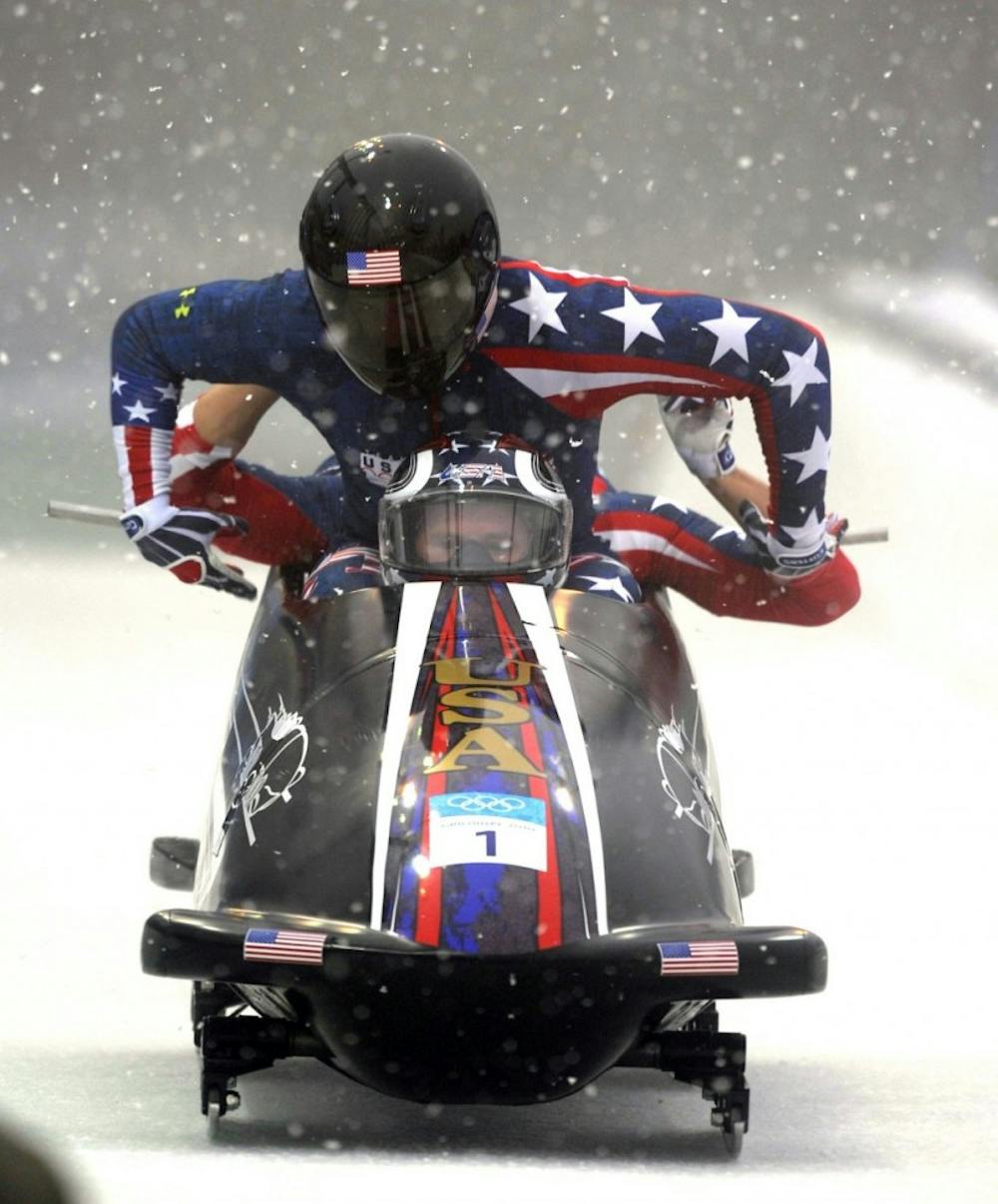
Aside from that, the three sports are rather different. Bobsleds are semi-enclosed fiberglass shells in which the competitors sit. At the Olympics, there are three Bobsled events – men’s two-person, women’s two-person, and men’s four-person. Each sled features a driver, who turns small bars to steer the steel blades that connect the sled to the track. A bobsled team will also feature a brakeman, who helps control the sled. In the four-person, two “crewmen” will sit in the middle. The winner of the events is the team with the shortest combined time over the course of four (two-person) or two (four-person) runs.
There are four main luge events – men’s singles, women’s singles, men’s doubles and team relay. Luge consists of the competitor lying face up on a small metal sled, in which they steer by moving their body ever so slightly. In doubles luge, one competitor lies on top of the other. Luge winners are determined by combining the times of four runs in singles or two runs in doubles. The team relay involves the times of one men’s singles run, one women’s singles run and a doubles run all combined. Luge is far and away the most dangerous sport of the three, as the competitors move fastest. In 2010, Georgian luger Nodar Kumaritashvilli was killed in a practice run for the Winter Olympics in Vancouver, giving the sport a public black eye.
Skeleton, which became permanent in the Olympics in 2002, is essentially inverted luge. The competitors lie on a similar sled, but face down toward the ice. This means that the slider’s chin is just inches from the ice as they rocket down the track. Skeleton only has two events – men’s and women’s singles. The winner is determined from a combination of four separate runs, akin to singles luge.
So there you have it: the difference between the three sliding sports of the Winter Olympic games. The United States took bronze in women’s bobsled and gold in men’s four-person in 2010, their only sliding medals.
Stay tuned for next week, when we dive into freestyle skiing.