

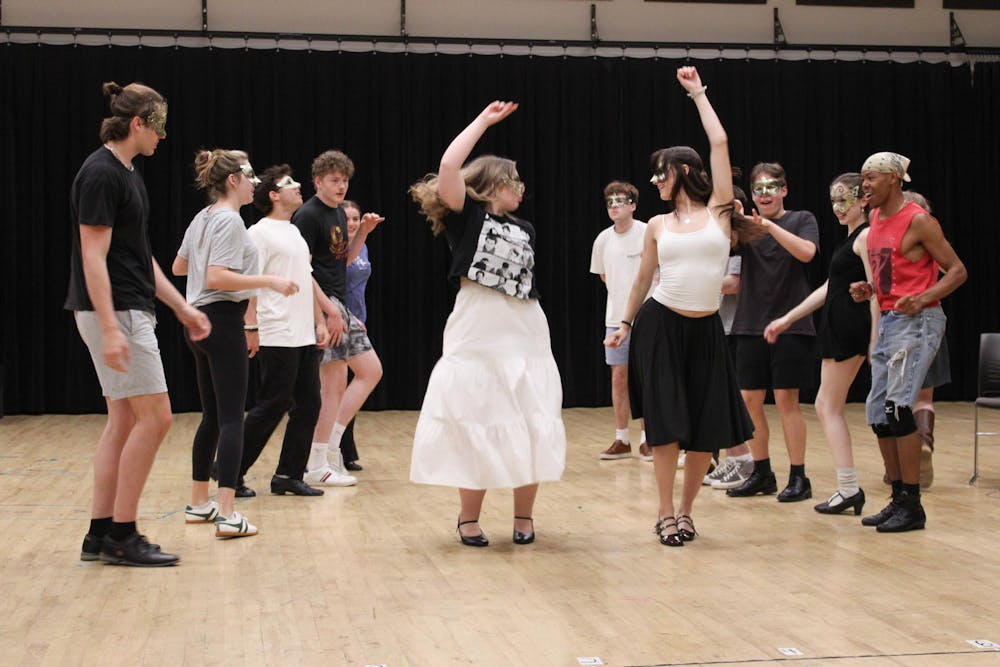
Shakespeare’s “Romeo and Juliet” may be centuries old, but Elon University’s spring production brings it into a new era, 1970s Italy, complete with disco music, dance numbers and a cast that mirrors the age of its audience. The idea came in January of 2025, when Professor Julian Stetkevych, director of the spring play, was listening to disco music.
“It maps well to the spirit of that age, which is in the fun, cool, cheesy Italian disco music,” Stetkevych said. “That was one of my first inspirations.”
Stetkevych said theater relies on collaboration, which made his rendition of “Romeo and Juliet” possible.
“Sometimes what’s great as a director is having a vision that you actually can’t achieve, but knowing that through the collaborative process, it can be achieved,” Stetkevych said.
Senior Sam Olt said he’s bringing some “swagger” to his character, Romeo Montague. He said that the technology people have today, from phones to security cameras, limits what people do in public. This Romeo, he said, has none of that.
“People were not careful like they are today because now there’s phones and cameras,” Olt said, “but the ‘70s, it was full unadulterated versions of yourself.”
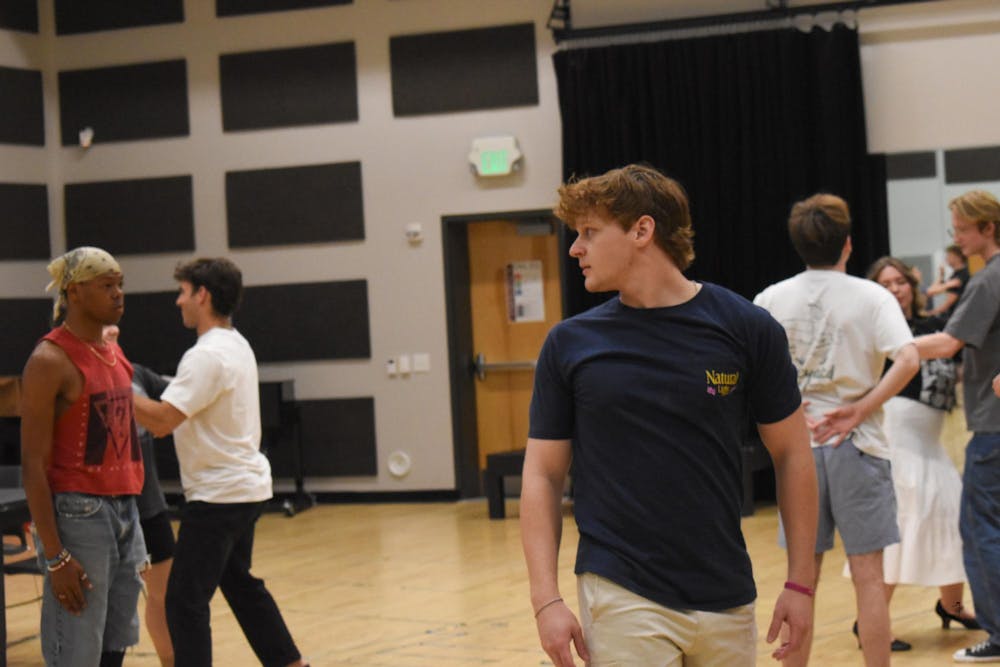
Senior Sam Olt, who plays Romeo, rehearses a moment from "Romeo and Juliet" on March 31 in Scott Studios.
Senior Isabella Shaffer plays Juliet in the show. While traditionally Juliet is 13 years old, Shaffer will be playing her as a 16-year-old instead. The emotions her character experiences from act one to act two are starkly different as the play flows from lover’s tale to tragedy, a challenge Shaffer said she is excited to take on.
“I just really love the extremes of emotion that I get to play and go through because it is very hard, yes, but it’s very freeing,” Shaffer said.
While Shaffer said her emotional maturity has grown significantly since being Juliet’s age, there are some parts of her that come out as the character on stage.
“Juliet is not punk, but just a little rebellious because she goes against her parents,” Shaffer said. “That’s something that I’ve always gravitated towards as a person, just a bit of edge.”
Olt said that a mutual trust he and Shaffer share allows their performance to thrive, especially during the four dance numbers Stetkevych added to the show. Though dance is not a primary skill of his, Olt said he pulls a lot of inspiration from paintings he’s seen, something he attributes to his mom, an art teacher.
“It’s weird how much lives in you, how art in different mediums always lives in you,” Olt said. “And even though I’m not a really good dancer, I’ve taken stuff in theater, and I’ve walked, I’ve seen paintings of people dancing, and I’ve listened to music.”
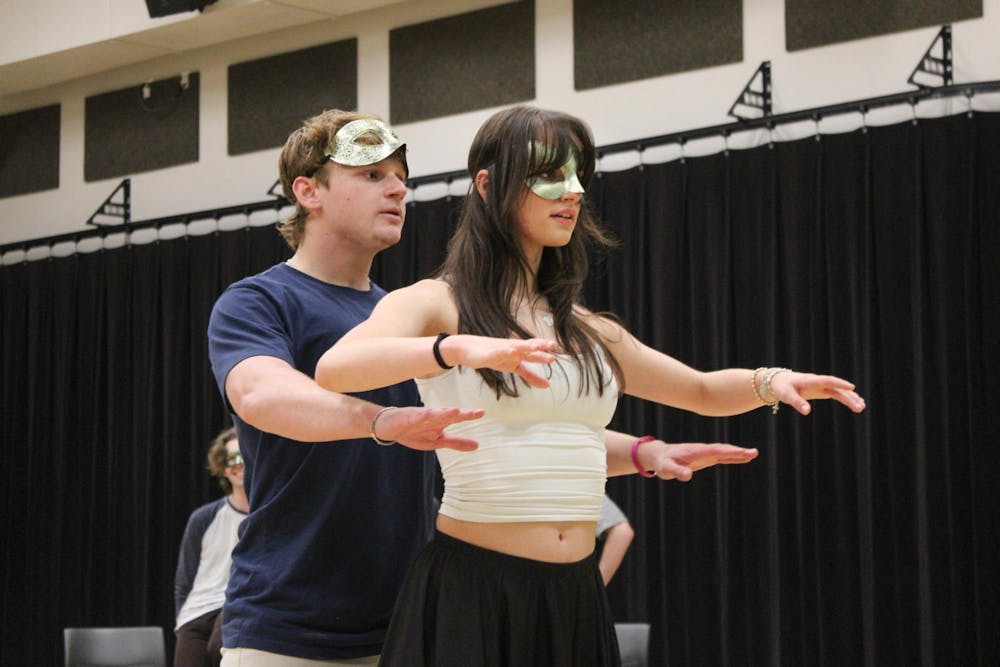
Assistant Director and Elon junior Amelia Brinson created a dramaturgy, a presentation composed of in-depth research into the play and the time period itself, which she gave to the creative team early on in the production.
“It’s a really interesting time because you’re 30 years off of World War II, and there’s a really big fascist movement in Italy at this time,” Brinson said.
Stetkevych said that though history is important to how the characters interact with each other, the politics of the period is not a primary source of conflict in this rendition. Instead, it’s the generational gap between an older generation of WWII veterans and the main cast of hippie youth.
“The central cast of it is about people who are around the ages of the people who are actually playing the roles and the majority of the audience who's going to come see it,” Stetkevych said. “So, it makes that connection feel more present and immediate.”
Brinson said the point of this show is to get away from the idea that Shakespeare is elitist and boring. During her study abroad in London, she learned that in Shakespeare’s Globe Theatre, actors speak to the audience, interacting with them, because when shows like “Romeo and Juliet” were put on, it wasn’t a “high art,” it was something made for regular people.
Stetkevych said he recognizes that students often dread reading Shakespeare in their high school English classes, but seeing it on stage transforms it from dull to lively.
“The hope is that in watching it, you understand how much it is full of life and excitement and high stakes, and in this one, romance, tragedy, dancing,” Stetkevych said.
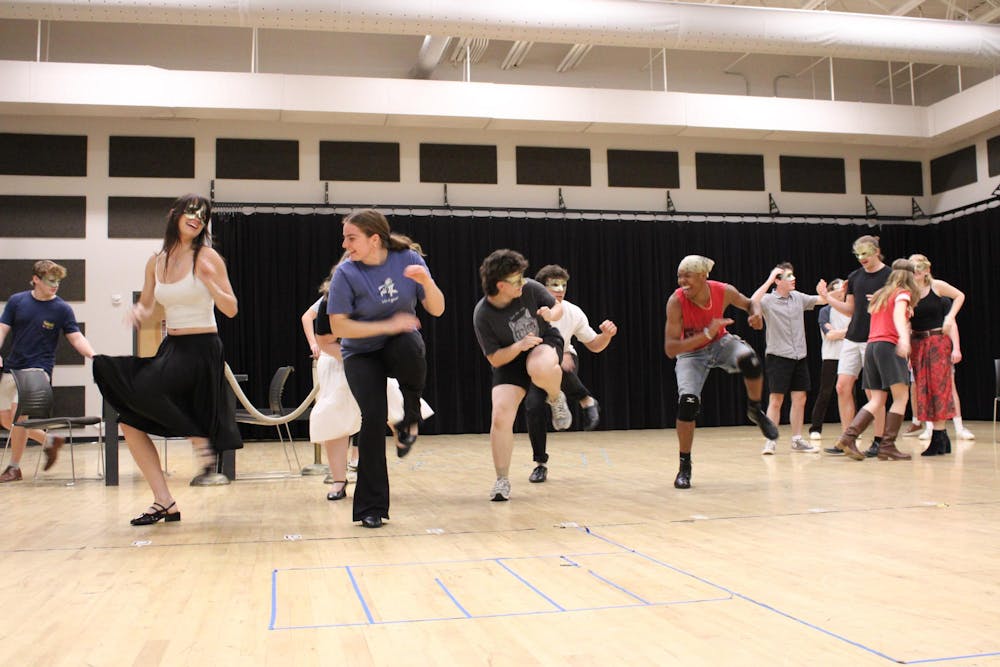
Brinson, Olt, Shaffer and Stekevych each separately said the actors have worked closely with the text, knowing that if they can understand what they’re saying, the audience can too.
“The wonderful thing about Shakespeare is you can sit there and you might not be able to understand every single word but you can feel all the emotions, and you can let it wash over you and be in the moment,” Brinson said.
Brinson said she hopes the community, especially those who aren’t quite comfortable with Shakespeare, come to see the show and understand it with the cast.
“Yes, it’s this love story,” Brinson said, “but it’s also a story about authority oppressing people and oppressing ideas and oppressing love. And right now, especially when there’s a lot of authority oppressing love in every way, how can we stay as a community and rise against that?”
There will be shows April 16 and 17 at 7.30 p.m. and April 18 at 2 p.m. and 7.30 p.m. Tickets are $15 or free with an Elon ID.