

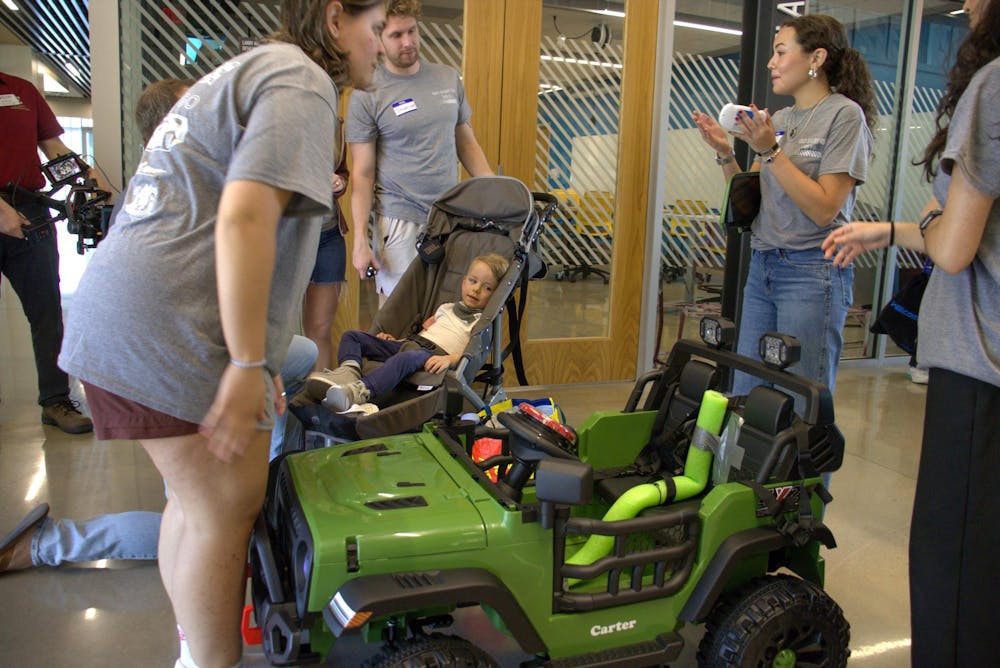
Elon University’s Innovation Hall was filled with the high-pitched hums of electric motors and the sounds of childhood play April 4. The noises came from the first Go Baby Go program at Elon, where the community takes standard electric toy cars and adapts them for children who cannot traditionally operate one.
This event was done in collaboration with students from engineering, physical therapy, and the Phoenix Racing team to collaborate and persevere through initial mobility challenges for children.
For Rebekkah Manning, the mother of four-year-old Henry, the event was about much more than just a new toy. She sat nearby, watching as a team of students tailored a car specifically for her son's needs.
“It’s hard to put into words what this event means to us,” Manning said. “Our people like Henry, my son, who’s four, don’t have as many opportunities as typically developing children have. The world is not made to adapt to their needs.”
Henry, who has spent years working on his mobility with Elon’s physical therapy program, has been through numerous studies and research on his limitations.
According to Paula DiBiasio, a professor in the physical therapy program, Henry has been a “teacher” to the graduate students for three years.
She noted that while she can teach theory in a classroom, she can’t teach real-life experiences, like working with Henry.
“The students develop humility,” DiBiasio said. “They really understand what it’s like to be a caregiver.”
Across the foyer, engineering students rewired buttons and ziptied steering wheels.
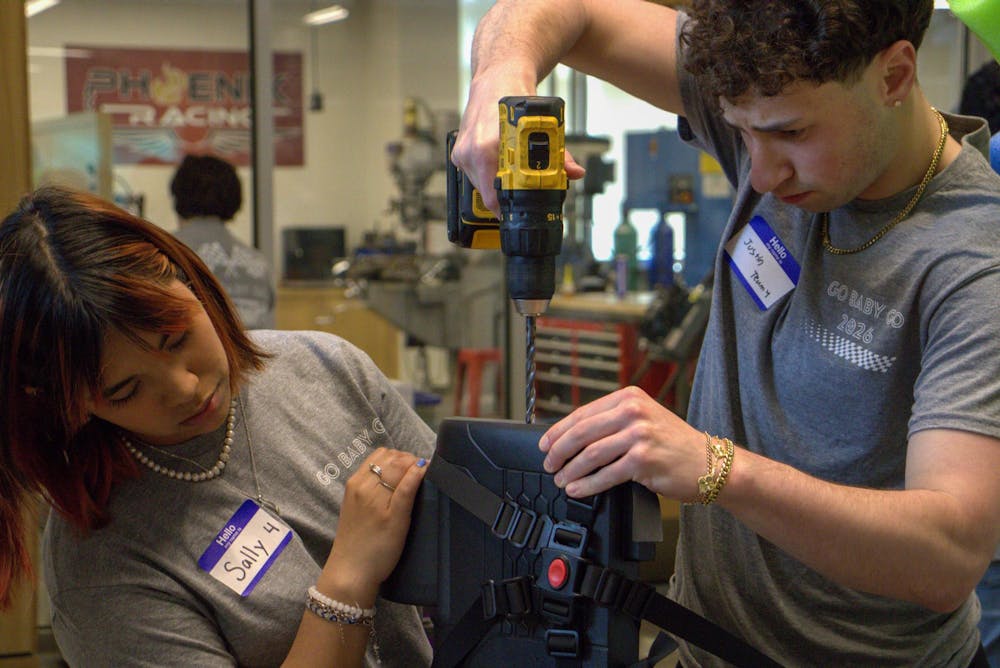
Sirena Hargrove-Leak, a professor of engineering at Elon University, oversaw the technical alterations. She explained that for many children with different abilities, a standard design is nearly impossible to use.
“What we do is to fit the car with a button on the steering wheel so that they can just simply press that button and make the car go,” Leak said. “In some cases, we also add a structure around the car, using PVC pipe to give a little bit more stability for children.”
The program, led by senior biomedical engineering student Julianna Millett and fellow students Diego Hernandez and Abby Johnson, was brought to Elon in collaboration with their Tikkun Olam Makers Fellowship. The fellowship is a 9-month program focused on developing open-source, affordable technology to assist people with disabilities and the elderly. Millett said that for these families, the cars represent a rare moment of independence.
“For a lot of kids, receiving this car is going to be the first time that they've had autonomy over their own movement,” Millett said. “Being able to play side-by-side with their siblings or with their peers, or attending family walks, playing in the yard, and having experiences like this really allows their development to kind of succeed and excel.”
As Manning watched Henry drive a car for the first time, she said that typical childhood memories are often taken for granted. For her family, seeing Henry smile while doing an activity that isn’t a doctor’s appointment or a therapy session was a change of pace.
“This is therapy, but it’s play, and that is priceless,” Manning said. “Opportunities like this make their worlds bigger, and they get to enjoy adventures and imagination.”