

Dystopian worlds have defined modern culture, through survival dramas like Squid Game to zombie-filled television shows. Some of today’s most popular stories imagine societies collapsed and filled with distrust and scarcity. Negative narratives have set themselves in everyday life.
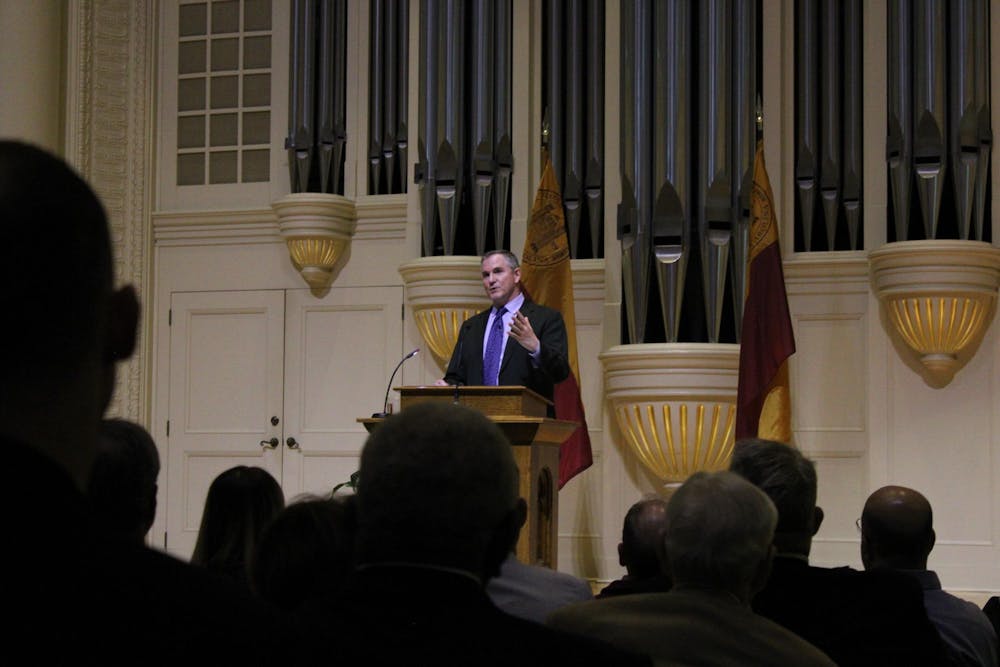
The same outlook appears in public opinion, according to New York Times journalist and best-selling author Frank Bruni. Bruni delivered the James P. Elder Lecture on April 9 in Whitley Auditorium at Elon University. He talked about how pessimism has shaped Americans’ views of the country and their role within it, themes all relevant in his book “The Age of Grievance.”
For more than two decades Americans have consistently expressed dissatisfaction with the direction of the nation, according to Bruni. Bruni referenced a Gallup polling data showing that since 2004, a majority of Americans have said they are unsatisfied with how the country is headed.
“The most recent one is that only 26% of Americans are satisfied,” Bruni said. “So, only one in four Americans basically feels good about our land.”
He argued this dissatisfaction is reinforced by the modern media environment we live in.
“What does it say about us that we have a word called doomscrolling?” Bruni said. “We encourage ourselves to see the world so darkly.”
This constant exposure to negativity can shape how people see one another, according to Bruni. When individuals believe resources are shrinking or the future is bleak, they are more likely to have a competitive mindset.
Bruni shared a story about a friend who once looked out of a window and saw a bird sitting outside. Instead of appreciating the moment, he started to think about climate change and human’s role in harming nature. Bruni said this instinct shows how negativity can affect simple experiences of appreciation and replace it with a sense of scarcity.
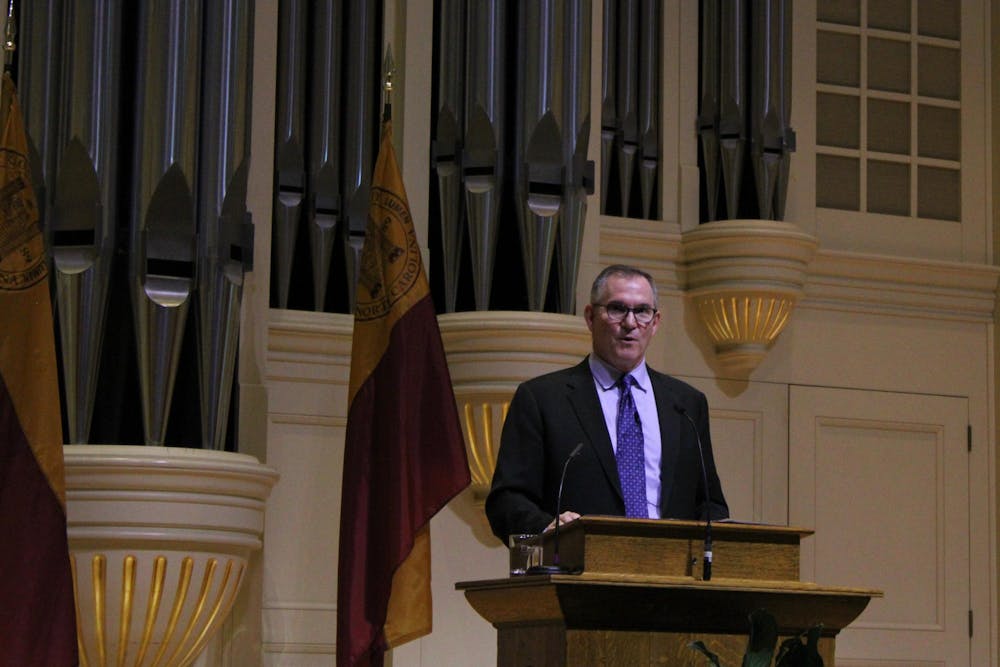
Journalist and New York Times bestselling author addresses audiences in Whitley Auditorium about his book "The Age of Grievance" on April 9.
Bruni contrasted this with a more optimistic look, which he said encourages cooperation and teamwork rather than division between people. Much of his mindset is influenced by social media, especially among younger generations, he said. While policy changes are often discussed, Bruni emphasized the need for better education about how these platforms shape behavior in young people.
Drawing from his experience as a professor at Duke University Bruni said how students often feel pressure to respond to major events online, even when they lack the full details.
“You feel like if you don’t say something, people think you don’t care,” Bruni said.
He said these habits are not intentional, but rather a result of how platforms are designed. Social media algorithms can reinforce beliefs and limit exposure to different perspectives.
Beyond media consumption, Bruni said to shift priorities to civic care.
“You cannot live on some level apart from society,” Bruni said. “You have to ask yourself all these things I’m doing in my self-care, self-maintenance and my self-optimization, what am I doing for civic maintenance and civic optimization?”
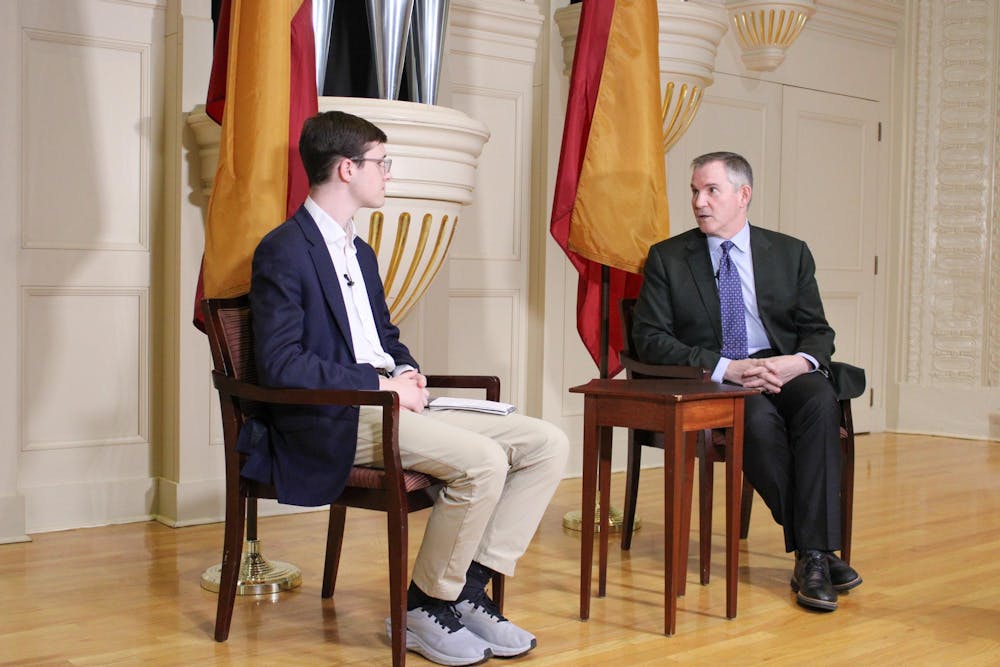
For attendees, the message ultimately felt hopeful.
Rosalind Pope, a local resident, said she expected a more negative tone but left encouraged.
“I thought it was going to be all pessimistic,” Pope said. “Actually, we’ve come away with some feeling of hope.”
Cecelia Thompson, an Elon alum who works in civic engagement, said the concept of civic care stood out most.
“We always talk about what’s good for ourselves, and we really need to be thinking more about what’s good for our community and the spaces that we live in,” Thompson said.
Bruni wanted the audience to know that to shift the tone of public life, it has to begin with individuals.
“Decide not to be that person who always sees things most darkly,” Bruni said.