

Growing up in Turkey with only one television channel and limited access to books, Zeynep Tufekci remembers a childhood with restricted information and American TV shows like “Little House on the Prairie” and the soap opera, “Dallas”.
Now, the techno-sociologist and columnist helps society understand the powerful impact of artificial intelligence.
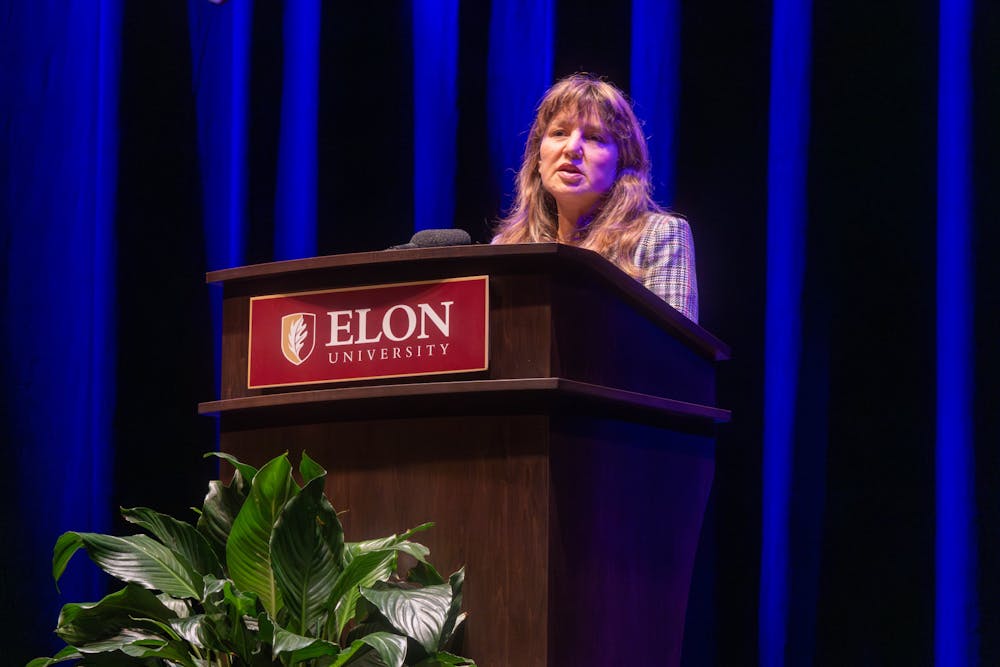
Tufekci delivered the Baird Lecture on March 12 in McCrary Theatre at Elon University about how emerging technologies such as artificial intelligence are reshaping society and democracy.
“I remember thinking this was going to change everything,” Tufekci said, as she recalled her experiences with digital communication while working as a programmer for International Business Machines Corporation (IBM), a major American multinational technology company specializing in computer software and artificial intelligence during college.
Through a company network, she was able to get early access to AI and communicate with programmers around the world to ask technical questions. Because communication was text-based, users didn’t know her identity or age online.
“Someone from Japan would just answer the question,” she said. “They didn’t know I was a teenager or a young woman.”
That experience led her to shift from computer programming to sociology, with a focus on how technology shapes social and political systems.
During the lecture, Tufekci compared the rise of artificial intelligence to earlier technological transformations such as the printing press.
Tufekci said that while new technologies can expand knowledge and communication, they can also make it difficult for societies to adjust to the changes.
“Once the technology is unleashed, the things come all at once,” Tufekci said. “It’s not like, here's the good part, here's the bad part and let me just use the good part.”
A concern she mentioned was how generative AI systems are affecting education. Tools powered by large language models can produce convincing essays, which raises questions about how teachers can ensure students still learn the important things.
“But the thing you got wasn't the essay itself. It was trying to grapple with ideas,” Tufekci said.
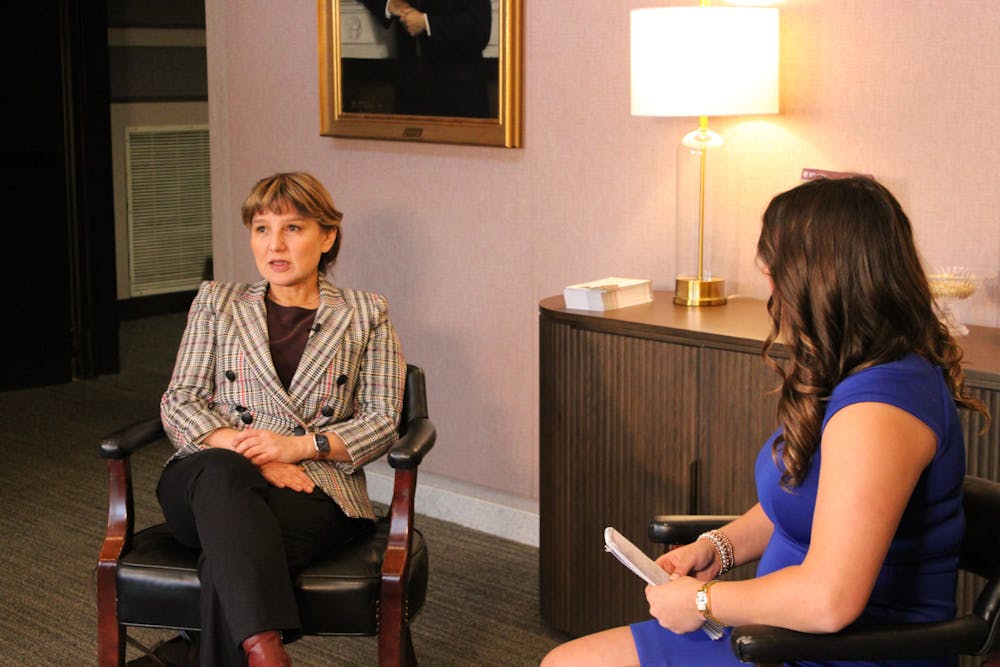
In an exclusive interview with Elon News Network, Tufekci compared relying on AI tools too early in the learning process to training for a marathon while wearing rollerblades.
“You might reach the finish line faster,” she said, “but you’re not building the muscles you need to run.”
Audience members said the historical perspective helped clarify the scale of the changes coming.
Charles Sneed, who attended the lecture with his wife, Laurel, said he had previously encountered Tufekci’s work through reading and was interested in hearing her speak.
“It sounded like she was one of those people who makes things understandable,” Sneed said. “With all the confusion and chaos that we’re swimming in these days, she does make things clearer.”
Laurel, said one of the most interesting parts of the lecture was Tufekci’s comparison between artificial intelligence and past technological transformations.
“I thought it was really good that she took it back to other technologies that have had transformational impacts, particularly the printing press,” Laurel said. “It shows that when these technologies come along, they often have consequences that no one could predict.”
Steven House, former executive vice president and provost at Elon, also attended the lecture.
He said lectures like this reflect the core purpose of a liberal arts education.
“This is at the heart of the liberal arts,” House said. “You have to ask the questions, and you have to understand the repercussions of the answers.”
Steven’s wife, Patricia, said the lecture also highlighted how quickly technological changes are approaching.
“The awareness of how close we are to some of these trucks coming down the highway really struck me,” Patricia said.
Patricia said she found the discussion encouraging because it emphasized the importance of students continuing to ask difficult questions.
“And as long as the students are asking the questions, really asking questions, good questions, challenging questions, questions that can't be answered, then that's the process that we want to go through with the students,” Patricia said.
Despite the risks of artificial intelligence, Tufekci emphasized that society has historically adapted to new technologies through government policy.
“So I think this is doable, we just have to do it, though,” Tufekci said. “We have to create the right incentives.”
She encouraged students to think critically about artificial intelligence and to verify the information they see online before sharing it, to ensure it’s accurate.
“What you do will shape the world I live in as well,” Tufekci told ENN. “This generation will be at the forefront of figuring out how we live with these technologies.”