

Tucked quietly in a corner adjacent to the entrance of Lakeside Dining Hall sits a metal rack teeming with brochures. Hordes of students walk by, either unaware of its presence or uncaring of the “Healthy for Life” message the pamphlets champion.
But does this mean Elon University students do not make healthy choices in the campus’s dining facilities?
According to Amanda Cerra, Elon’s registered dietitian and nutritionist, the university continues to enhance the ways in which it reaches students to encourage healthy eating.
“I’m excited by my job and the ways in which I can personally help students make smart choices,” Cerra said.
While Cerra works on Elon’s campus, she is employed by Aramark — the university’s food service provider.
Cerra mentioned Aramark is committed to purchasing from healthier vendors.
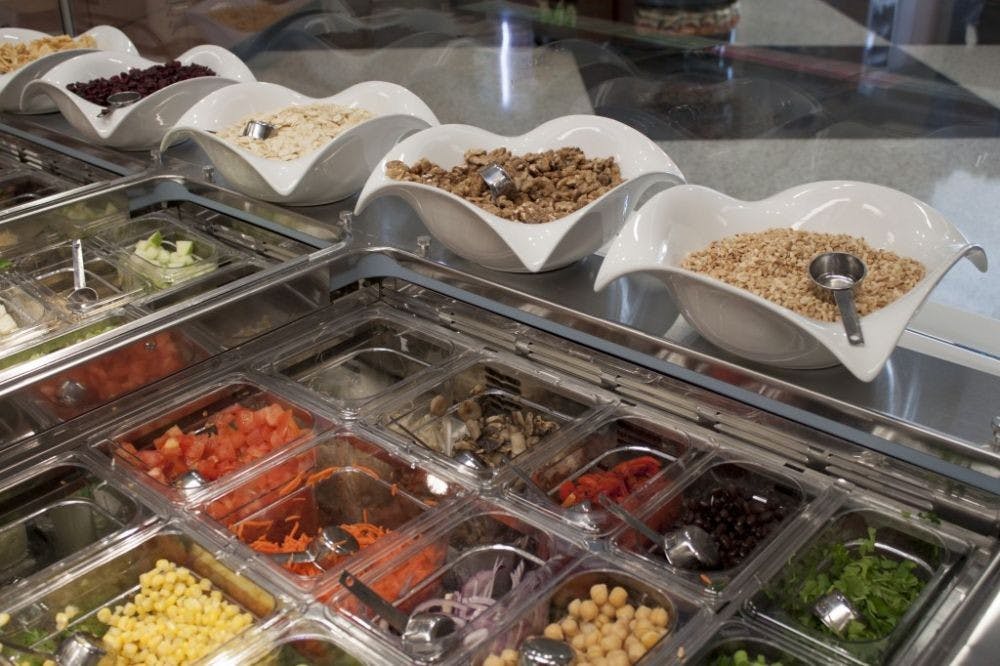
“When in season, we try to provide items from local vendors,” Cerra said. “We provide daily fresh fruit. Our soups are made fresh instead of very processed, sodium-rich canned soups. In every dining hall, there is a salad bar, and at least one cooked vegetable dish. We provide low-fat or fat-free dairy products in each location. There is always a gluten free option.”
But students, especially freshmen, do not always agree.
“I don’t feel like it’s easy to eat healthy at Elon because of the costs of certain items,” said freshman Matthew Strickland. “I go to Acorn and a bowl of grapes costs more than a cookie, so if I need a snack, I’m going to go with the cookie. And in the dining halls, I don’t always feel like the veggies are the best quality.”
Fellow freshman Carter Rayburn echoed Strickland’s complaints.
“At the fountain drink stations, water is legitimately the only healthy option that isn’t loaded with sugar and corn syrup,” Rayburn said. “There are some healthy options, and I like Freshii sometimes, but you can’t eat there all the time.”
Others feel that eating healthy has less to do with the university and more to do with the individual.
Freshman Judah Brown said dining hall hours play a major role in students’ abilities to eat healthy but recognized that some students will naturally choose to live an unhealthy lifestyle.
“I think it is possible to be healthy here when the dining halls are open,” Brown said. “Sure, when you walk into upstairs Colonnades, the first thing you walk by is pizza. But I feel like when someone enters a dining facility, they have a pretty good idea of how they want to eat.”
Aside from the fresh options provided in standard dining halls, Elon continues to improve other options around campus.
One of the more recent healthy eating initiatives is Green World, which transformed a mediocre “steakhouse” into the university’s first-ever vegan and vegetarian establishment.
According to USA Today, the number of vegan students in the United States continues to grow and reflects a larger national movement. Elon’s establishing of Green World responded to an existing on-campus demand, illustrating the university’s progressive support of changes.
“We understand that there are a lot of places on campus that do not promote healthy eating, and there are ways in which to abuse even some of the healthier establishment’s provisions,” Cerra said. “But it’s a balance. We need to take into account what students want, and some want places like Chick-fil-A just as some want places like Green World. All we can do is continue to provide variety and education. I feel students will make the choices they need to stay healthy.”