

Elon University junior Cody Hoyt opened his mouth to answer the question, but no words came out.
Finally, after several attempts, he arrives at his best answer: “People are desperate.”
Hoyt was referring to the upcoming election and the dissatisfaction voters have with the existing candidates. Like many in the country, he said he feels candidates are earning votes out of increased extremism coupled with the personal attacks against fellow candidates.
The Wall Street Journal and NBC held a focus group in October 2015 to measure the phenomenon of picking the least objectionable candidate. The findings were telling of national political sentiment — none of the candidates earned above a 50 percent in the “optimism/satisfaction” category.
“I don’t think people immediately get excited,” said Kenneth Fernandez, assistant professor of political science and policy studies and director of the Elon Poll. “Instead, a lot of the time, they pick a lesser of two evils.”
But for this election, several of the more popular candidates are anything but traditional.
Businessman and real estate mogul Donald Trump leads the Republican Party field in national polling at 37.4 percent, which is more than 20 percent higher than Sen. Ted Cruz (R-Texas).
Former Secretary of State Hillary Clinton leads the Democratic Party in national polls at 51.3 percent. She is followed by Sen. Bernie Sanders (D-Vt.) at 35.3 percent.
Part of the love and hate many hold for candidates comes from the nature of the U.S. campaign system. Some argue existing campaign structures emphasize the individual and their personality rather than personal or party policies.
“We have candidate-centered elections,” Fernandez said. “In Europe, campaigns and elections are far more policy- and party-centered. It’s interesting, and somewhat makes our elections a personality contest.”
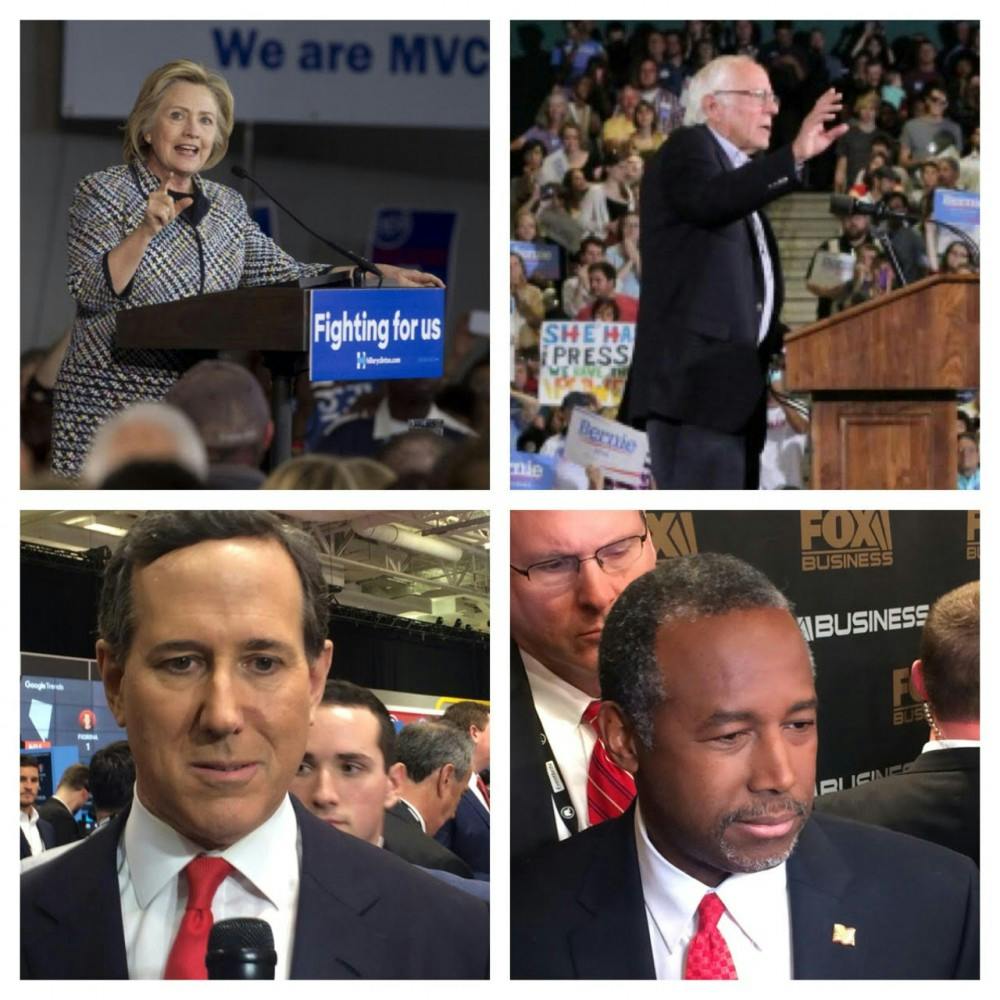
Massive personalities have largely defined the 2016 presidential election, particularly those of Trump, Clinton and Sanders.
Fernandez predicts the extreme viewpoints championed by the candidates will increase voter turnout.
“People are excited by the nontraditional stances, particularly Trump’s and Sanders', Fernandez said. "People find Trump’s honesty and confidence to be refreshing.”
But while it may seem to many like the candidates are especially unfavorable in a historical context, Hoyt said it is easy to forget how realities of past elections echo those of the present.
“Nixon tried to run four times before he was elected," Hoyt said. "Last election, a Mormon, Mitt Romney, won the primary. When John F. Kennedy, a president people today still admire, won, it was a huge deal to elect a Catholic. There will always be something wrong with a candidate.”
The characteristics people find to be admirable in a candidate remain subjective.
“An ideal candidate must be calm and honorable," said freshman Charlotte Murphy. "For me, that’s Sanders. But then again, I’m also from Vermont so I need to support my guy.”
As a professor of political science, Fernandez said he often hears students talk about their disgust for politics. Nevertheless, pertinent information still manages to reach the populous.
“A lot of people tell me they hate politics," Fernandez said. "Hate it all you want, but you cannot avoid the information coming from the various campaign trails. We have so much of it, and in my opinion, it can only be a good thing."
As candidates like Trump secure heavy media presence, students grapple with the plethora of available information and remain on the search for the "perfect candidate."