

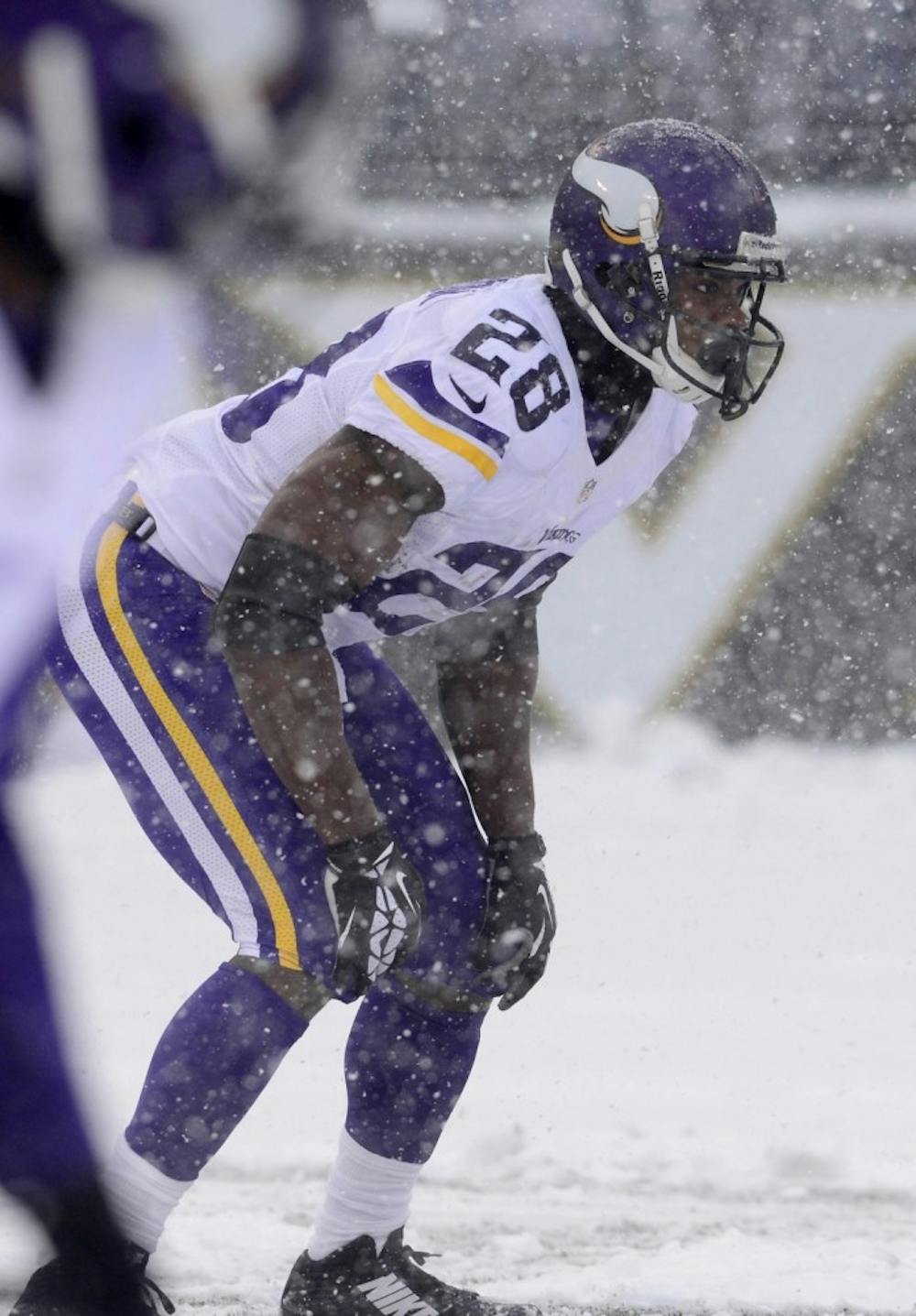
It is rare in modern day football that you see a running back almost single-handedly takeover a game.
In the heyday of the pigskin during the 1970s and 1980s, we were witness to greatness at the tailback position. Walter Payton, Earl Campbell, Eric Dickerson and Marcus Allen were just a few in a long line of running backs who were the primary ball-handlers in their respective offenses.
In the college ranks, legends such as Herschel Walker and Bo Jackson often received 30-to-40 carries a game while literally carrying the University of Georgia and Auburn University on their backs. In contrast, it was relatively difficult to find a superstar wide receiver to pair with a quarterback during this time period. John Stallworth, Lynn Swann and of course, the great Jerry Rice were known as the godfathers of the breed known today as game-changers at the wide receiver position. As years progressed, the emergence of receivers led to the slow decline of the primary tailbacks.
In 2014, the only running backs left who carry this mantle are Adrian Peterson, LeSean McCoy and Marshawn Lynch. Even their numbers pale in comparison to that of the ball carriers of the 1970s and 1980s, possibly with the exception of Peterson having posted a 2,000 yard season. Today, we see superstar wide receivers like Calvin Johnson, A.J. Green, Demaryius Thomas and Dez Bryant take over games with their quarterbacks, ones who are now making 4,000-yard seasons look average. Rather than having a single tailback, teams now use a running back-by-committee approach using two to three backs in one game. Running backs now have to have the added dimension of a wide receiver out of the backfield.
The absence of the tailback position has taken away the ability of teams to control games through time of possession. Once teams took the lead, they could control the tempo for the rest of the game by holding on to the football and riding the back of their running game. This aspect of football seems to have run its course, but often times we see a flash of what controlling the ball can do. This is most noticeable in the college ranks with teams like the University of Alabama living by controlling the football. This is one of the primary reasons why Alabama has maintained its stature at the pinnacle of college football. The game is always in its hands. The Crimson Tide has had a succession of running backs since Mark Ingram that has been followed by Trent Richardson, Eddie Lacy, and T.J. Yeldon — consensus All-Americans who have been the primary handlers of their offenses. Alabama has proved that the recipe for success is that of having a primary ball carrier who can control a game and a defense who can contain the opposition. This writer finds it peculiar why more teams do not follow this blueprint.
I believe we could see a resurrection of this lost art in the near future with Alabama’s success and the talent seen in Georgia tailback Todd Gurley, a man stated by Fran Tarkenton as “having the potential to being as good as Jim Brown”. While this is a lofty comparison, it shows the respect that is revered for a back that can carry the load of an entire offense and maintain leads rather than leaving that duty to a quarterback or wide receiver.
Teams may find out that this simple strategy in football can possibly be the difference in controlling a game and losing a game.