

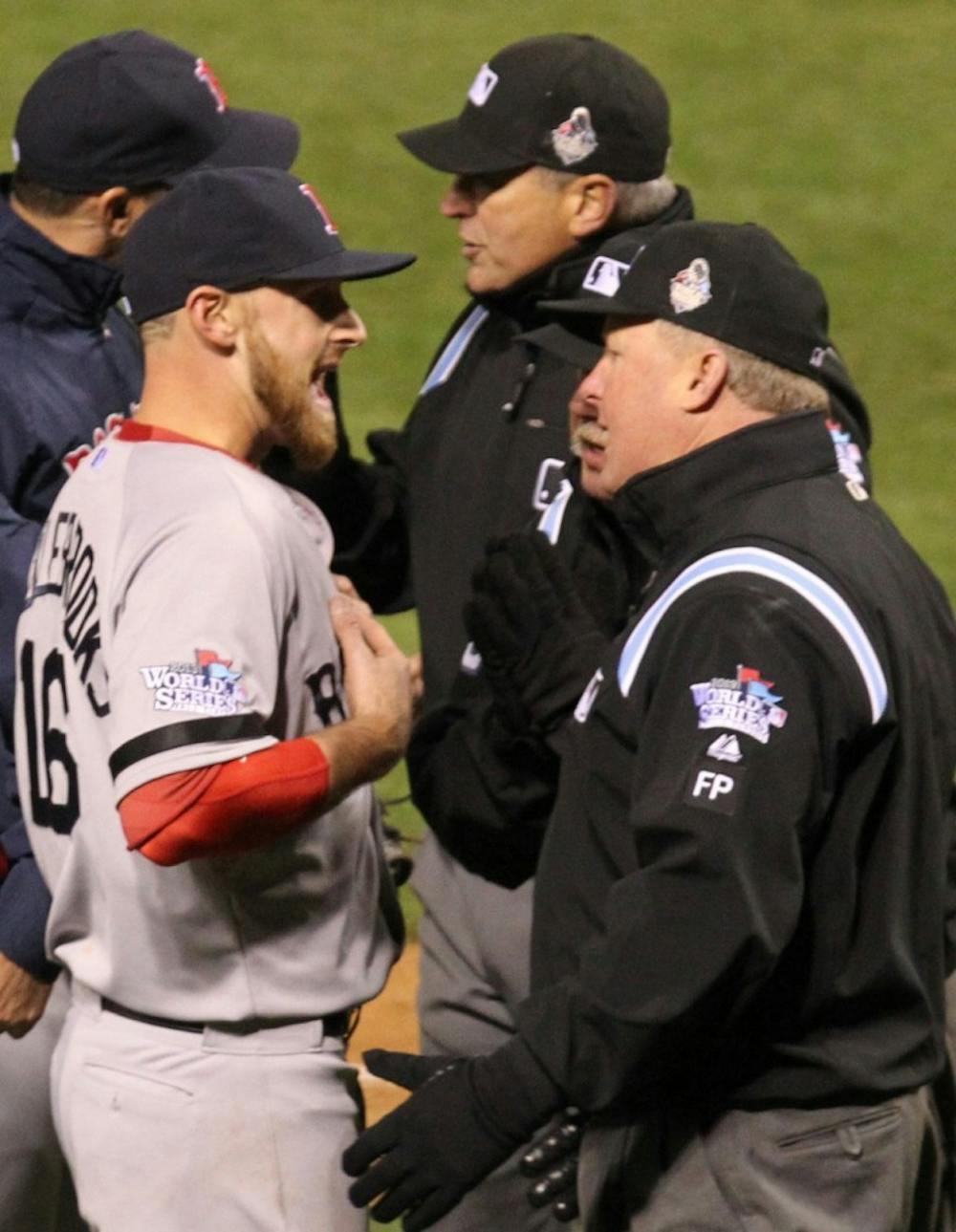
Major League Baseball umpire Jim Joyce ruled Boston Red Sox third baseman Will Middlebrooks obstructed St. Louis Cardinals' first baseman Allen Craig from scoring the winning run in Game 3 of the World Series. Craig was awarded home plate and the Cardinals won the game 5-4 and took a 2-1 series lead.
There are a couple of things to understand about the ruling in order to understand why this was the correct call. Obstruction is, as defined in the MLB Rulebook, “the act of a fielder who, while not in possession of the ball and not in the act of fielding the ball, impedes the progress of any runner.” (pg. 19). It’s very clear that Middlebrooks impeded Craig’s progress to home plate, whether intentionally or unintentionally. Craig was inside the baseline after standing up from a headfirst slide and attempting to score.
It can be determined that:
- The fielder was not in possession of the ball
- The fielder impeded the progress of the runner
Middlebrooks has already made the attempt to field the ball and missed. The thing that bothered most of the Red Sox was there was nothing Middlebrooks could do about it. While that is likely the case, he still obstructed Craig. A rule is a rule and in most cases, the umpires will, and should, follow them.
The purpose of this rule is not only to keep fielders from intentionally preventing runners from scoring. It is also so that if there is some type of obstruction, the runner will be awarded the base he likely would have reached without the obstruction. That’s why this was the correct call, a good rule, and should have been called in this situation.
The game ended with this call and because of that, there was “controversy” surrounding the decision of Jim Joyce to call obstruction. However, it was not the first controversial call of this World Series.
In Game 1, umpire Dana Demuth called a runner out at second base, ruling that Cardinals' shortstop Pete Kozma was transferring the ball from his glove to his throwing hand. This was a poor call, as the ball never made it inside of Kozma’s glove. However, the next step the umpires made was just as poor of a decision. The umpires overturned Dana Demuth’s call despite the fact that rule 9.02(a) says that his ruling “is final.”
So far this series, both teams and the umpiring crew have made mistakes. Both teams have thrown games away, there have been a number of fielding mistakes, base-running blunders, questionable decisions made by the managers and hitters taking called third strikes on pitches way too close to the zone. At this point, the World Series looks like it could come down to whichever team shoots itself in the foot the fewest amount of times.