

Millions of Americans have spent Sunday nights on meth for the past five years.
This past Sunday, there were about 10.3 million.
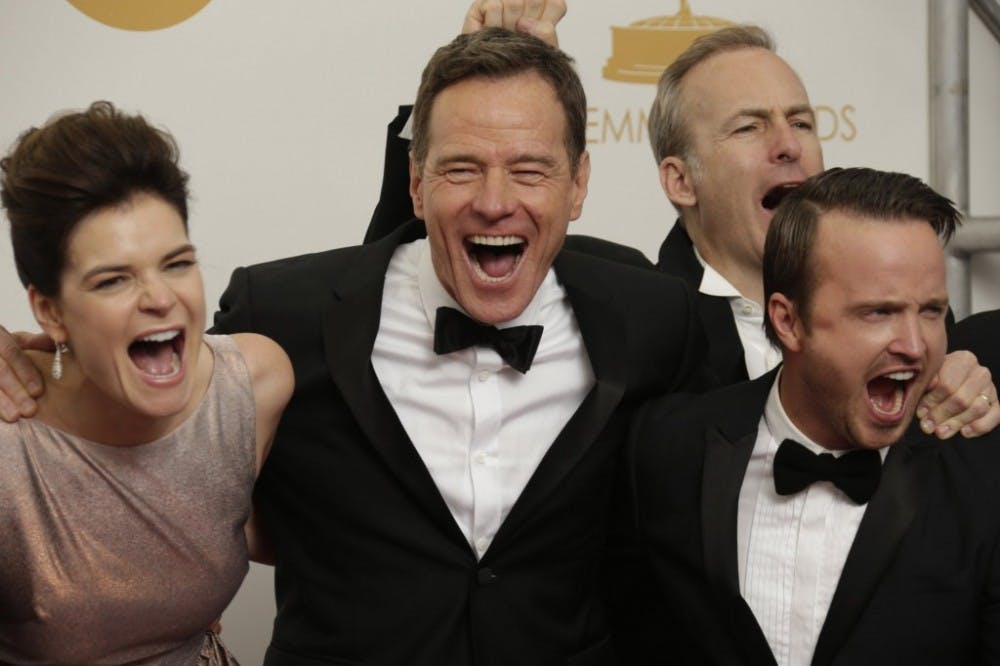
According to Nielsen ratings, that’s how many viewers tuned into the series finale of the AMC network’s wildly popular drama series “Breaking Bad.” This is coming off the show’s big win last week at the Emmys, where it (finally) took home the trophy for Outstanding Drama Series over the likes of “Homeland” and Netflix darling “House of Cards.”
People love “Breaking Bad,” that much is obvious. I count myself among the ranks of crazed fans of the show. But considering its rabid fan base, the final episode of “Breaking Bad” was pretty underwhelming.
Of course, expectations were astronomical for the episode. Will Jesse escape the neo-Nazis? Will Todd get away with his bad deeds? Will Walt die and, if so, will it be his cancer or a well-placed bullet or something else that does him in? All of these questions and more were answered in the finale, providing what the show’s creator Vince Gilligan called “necessary closure.” But such an intense show deserved more from its ending.
In an interview with Entertainment Weekly, Gilligan said the team behind the show wanted to go out with a bang, not a whimper. Actors Bryan Cranston and Aaron Paul both claimed the final episode was “satisfying.” It was ultimately satisfying in terms of tying up all the show’s loose ends and (most of) its stray subplots, but it was too tame.
Yes, there were a number of deaths in the finale. Yes, questions were answered. But did a show about a meth-cooking chemistry teacher turned ruthless drug lord need to be wrapped up so nicely? I think not.
Gilligan and his fellow showrunners should have taken a lesson from HBO’s “The Sopranos” or ABC’s “Lost” — two shows that concluded with open-ended finales. They tied things up, but they also raised more questions for fans’ endless speculation. “The Sopranos” had a particularly controversial ending, in which (spoiler alert) its lead character departed without explanation. While the cliffhanger upset many fans, it also made them gush to their friends about the show — a smart marketing tactic to generate more buzz.
If you’re not already one of the legion of Heisenberg followers, then you’ve surely at least heard a friend or two adamantly recommend you watch it. When your friend suggested it to you, I bet he or she didn’t base the recommendation on the show’s pilot episode but rather one of the show’s more shocking moments, such as the explosive season four finale (hint: there’s an explosion). That episode drew 2.9 million viewers on Oct. 9, 2011. The show then went on a nine-month hiatus during which its first four seasons prospered on Netflix. Season five premiered to almost 6 million viewers in July 2012, which must have had something to do with said explosion.
Thus, showrunners and networks shouldn’t be afraid of open-ended, potentially infuriating finales. These types of endings hit our emotions hardest and are ultimately the most memorable. The final episodes of “Breaking Bad” hurtled toward a cliff before stopping comfortably short and sighing relief.
My message to showrunners: Dare to push your shows over the edge.