

Throngs of prospective students and their parents visit Elon University’s campus every day, and they are often blown away by what they see.
Elon’s largely wooded areas, brick paved paths and neat landscaping all can be the subject of adoration from visiting families. But some may argue Elon truly shines through the beauty of its man-made lakes, the maintenance of which requires dedication on the part of Elon’s landscaping and grounds crew to maintain a pristine image.
Elon has three lakes on campus. The first is Lake Verona, located near Danieley Center. The second is Elon Homes Lake, located near the golf driving range on South Campus.
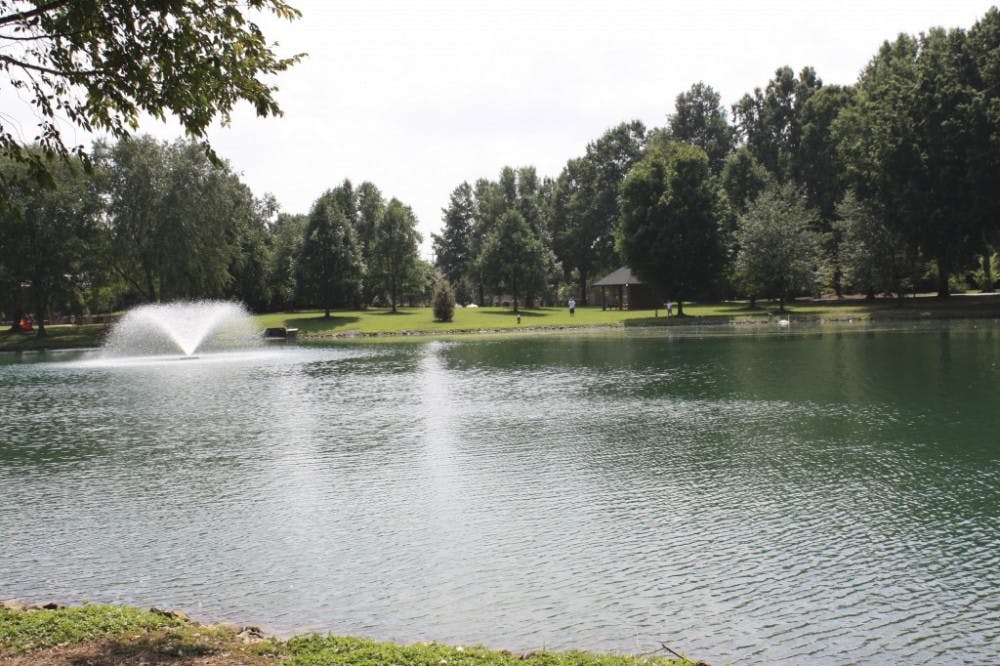
But the lake that typically receives the most attention is Lake Mary Nell. It’s the largest lake on campus and is located behind the Center for the Arts. This man-made lake has a surface area of 2.5 acres and is about seven feet deep.
Not only is the lake a visual flagship for Elon, but it is also used by multiple programs around campus.
Elon Academy, an enrichment program for teenagers in Alamance County, uses the lake as the site for its engineering class, where students build small boats out of household materials and attempt to row across the lake in them. In the past, Lake Mary Nell has been the host of the Earth Day celebration Earthfest. It was also the site of the Polar Bear Plunge, a former Elon Winter Term tradition where students courageously jumped into the often freezing waters of the lake and competed for prizes.
Even without these recreational uses, Lake Mary Nell would likely still thrive with student activity. Students, staff and faculty members can always be found sitting on the swings near the lake. Some students go just to enjoy the scenery.
“It’s just really calming,” said sophomore Bobby King. “Something about sitting in front of the lake just relaxes me and helps me work.”
In addition to Lake Mary Nell being a cornerstone of Elon’s scenery, it is also a critical part of the school’s sustainability plan.
“Its primary purpose is to be a source of irrigation water for the campus landscape,” said Tom Flood, assistant director of Physical Plant and director of landscaping and grounds.
Lake Mary Nell is connected to irrigation lines that allow it to irrigate both the athletic fields and the center of campus using recycled storm water. Not only does this help regulate the water levels in the lakes, but it also helps keep the grass on campus healthy and visually appealing.
With the ecological benefits Lake Mary Nell offers, it is surprisingly low maintenance. Flood said aside from doing minor chores to keep the lake clean, it doesn’t require much upkeep.
“During the hot summer months, we occasionally add pond dye to the lake to reduce the algae growth, which is common in shallow ponds in this part of the country,” Flood said. “It is simply a biodegradable colorant that reflects the blue-green spectrum of light, thereby reducing the photosynthesis and growth of blue-green algae.”
Lake Mary Nell even has its own ecosystem. Within its waters you will find bass, carp and snapping turtles. It is also home to two swans and a gaggle of geese that can often be found swimming in the lake or nesting on its outskirts.