

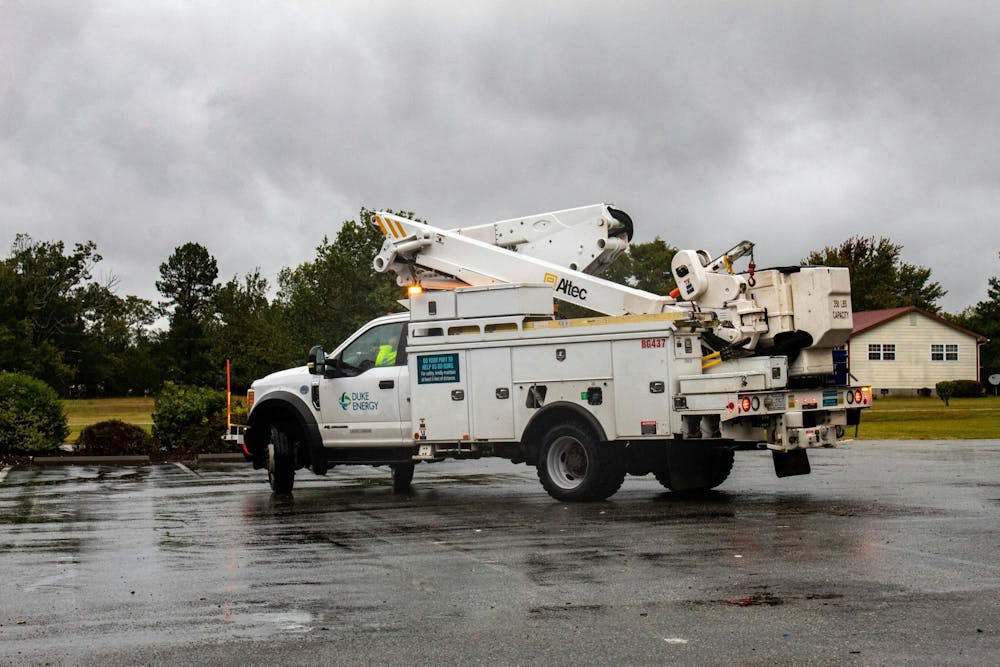
North Carolina Attorney General Jeff Jackson is not joining a proposed settlement submitted by Duke Energy Carolinas, the largest electricity provider in Alamance County.
Jackson acknowledged the concessions Duke Energy has made, but he was not satisfied with the proposed rates, according to a press release by the North Carolina Department of Justice.
“Duke started this case asking families for an 18% increase. We pushed back, and now its own filing shows 9.5%,” Jackson stated in a press release. “That is movement in the right direction, but it is still too high. We are not joining this deal, and we will keep pushing for lower rates.”
Duke Energy states that this settlement would lead to an average increase of 7.4% over two years for all North Carolina customers. Residential rates would increase by 9.5% under this settlement, while industrial rates would increase by 6.3%.
Jackson Ewing, director of energy and climate policy at the Nicholas Institute for Energy, Environment & Sustainability at Duke University, said that the primary reason for the rate increases is to support Duke Energy’s plans for building new energy infrastructure to meet the growing demand.
“It would ultimately lead to changes in the system which could affect reliability, the way citizens are receiving power and the different options they might have for attaining and maintaining their electricity access,” Ewing said.
According to Duke Energy, electricity demand could increase between 16% to 60% over the next 15 years, with large users such as data centers accounting for 80% of the projected demand.
The proposed settlement also addresses concerns Jackson and others raised in a similar case with Duke Energy Progress. Jackson submitted a filing July 15th to the Utilities Commission, arguing that Duke Energy Progress’ proposed 10.95% return on equity — the measure of profit investors are allowed to earn — should be lowered to 7.4% to support North Carolina residents.
Jackson’s office argues this lower rate would save customers $960 million over two years, roughly $420 for the average residential customer.
Jackson’s filing also argues for Duke Energy to create a separate rate class for large energy users like data centers to keep North Carolina residents and businesses from covering the bulk of the energy costs.
In response to this filing and objections from North Carolina Public Staff, Duke Energy Progress has lowered its proposed return on equity to 9.8%. Duke Energy also agreed to participate in a fast-track regulatory process to develop new rates for data centers and other large energy users. Jackson’s office will be involved in the proceedings for this process.
Duke Energy has proposed a large-load tariff on customers with high electricity demand and usage, billing customers 75% of their demand charges in advance. The current proposal would target customers asking for 50 megawatts or more, but Ewing said the actual numbers could change before the Utilities Commission approves it.
“It’s going to be getting input from across the sector, and so that will also ultimately affect what our cost outcomes are on the systems in North Carolina, and that could affect the rates that the broader customer base ultimately face,” Ewing said.
The North Carolina Utilities Commission will begin hearings on Duke Energy’s settlement on Aug. 4. If approved, the rate increases will go into effect Jan. 1, 2027.