

Survey results and recommendations have been released today by the "Presidential Task Force on Black Student, Faculty and Staff Experiences."
The Fall 2014 campus climate survey was administered by the task force, and included surveys, focus groups and one-on-one interviews with task force members.
Report Findings of Non-Black Students, Faculty and Staff
According to the report, non-black student respondents indicated in the campus survey that they viewed Elon's campus climate as positive and inclusive.
When asked a question on the campus survey of, "What is the most important issue facing Elon University?," the most common answer given by non-black students was associated with the lack of diversity on campus.
Most non-black student survey respondents said they were committed to promoting inclusion at Elon, and see themselves as active supporters of diversity.
The report states that although non-black students, faculty and staff are aware of some of the issues that black students, faculty and staff face at Elon, they generally have a "much rosier image of the university's level of inclusivity."
Non-black faculty and staff perceived the work environment to be much more inclusive than black faculty and staff did. According to survey results, 93% of all faculty and staff are committed to an inclusive community.
Report Findings of Black Students, Faculty and Staff
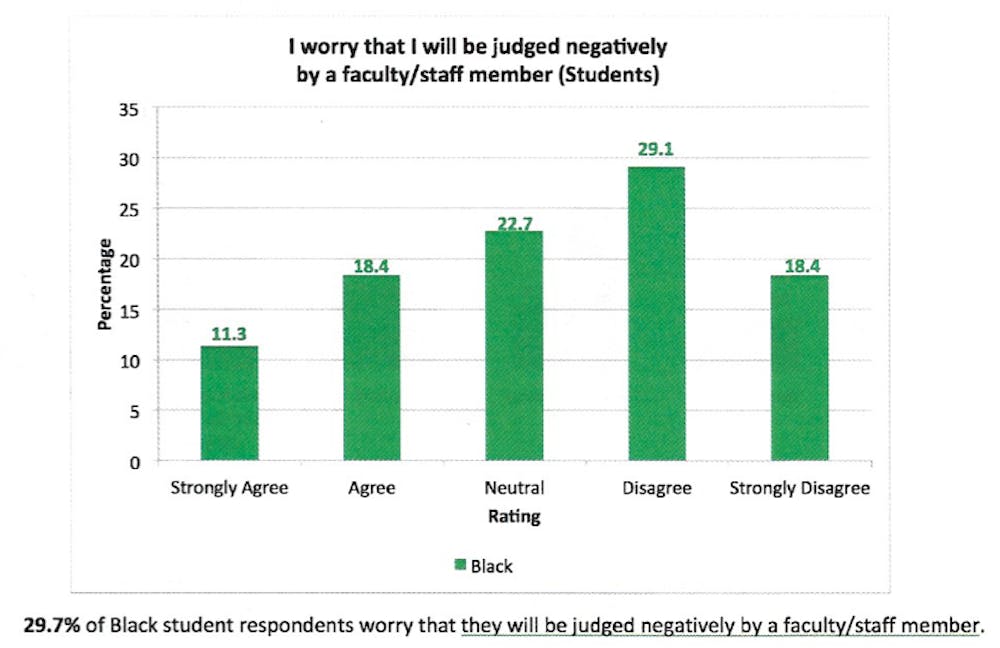
Only 16% of black students completing the survey rated Elon as an inclusive place for black students to attend, and many stated in focus groups and interviews that the percentage of black students on campus "creates a sense of isolation in a largely white student environment."
Among the 151 black student respondents, 98 reported examples of disparaging comments, such as use of the n-word on campus. According to the report, almost 80% of black student respondents indicated they do not feel "physically safe and secure" on campus.
According to the report, several black students discussed in focus groups that they had planned to leave Elon during their first year, as they were often the only black student in class and did not feel a sense of belonging on campus.
In student-athlete focus groups, black student-athletes said they felt a different type of isolation compared to black non-athletes because "many of their peers, and some faculty think they are only on campus to play sports, and not for education or to have experiences such as study abroad and internships."
Among the 63 black faculty and staff who completed the survey, there were 47 reports of disparaging comments regarding race or ethnicity directed at black faculty or staff by students, colleagues, staff or administrators.
Some black respondents reported feeling they were being sent "subtle, and sometimes overt, messages" that they are "not actually qualified or good enough." They also reported that the university presents few opportunities to connect with other black colleagues.
Task Force Recommendations
The Presidential Task Force on Black Student, Faculty and Staff Experiences also released a number of recommendations, pointing out places in the curriculum and across campus where changes could be made to promote a more inclusive environment for all students, faculty and staff.
In Admissions, the Task Force suggests hiring a professional admissions staff member who will focus on recruiting Black students, and will enhance existing recruitment plan. The Task Force also suggests enhancing the role of student Diversity Ambassadors.
When it comes to student aid, the Task Force recommended developing a resource center in the Office of Financial Planning to provide scholarship information for students from underrepresented races and ethnicities, as well as expanding the ethnically diverse student staff in the Office of Financial Planning.
For faculty and staff, recommendations include creating a plan to diversify senior leadership across campus, with an emphasis on people of color within academic departments and in higher administration. The Task Force also recommends increasing participation in programs that draw a diverse faculty to Elon, including the"Faculty Exchange Program" with local Historically Black Colleges and Universities.
The Task Force has suggested curriculum changes, to deepen and promote topics like power, privilege and oppression related to race and ethnicity. The report also recommends asking the Elon Core Curriculum Committee to explore a required diversity course for first-year students.
Campus Safety and Police has been recommended to ensure ongoing implicit bias training for campus police and security officers. It was also suggested to hold regular meetings between the Black Student Union leadership, the Director of Campus Safety and Police and black students.
Background
According to the report, 749 students completed the survey and 141 of survey respondents self-identified themselves as black. That is 36% of the black student population of Elon.
416 faculty and staff completed a different survey on the same topic, 61 of which self-identified themselves as black in the survey. That is 30% of the Elon black faculty and staff population.
In December 2013, President Lambert gave a charge to the Presidential Task Force on Black Student, Faculty and Staff Experiences, encouraging them to think about ways to create a deeper understanding on campus about issues of race and ethnicity.